 Faucet Online
Where Can I Find Laundry Taps Near Me — and Which One Should I Actually Buy?
View Count:132 CategoryProduct
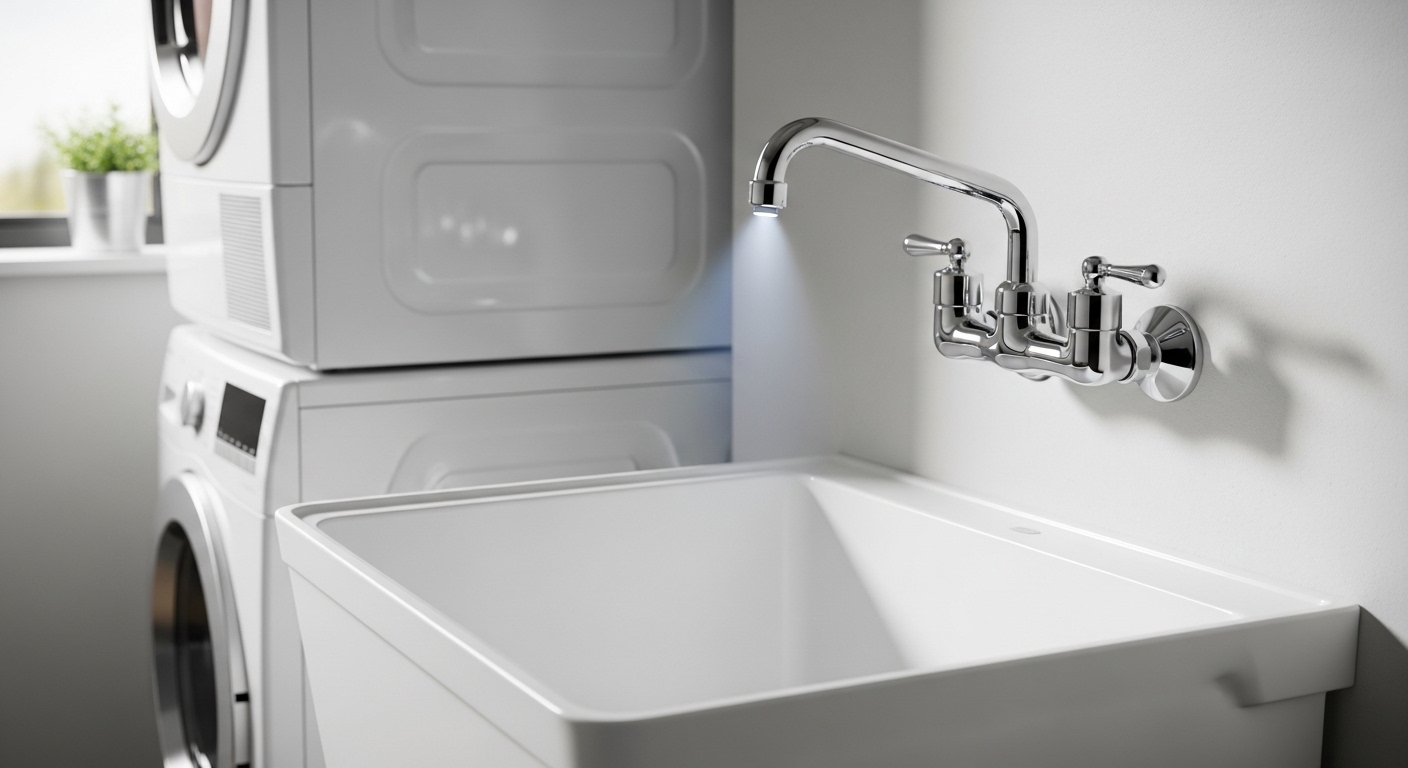
If you’ve been typing “laundry taps near me” into your phone at 9 p.m. because your utility-sink faucet finally cracked or your washing machine hookup is dripping, this guide is for you. A laundry tap (also called a laundry faucet, utility faucet, or laundry sink tap) is a heavy-duty valve made for the roughest water job in the house — filling mop buckets, rinsing paint rollers, hand-washing, and feeding a washing machine. Below, I’ll show you exactly where to buy one locally versus online, how to pick the right type and connection size, what a fair price looks like, and how to install it without flooding your basement.
Where’s the best place to buy laundry taps near me right now?
Your best local options are big-box home improvement stores, dedicated plumbing supply houses, and neighborhood hardware stores — each with a different trade-off. Big-box stores win on convenience and price; plumbing supply houses win on quality and expert advice; hardware stores win on speed for a simple replacement.
Here’s how I’d rank them depending on your situation:
- Home Depot / Lowe’s / Menards — Best for same-day pickup and the widest range of budget-to-mid faucets. You’ll find utility-sink faucets, laundry tub taps, and washing-machine bib valves in one aisle. Use the store app to confirm the exact model is “in stock at this store” before you drive over.
- Local plumbing supply house (e.g., Ferguson, Winsupply, or an independent) — Best if you want commercial-grade brass, a specific rough-in, or advice on an odd connection. They stock the parts contractors actually trust and can match a discontinued valve.
- Ace / True Value / neighborhood hardware — Best for a fast, no-frills replacement washer, a hose bibb, or a standard 4″ centerset laundry faucet when you just need it working tonight.
- Online (WOWOW and others) — Best selection of finishes, wall-mount styles, and warranties, usually with free shipping in a few days.
My honest take: if your old tap is a standard size and you just need water flowing again tonight, drive to the nearest big-box or hardware store. If you’re upgrading, renovating, or want a finish that actually matches your space, order online — you’ll get more choice and often a longer warranty than the shelf stock at a local store.
What type of laundry tap do I actually need?
For most laundry rooms you need one of three types: a wall-mounted utility faucet (mounts to the wall behind the sink), a deck-mounted laundry faucet (sits on the sink or countertop), or a washing-machine bib valve (a threaded shutoff that feeds the washer hoses). Which one you need depends entirely on how your current plumbing comes out of the wall.
Look at your existing setup first. If the water pipes come straight out of the wall above the sink, you want a wall-mount tap with the correct on-center spacing (usually 4″, 6″, or 8″). If your utility tub or sink has holes drilled in the back deck, you want a deck-mount faucet. If you’re only feeding a washing machine, you want a laundry box or a pair of bib valves — not a spout faucet at all.
| Type | Best for | Typical connection | Price range (US) |
|---|---|---|---|
| Wall-mount two-handle | Classic utility sinks, pipes coming out of the wall | 1/2″ NPT female, 4″ or 8″ center | $25–$70 |
| Deck-mount single-lever | Modern laundry sinks with a pre-drilled deck | 3/8″ supply lines, 4″ centerset | $35–$120 |
| Gooseneck / high-arc spout | Filling tall buckets and watering cans | 1/2″ NPT, swivel spout | $45–$140 |
| Washing-machine bib valves / box | Feeding a washer only, no sink | 1/2″ sweat or MIP × 3/4″ hose thread | $15–$45 |
One detail people miss: many laundry taps have a hose-thread (3/4″ GHT) spout tip so you can screw on a garden hose or washing-machine hose. If you plan to run a hose from the tap, confirm the spout is threaded before you buy — plenty of decorative utility faucets aren’t.
What size and connection do laundry taps use?
Most residential laundry taps connect to 1/2-inch pipe at the wall and finish with a 3/4-inch hose thread at the spout, but you should always measure before buying. The two numbers that matter are the supply connection (what screws onto your water lines) and the on-center spacing between the hot and cold inlets.
Grab a tape measure and check three things:
- On-center spacing — measure from the center of the hot inlet to the center of the cold inlet. Common laundry sizes are 4″, 6″, and 8″. Wall-mount utility faucets are frequently 8″ on-center.
- Supply connection — is it 1/2″ NPT (threaded pipe), 1/2″ sweat (soldered copper), or a 3/8″ compression line running up to the faucet? This decides whether you need an adapter.
- Spout tip — plain, aerated, or 3/4″ hose-threaded. If you want to attach a hose, you need the threaded tip.
If any of that feels unfamiliar, snap a photo of your under-sink connections and show it to the plumbing associate — that one picture saves more wrong purchases than anything else. And if you’re already planning the install, our guide on how to connect faucet hoses to shutoff valves walks through getting a leak-free seal at the wall.
How much should a good laundry tap cost in 2026?
Expect to pay $25–$70 for a solid everyday laundry tap, $70–$140 for a premium brass or high-arc model, and under $25 only for the most basic plastic-bodied valve. Price tracks two things: body material and valve type.
Here’s what your money actually buys:
- $15–$30 — plastic or thin zinc body, rubber-washer valve. Works, but expect drips within a couple of years and no finish to speak of. Fine for a garage or rental.
- $30–$70 — solid brass or stainless body, ceramic-disc cartridge. This is the sweet spot: durable, drip-resistant, and available in chrome, brushed nickel, and matte black. Buy here if you use the sink weekly.
- $70–$140 — heavy brass, ceramic cartridge, high-arc or commercial-style spout, longer warranty. Worth it if the laundry tap doubles as a slop sink you rely on daily.
The single biggest longevity factor is the valve. A ceramic-disc cartridge outlasts an old-style rubber-washer valve by years and is far less likely to drip — it’s the same technology in quality kitchen and bath faucets. If a cheap tap doesn’t say ceramic disc anywhere, assume it’s a washer valve. For a deeper look at which faucet bodies survive hard use, see our breakdown of which faucet materials last the longest.
Can I install a laundry tap myself, or do I need a plumber?
Yes — for a straightforward like-for-like swap, most homeowners can replace a laundry tap in under an hour with basic tools. You only need a plumber if you’re moving pipes, adding a new water line, or soldering copper you’re not comfortable with.
Here’s the basic swap on an existing wall-mount or deck-mount tap:
- Shut off the water at the laundry shutoff valves (or the main) and open the old tap to release pressure.
- Place a bucket and towel underneath, then disconnect the supply connections with a wrench.
- Unthread or unbolt the old faucet from the wall bracket or sink deck.
- Clean the threads, wrap them with fresh PTFE (plumber’s) tape — three to four wraps clockwise — and thread on the new tap hand-tight, then a quarter to half turn with a wrench.
- Turn the water back on slowly and check every joint for drips. Snug any joint that weeps; don’t overtighten.
Two pro tips. First, don’t overtighten a brass or plastic body — you’ll crack it before you stop a leak; a fresh wrap of tape fixes most weeps. Second, if you’re feeding a washing machine, replace the rubber washer hoses with braided stainless steel while you’re in there — burst laundry hoses are one of the most common causes of home water damage. If your utility sink drains slow after the swap, that’s a separate issue covered in our guide on why your faucet drains slowly and how to fix it.
What finish holds up best in a laundry room?
Chrome and stainless steel hold up best in a laundry room because they resist the splashes, detergent, and bleach that a utility space throws at a faucet. Matte black and brushed nickel look great and also perform well; the finishes to be cautious with are cheap painted or oil-rubbed coatings that can wear where you grip the handle.
A laundry room isn’t a showcase bathroom, so I’d prioritize durability over drama:
- Polished chrome — cheapest, toughest, wipes clean, hides water spots reasonably well. The default for good reason.
- Stainless / brushed nickel — slightly pricier, hides fingerprints and mineral spots better than chrome, great if your laundry room is on display.
- Matte black — on-trend and easy to clean, but shows dried-on hard-water spotting more than brushed finishes if your water is very hard.
Speaking of hard water: if your area has heavy mineral content, the tap aerator and spout will scale up over time no matter the finish. That’s a maintenance issue, not a buying mistake — our guide on removing hard water deposits from a faucet head keeps flow strong for years.
Should I buy a laundry tap in-store or online?
Buy in-store when you need it today and your setup is standard; buy online when you want more finishes, wall-mount options, or a longer warranty. Both are valid — it just depends on urgency versus selection.
Local pickup gets water flowing tonight and lets you eyeball the tap in person. Online gives you a much bigger catalog — high-arc spouts, wall-mount two-handle models, matte black and brushed finishes that local stores rarely stock — plus published warranty terms and real customer reviews. If you’re not in an emergency, online usually wins on both value and choice, with delivery in a few days.
Author’s note & why you can trust this guide
This guide was written by the WOWOW Faucet product team, drawing on years of designing and testing kitchen, bath, and utility faucets. WOWOW manufactures faucets built to meet cUPC and NSF/ANSI standards for safe drinking-water contact, uses lead-free brass and ceramic-disc cartridges rated for hundreds of thousands of open-close cycles, and backs its faucets with a limited lifetime warranty against leaks and finish defects. Every recommendation above reflects what we tell our own customers when they ask what to actually buy — not marketing copy. When we say “buy a ceramic-disc cartridge,” it’s because we cycle-test those valves in-house before they ship.
FAQ
Do all laundry taps fit a washing machine hose?
No. A washing-machine hose uses a 3/4″ garden-hose thread (GHT). Only laundry taps with a threaded spout tip or dedicated 3/4″ hose-thread outlets will accept it directly. A plain or aerated spout won’t — you’d need an adapter, and even then it’s not ideal for the pressure a washer draws.
What’s the difference between a laundry tap and a regular bathroom faucet?
A laundry (utility) tap is built heavier, usually has a taller or hose-threaded spout for filling buckets, and often mounts to the wall rather than a deck. Bathroom faucets prioritize looks and a lower, aerated flow. You can use a bathroom faucet on a laundry sink in a pinch, but it won’t handle buckets or hoses as well.
Can I put a laundry tap outside as a hose bibb?
Not usually. Standard laundry taps aren’t freeze-rated and aren’t designed for outdoor pressure and weather. Use a proper frost-free hose bibb outdoors instead. If your existing outdoor faucet is misbehaving, our article on why an outdoor faucet sprays when turned off explains the fix.
How long does a good laundry tap last?
A solid-brass laundry tap with a ceramic-disc cartridge typically lasts 10–15 years or more with light maintenance. Cheap plastic-bodied taps with rubber-washer valves often start dripping within 2–3 years. The valve type matters far more than the price tag.
Do I need a plumber to replace my laundry tap?
Not for a like-for-like swap on existing shutoff valves — that’s a 30-to-60-minute DIY job with a wrench and plumber’s tape. Call a plumber only if you’re relocating pipes, adding a new supply line, or soldering copper you’re not confident with.
Are matte black laundry taps a bad idea for hard water?
They’re fine, just higher-maintenance. Matte black shows dried mineral spotting more than brushed nickel or chrome. If you love the look, keep a spray bottle of diluted vinegar handy and wipe the spout weekly — the finish itself holds up well against detergent and splashes.
您好!Sign In