 Faucet Online
What Is a Faucet Supply Line Plug, and When Do You Actually Need One?
View Count:121 CategoryProduct
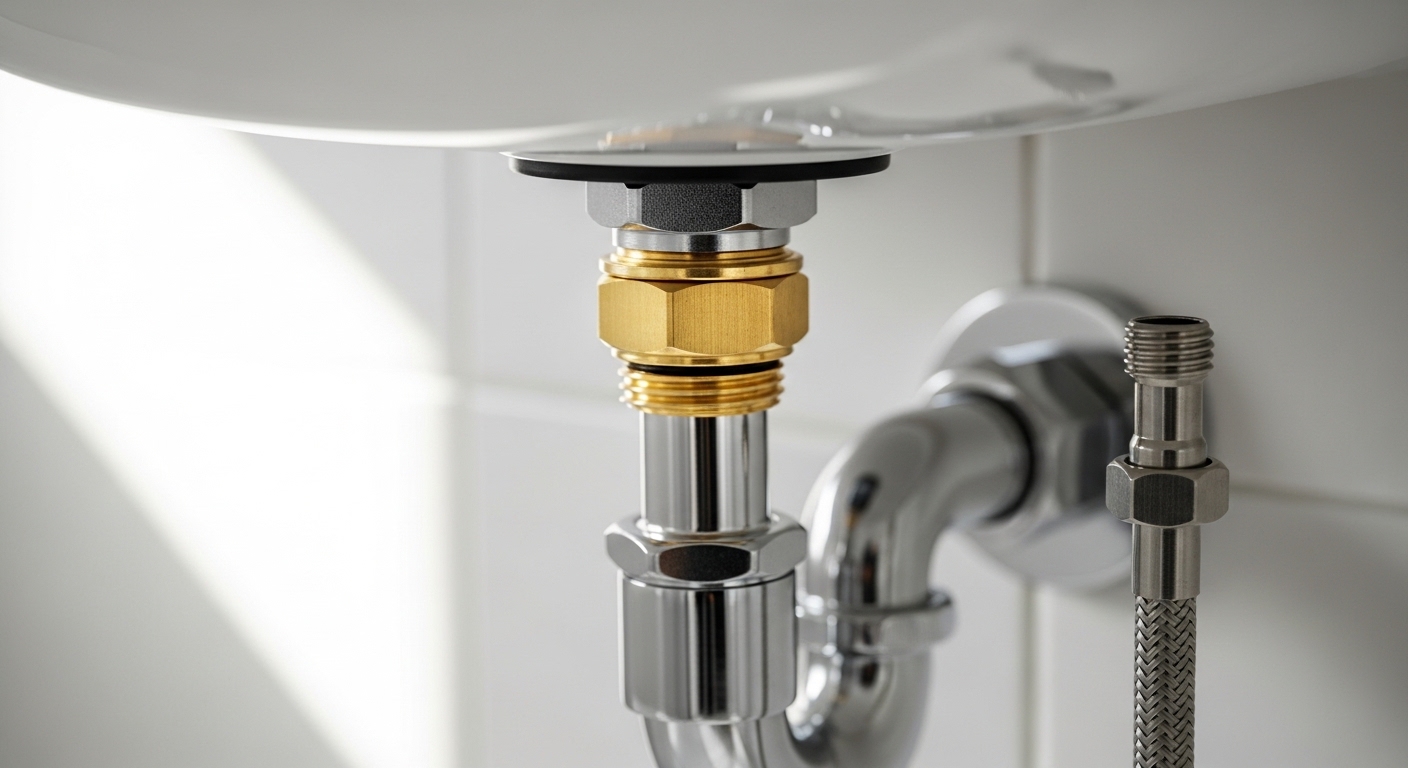
If you’ve ever pulled a faucet off the sink and stared at a live water line dripping onto your cabinet floor, you already understand why a faucet supply line plug exists. It’s one of those tiny plumbing parts nobody thinks about until they’re standing in a puddle. A good plug caps the open end of your supply line or shutoff valve so you can walk away, keep the water on to the rest of the house, and finish the job on your own schedule. This guide breaks down exactly what a supply line plug is, the sizes and materials that matter, how to pick the right one, and how to install it correctly so it never seeps.
What does a faucet supply line plug actually do?
A supply line plug seals an open water connection so pressurized water can’t escape. Think of it as a temporary or permanent “dead end” for a pipe. Instead of shutting off the main water valve to the whole house — which kills every faucet, toilet, and shower — you cap the single line you’re working on and keep everything else running.
There are three common jobs a plug handles:
- Capping a live shutoff valve after you’ve disconnected a faucet, so you can leave the water main on.
- Blocking off an unused stub-out — for example, when you remove a bidet, a second sink, or a dishwasher line and never plan to reconnect it.
- Pressure-testing a line to confirm there are no leaks before you finish a remodel or close up a wall.
People confuse a “plug” with a “cap,” and the distinction is worth two seconds: a plug has male (external) threads and screws into a female fitting, while a cap has female (internal) threads and screws over a male fitting. When someone says “faucet supply line plug,” they usually mean whichever one seals their specific connection — so the real question is always the thread size and gender, not the word.
What size faucet supply line plug do I need?
For most U.S. residential faucets, you need a plug that matches a 3/8″ compression or 1/2″ FIP connection — those two cover the vast majority of kitchen and bathroom sinks. The only reliable way to know is to look at the fitting you’re sealing, because “supply line” covers several standards.
Here’s the honest truth: sizes are stamped small and worn parts are hard to read, so measure before you drive to the store. Wrap a piece of tape around the threads, count them, or bring the old part in for a side-by-side match. If you’re already learning the ropes of connecting lines, our guide on how to connect faucet hoses to shutoff valves walks through the same fittings from the other direction and makes the thread types click.
| Connection type | Where you’ll see it | Plug/cap you need |
|---|---|---|
| 3/8″ compression | Angle stop shutoff valve outlet under most sinks | 3/8″ compression cap with a ferrule & nut, OR a 3/8″ plug |
| 1/2″ FIP (female iron pipe) | Threaded pipe stub-out in the wall | 1/2″ MIP brass plug |
| 1/2″ MIP (male iron pipe) | Male-threaded valve or nipple | 1/2″ FIP brass cap |
| 7/16″ & 1/2″ faucet shank | Under-faucet inlet where the supply hose attaches | Faucet-shank plug or blank hose with a sealed end |
| 15/16″-27 (aerator thread) | Faucet spout tip — not a supply line | Not applicable; different part entirely |
The last row is a common mix-up: the aerator at the tip of your spout uses its own thread standard and has nothing to do with sealing a supply line. If your real issue is spray or clogging at the spout, that’s a separate fix covered in how to unclog a kitchen faucet aerator.
Brass or plastic — which supply line plug lasts longer?
For anything that stays under pressure long-term, choose solid brass. Plastic plugs are fine for short-term jobs like a weekend faucet swap, but for a permanent cap on a valve you never plan to touch again, brass wins on durability, temperature tolerance, and resistance to cracking.
Here’s how the two compare in the real world:
- Brass: Handles both hot and cold lines, won’t get brittle with age, and seals reliably against a metal ferrule. It’s the material we use for our own valve and connector components because it survives years of pressure cycling. The downside is cost — a few dollars more per piece.
- Plastic (usually polymer or nylon): Cheap, corrosion-proof, and perfect for a temporary cap while you run to the store for parts. But heat and long-term pressure can make it deform or crack, and over-tightening splits it fast. Use it as a stopgap, not a forever fix.
One more note on metal quality: not all “brass” is equal. Look for lead-free brass that meets the low-lead standard for potable water (in the U.S., that’s the requirement behind NSF/ANSI 372 certification). A no-name plug from a mystery bin might contain enough lead to matter on a drinking-water line. This is the same reason material choice matters for the faucet itself — we dig into that in faucet materials: which lasts the longest.
How do you install a faucet supply line plug so it doesn’t leak?
You install a supply line plug by shutting off the local valve, relieving pressure, wrapping the male threads with plumber’s tape (for tapered pipe threads), and hand-tightening plus a quarter-to-half turn with a wrench. The whole job takes about five minutes if you have the right size on hand.
Step by step:
- Shut off the water. Close the angle stop under the sink, or the main if there’s no local valve. Turn the faucet on to confirm the water is actually off and to relieve pressure.
- Disconnect the supply line. Unthread the hose from the valve or faucet inlet. Keep a towel and a small bowl underneath — there’s always a little water left in the line. If you’re mid-removal, our step-by-step on how to remove a faucet from under the sink covers the full teardown.
- Prep the threads. For tapered pipe threads (NPT/FIP/MIP), wrap 2–3 turns of PTFE plumber’s tape clockwise around the male threads. For a compression fitting, you don’t tape — the ferrule does the sealing, so make sure the ferrule and nut are seated properly.
- Thread the plug on by hand until it’s snug. Cross-threading is the #1 cause of leaks, so start it by hand and make sure it turns freely.
- Snug it with a wrench. Give it a quarter to half turn past hand-tight. Don’t gorilla it — over-tightening cracks plastic and can distort brass ferrules.
- Slowly reopen the valve and inspect. Watch the joint for 60 seconds. A single bead of water means back off, re-tape, and retry. Dry means you’re done.
If you notice the joint weeping days later, the culprit is almost always too little tape, a nicked ferrule, or a size that’s “close but not exact.” Don’t just crank harder — take it apart and fix the actual cause.
Can I use a supply line plug to shut off water temporarily instead of the main?
Yes — that’s one of its most useful jobs. Capping a single line with a plug lets you keep water running to the rest of the house while you work on one fixture, which beats shutting the main and losing every tap for the afternoon. It’s especially handy when a shutoff valve is old, seized, or won’t fully close.
That said, a plug is a seal, not a valve — you can’t turn it on and off. So the smart move is: if a shutoff valve under your sink is failing and you find yourself capping the line “temporarily” for weeks, replace the valve. A plug buys you time; it isn’t a substitute for a working stop. And if the reason you’re capping a line is an outdoor faucet or valve that won’t behave, the diagnostics in what does it mean when your outdoor faucet sprays when turned off may point to the real fix.
What should I look for when buying a faucet supply line plug?
Buy the exact thread size and gender for your fitting, in lead-free brass, from a brand that publishes the specs. That’s 90% of the decision. The other 10% is matching the finish if it’ll be visible and confirming it’s rated for potable water and your line’s pressure.
A quick buyer’s checklist:
- Thread size & type: 3/8″ compression and 1/2″ FIP/MIP cover most homes — confirm yours first.
- Material: Lead-free brass for permanent, potable-water use; plastic only for temporary jobs.
- Certification: Look for NSF/ANSI 61 & 372 compliance on anything touching drinking water.
- Pressure rating: Standard residential lines run 40–80 psi; any quality brass plug handles this easily, but check if you have a high-pressure system.
- Included ferrule & nut: For compression caps, make sure the kit includes a fresh ferrule and nut — reusing a deformed old ferrule is a common leak source.
- Warranty & brand transparency: A brand that stands behind its plumbing parts publishes dimensions and offers a warranty. Vague “universal” parts with no specs are a gamble.
Where does a supply line plug fit in a bigger repair or upgrade?
A plug is rarely the whole project — it’s usually one step inside a faucet swap, a valve replacement, or a remodel. Knowing that helps you buy the right one the first time. If you’re capping a line because you’re pulling an old faucet to install a new one, you’ll want the plug on hand before you disconnect anything, so the line stays sealed while your new fixture ships or while you clean up the sink deck. Our full walkthrough on how to change a faucet in a kitchen sink shows exactly where that capping step lands in the sequence.
For a permanent cap on a line you’re retiring — say you removed a second basin or a filtered-water tap — brass with plumber’s tape on a pipe thread is the right, forget-about-it solution. For a short pause mid-project, a compression cap on the existing valve is faster and reuses hardware you already have.
Author’s note & why trust this guide
This guide was written by the product and plumbing team at WOWOW Faucet, a manufacturer and direct seller of kitchen and bathroom faucets, shower systems, and the valves and connectors that go with them. We design and pressure-test our brass fittings against U.S. residential water standards, and our components are built to lead-free, potable-water requirements (NSF/ANSI 61 & 372). Our fixtures and hardware are backed by a manufacturer warranty, and every recommendation above reflects what we tell our own customers when they call support mid-install. We’ve capped, tested, and replaced enough supply lines to know that the two things that ruin the job are the wrong thread size and an over-tightened fitting — get those right and a plug is genuinely a five-minute task.
FAQ
Is a faucet supply line plug the same as a cap?
Not exactly. A plug has male (external) threads and screws into a female fitting; a cap has female (internal) threads and screws over a male fitting. In everyday shopping, people use “supply line plug” for whichever one seals their connection — so match the thread size and gender of your specific fitting rather than the name on the package.
What size plug fits a standard under-sink shutoff valve?
Most residential angle-stop shutoff valves have a 3/8″ compression outlet, so you’ll want a 3/8″ compression cap with a fresh ferrule and nut. Wall stub-outs are more often 1/2″ FIP, which needs a 1/2″ MIP brass plug. Always confirm by looking at your actual valve before buying.
Do I need plumber’s tape on a supply line plug?
Yes for tapered pipe threads (NPT/FIP/MIP) — wrap 2–3 clockwise turns of PTFE tape on the male threads. No for compression fittings — those seal with a metal ferrule, not tape, so adding tape there won’t help and can actually interfere with the seal.
Can a plastic supply line plug handle hot water?
Only for short-term use. Quality plastic plugs tolerate warm water briefly, but sustained heat and pressure can make them deform or crack over time. For a hot line or any permanent cap, use lead-free brass instead.
Will capping one supply line affect the rest of my house’s water?
No. That’s the whole advantage — capping a single line lets you keep the water main on and every other fixture working. Just make sure the local shutoff valve for that line is fully closed before you remove the hose and install the plug.
How tight should I make a brass supply line plug?
Hand-tighten it fully, then add just a quarter to half turn with a wrench. Over-tightening can distort brass ferrules or crack the fitting and won’t cure a leak that’s really caused by the wrong size or missing tape. If it weeps, take it apart and fix the cause rather than cranking harder.
您好!Sign In