 WOWOW Faucets
How Do You Do a 304 Stainless Steel Faucet Installation the Right Way?
View Count:207 CategoryProduct
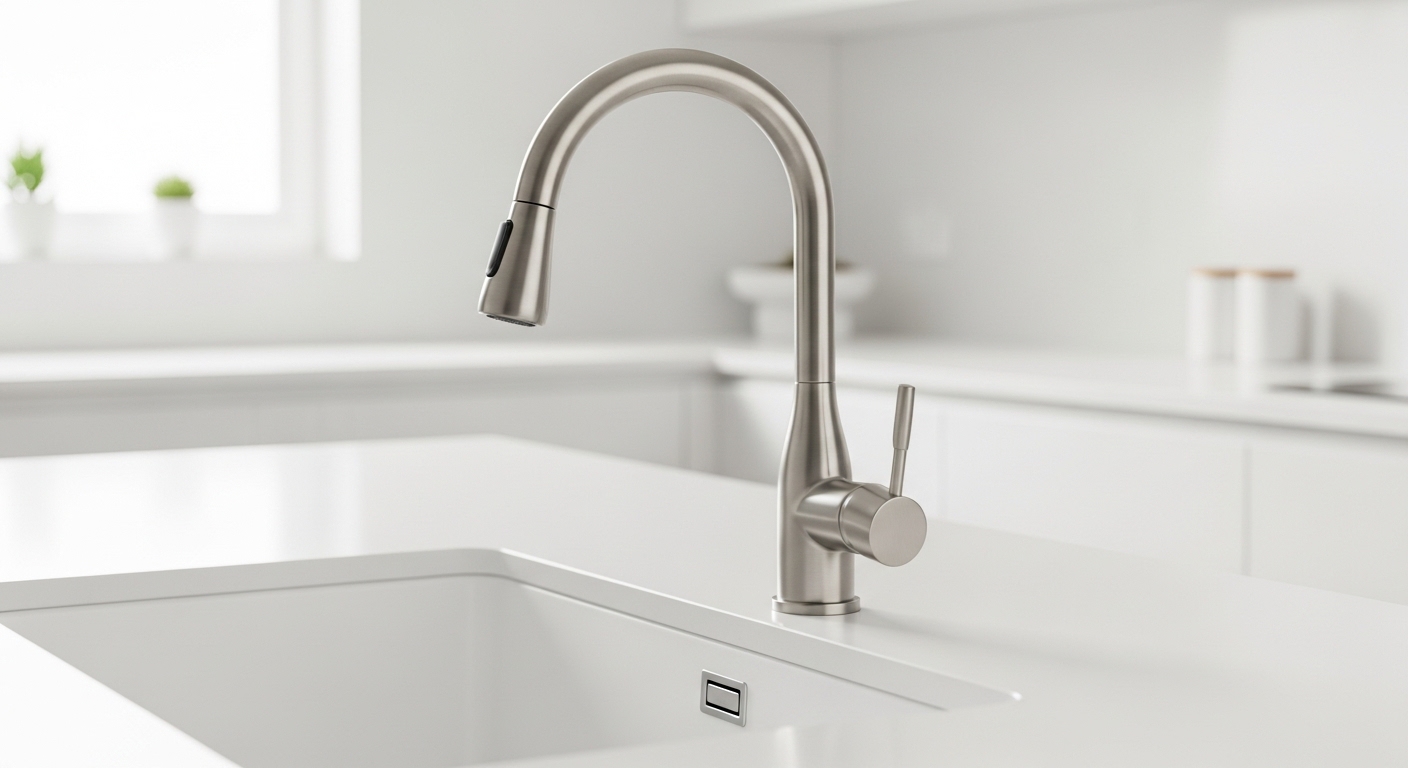
If you’re planning a 304 stainless steel faucet installation, the good news is that it’s one of the most DIY-friendly fixture swaps in the house — and the metal itself is forgiving, durable, and lead-free. Below, we’ll walk through exactly how to install one, what tools you need, how 304 stacks up against other faucet materials, and the small mistakes that turn a 45-minute job into a leaky weekend headache. This is written for real kitchens and bathrooms, not a lab — so we’ll talk about the cramped under-sink reality, hard water, and what to do when the old shutoff valve won’t cooperate.
What is a 304 stainless steel faucet, and why does the “304” matter?
A 304 stainless steel faucet is built from food-grade 304-series stainless — the same alloy used in commercial kitchen sinks and cookware — which means it won’t rust, won’t leach lead, and won’t flake its finish the way cheaper zinc-alloy or chrome-plated faucets eventually do. The “304” is the grade designation: roughly 18% chromium and 8% nickel, which forms a self-healing passive layer that resists corrosion even with constant water contact.
Here’s why that’s a big deal for installation and longevity. Cheaper faucets are often made of zinc alloy or brass with a thin plated coating. Once that plating wears or chips, the base metal corrodes. A solid 304 body has no plating to fail — the corrosion resistance goes all the way through. For anyone on well water, hard water, or coastal humidity, that’s the difference between a faucet that looks new in ten years and one that pits and discolors in two. If you want a deeper breakdown of how materials hold up over time, our guide on which faucet materials last the longest goes further into the metallurgy.
Is 304 stainless steel safe for drinking water?
Yes — 304 stainless is inert and lead-free, which is why it meets the low-lead requirements behind certifications like NSF/ANSI 61 and the U.S. “lead-free” plumbing standard (no more than 0.25% weighted average lead in wetted surfaces). Unlike some older brass faucets that contained measurable lead, a quality 304 faucet doesn’t add metallic taste or contaminants to your water. If certification matters to you, check the spec sheet before buying — and our walkthrough on how to check if a faucet is eco-certified shows exactly what marks to look for.
What tools and parts do I need before I start the installation?
You need surprisingly little: an adjustable wrench, a basin wrench, plumber’s tape (PTFE thread tape), a bucket and towel, and a flashlight. Most 304 stainless faucets ship with the mounting hardware, gaskets, and sometimes the supply lines included, so you rarely need a trip to the hardware store mid-job.
Here’s the full checklist so you’re not lying under the sink discovering you’re missing something:
- Adjustable wrench — for the supply line connections.
- Basin wrench — the long-handled tool that reaches the cramped mounting nut behind the sink. This is the one tool people skip and regret.
- PTFE plumber’s tape — wrap male threads 3–4 times clockwise.
- Bucket + towel — there’s always residual water in the lines.
- New braided stainless supply lines — replace old ones even if they “look fine”; they’re cheap insurance against a flood.
- Flashlight or headlamp — under-sink lighting is always terrible.
- Silicone or plumber’s putty — only if your faucet base doesn’t include a rubber gasket.
If your existing shutoff valves are corroded or you’re connecting fresh lines, our step-by-step on how to connect faucet hoses to shutoff valves is worth a quick read before you start cranking.
How do you install a 304 stainless steel faucet step by step?
Install a 304 stainless steel faucet in seven steps: shut off the water, clear the old faucet, prep the deck, feed the new faucet through, secure the mounting nut, connect the supply lines, then flush and leak-test. Here’s the full sequence with the details that actually matter.
- Shut off the water and relieve pressure. Turn both hot and cold shutoff valves clockwise under the sink. Open the old faucet to drain residual water and release pressure. No under-sink valves? Shut off the main and plan accordingly.
- Disconnect and remove the old faucet. Use the basin wrench to loosen the supply-line nuts, then the mounting nuts. Old faucets are often crusted in place — our guide on how to remove a faucet from under the sink covers the stubborn cases. Lift the old unit out and scrape off old putty or gunk from the deck.
- Clean and inspect the mounting surface. Wipe the sink deck or countertop clean and dry. A clean surface lets the gasket seal flat — debris here is the #1 cause of base wobble and slow drips later.
- Position the new faucet. Feed the supply lines and faucet shank down through the mounting hole(s). Seat the rubber or silicone gasket between the faucet base and the deck. If yours uses plumber’s putty instead of a gasket, roll a thin rope and press it under the base.
- Secure the mounting nut. From below, thread the mounting washer and nut onto the shank and tighten with the basin wrench until snug. Keep the faucet aligned straight while you tighten — check from above. Don’t overtighten; 304 stainless is strong, but crushing the gasket causes leaks.
- Connect the supply lines. Attach the hot line to the hot (left) valve and cold to cold (right). Wrap PTFE tape on the valve threads, then hand-tighten and add roughly a quarter to half turn with a wrench. Snug, not gorilla-tight — over-torquing splits washers.
- Flush and leak-test. Remove the aerator, turn the shutoff valves back on slowly, and run hot and cold for 30–60 seconds to clear debris. Then check every joint with a dry finger or paper towel. Reinstall the aerator.
That’s the whole job. For a pull-down or pull-out spray model, there’s one extra step: connect the spray hose to the quick-connect fitting and clip on the counterweight — the install is otherwise identical.
How long does a 304 stainless faucet installation take?
Plan on 45–90 minutes for a straightforward swap where the existing shutoff valves work and the sink configuration matches. First-timers should budget closer to 90 minutes; experienced DIYers can do it in 30. The time blows up only when something old fights back — a seized shutoff valve, a rusted mounting nut, or a supply line that won’t break free. If your shutoff valves are old and crusty, factor in extra time (or a plumber) for those.
How is a 304 stainless faucet install different from brass or chrome-plated ones?
Mechanically, the installation steps are identical — but 304 stainless faucets tend to be lighter, won’t gall or seize on the threads, and don’t chip if you nick the finish with a wrench. That last point matters during install: a wrench slip on chrome-plated zinc leaves a permanent silver scar; on solid brushed 304 stainless, a light scuff buffs right out. Here’s how the common faucet materials compare for the things that affect installation and lifespan:
| Material | Corrosion resistance | Weight | Lead-free? | Finish durability | Typical lifespan |
|---|---|---|---|---|---|
| 304 stainless steel | Excellent (rust-proof) | Light–medium | Yes | Solid through-body, won’t flake | 15+ years |
| Solid brass | Very good | Heavy | Usually (check spec) | Good, but plating can wear | 15–20 years |
| Chrome-plated zinc | Poor–fair | Light | Often no | Plating chips/peels over time | 3–7 years |
| Zinc alloy | Poor | Light | Often no | Corrodes once coating fails | 2–5 years |
The takeaway: 304 stainless gives you brass-level durability and corrosion resistance with less weight and a guaranteed lead-free body, usually at a friendlier price. If you’re weighing whether premium materials are worth the spend at all, our comparison of luxury vs budget faucets breaks down where the money actually goes.
What are the most common 304 stainless faucet installation mistakes?
The most common mistakes are overtightening the connections, reusing old supply lines, skipping the leak test, and forgetting to flush debris before reinstalling the aerator. Every one of these is easy to avoid once you know to watch for it.
- Overtightening the mounting nut or supply lines. 304 stainless is strong, but the rubber washers and gaskets aren’t. Crushing them is what causes the slow drip three days later. Snug plus a slight turn is the rule.
- Reusing old, brittle supply lines. They’re a few dollars. A failed line under pressure floods a cabinet. Replace them.
- Cross-threading the supply connections. Start every nut by hand and make sure it spins on smoothly before you reach for the wrench.
- Skipping the flush. Debris loosened during install will clog your new aerator on day one. Always run the lines with the aerator off first. If yours does clog, here’s how to unclog a kitchen faucet aerator.
- Not checking water pressure first. A great faucet on bad pressure is a disappointing faucet. It’s worth learning how to check faucet pressure before buying so the new install actually performs.
Do I need plumber’s putty or silicone for a 304 stainless faucet?
Usually no — most modern 304 stainless faucets include a rubber or silicone gasket that seals the base to the deck, so no putty is needed. Use plumber’s putty or clear silicone only if your faucet didn’t come with a gasket, or if you want extra insurance against water seeping under the base on a flat deck-mount. If you do use silicone, wipe the excess immediately; cured silicone on brushed stainless is a pain to remove cleanly.
How do you maintain a 304 stainless faucet after installation?
Maintenance is minimal: wipe it dry after heavy use to prevent water spots, clean with mild soap and a soft cloth, and avoid abrasive pads or bleach-based cleaners that can dull the finish. Because 304 stainless doesn’t have a plated coating to protect, you never have to baby it the way you would chrome — but the brushed or satin grain still looks best when you wipe with the grain, not against it.
For hard-water households, a monthly aerator clean keeps flow strong, and an occasional vinegar wipe dissolves mineral spotting without harming the steel. Avoid steel wool — it can leave tiny iron particles on the surface that rust and make the stainless look like it’s corroding when it’s actually just contaminated. A soft microfiber cloth is all you need.
Author note & brand credibility
Written by the WOWOW Faucet product team. At wowowfaucet.net, faucets aren’t a side business — they’re the whole business. Our 304 stainless steel faucets are built from solid, lead-free 304-grade stainless, pressure-tested before shipping, and backed by a manufacturer warranty against finish and functional defects. We design for North American plumbing standards (standard 1/2″ connections, standard deck-mount hole sizes) and provide the mounting hardware and gaskets in the box so the install goes the way this guide describes. Every model is built to meet low-lead “lead-free” plumbing requirements, and our finishes are tested for adhesion and corrosion resistance so what you install today still looks right years from now.
FAQ
Can I install a 304 stainless steel faucet myself, or do I need a plumber?
Most people can install a 304 stainless faucet themselves in under 90 minutes with an adjustable wrench and a basin wrench — no plumber required for a standard swap. You only need a pro if your shutoff valves are seized or missing, your supply lines need rerouting, or you’re cutting new holes in a countertop.
Will a 304 stainless faucet fit my existing sink?
It will fit if your hole configuration matches — single-hole faucets need one hole, while centerset and widespread models need three. Measure your existing setup and check the faucet’s spec sheet before buying. Most 304 stainless deck-mount faucets fit the standard 1.25″–1.5″ mounting hole and standard 8″ or 4″ hole spacing.
Does a 304 stainless steel faucet rust?
No — solid 304 stainless is highly rust-resistant thanks to its chromium content, which forms a self-healing protective layer. The only time you’ll see rust-like spots is surface contamination from steel wool or iron-rich water sitting on it, and that wipes off. The faucet body itself doesn’t corrode.
What size supply lines do I need for a 304 stainless faucet?
Most residential 304 stainless faucets use standard 3/8″ compression connections at the shutoff valve and connect to 1/2″ faucet shanks, so braided stainless supply lines labeled “3/8″ comp x 1/2″ FIP” (or with the faucet-specific connector) are typical. Always confirm against your valve and faucet threads, and buy lines a few inches longer than you think you need.
How do I know if my new faucet is leaking after installation?
Run both hot and cold at full flow, then dry every connection with a paper towel and watch for any re-wetting over a few minutes — also open the cabinet and feel each joint by hand. A slow leak usually shows up at the supply-line nuts or the base gasket within the first day, so check again after 24 hours. If a connection weeps, snug it a touch more before assuming a part is faulty.
您好!Sign In