 Faucet Online
What Does It Mean When Your Outdoor Faucet Sprays When Turned Off?
View Count:155 CategoryProduct
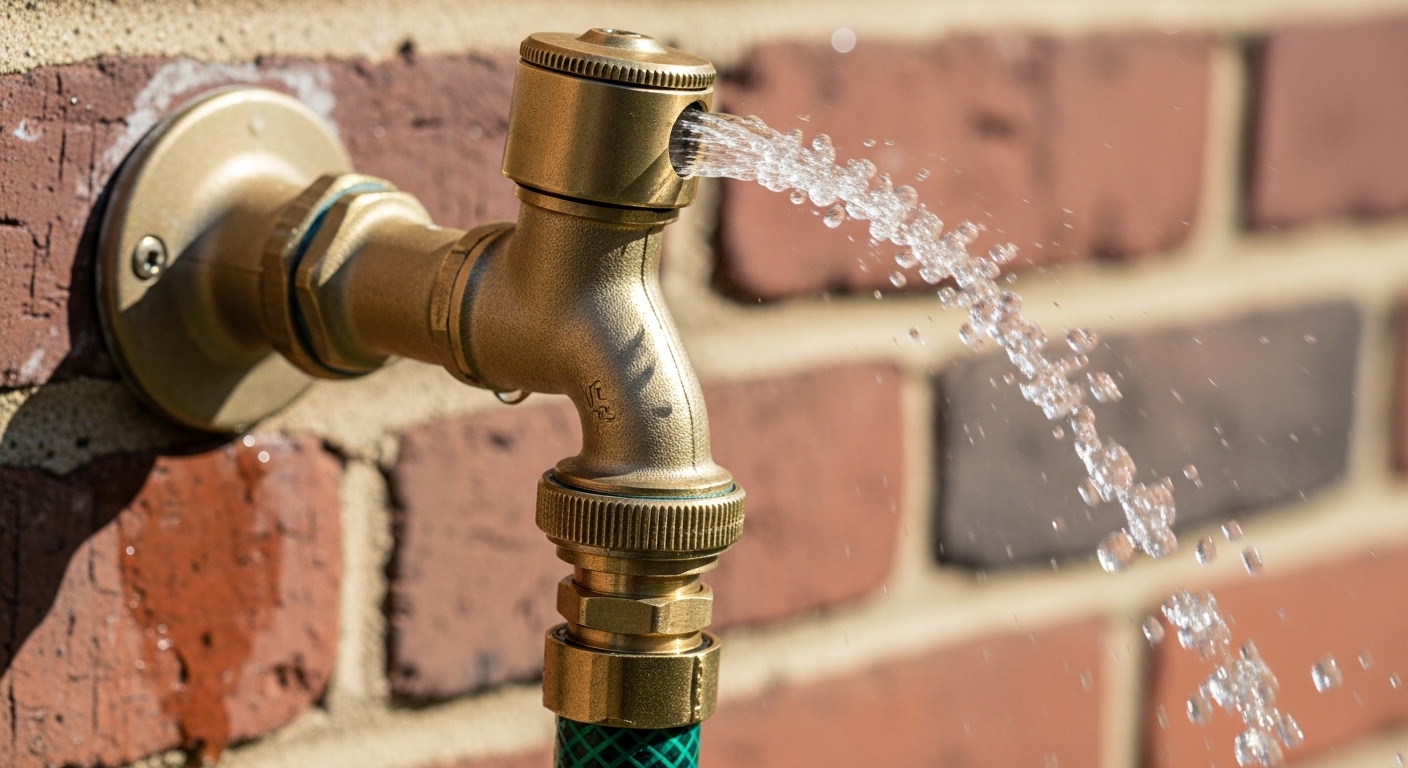
When an outdoor faucet sprays when turned off, it’s telling you that one of the internal seals can no longer hold back the water pressure sitting behind the valve. The good news: this is one of the most common and most fixable outdoor plumbing problems there is. In the vast majority of cases you’re not looking at a burst pipe or a frozen split — you’re looking at a $3 rubber washer or a $15 backflow preventer that has simply worn out. Below, I’ll walk you through exactly where the spray is coming from, how to diagnose it in five minutes, and what part to buy to stop it for good.
I’ve replaced hundreds of hose bibb (that’s the technical name for an outdoor spigot) components over the years, and I can tell you the location of the spray tells you almost everything. Spray from the very top means the vacuum breaker. Spray from around the handle when the water is running means the packing nut. A faucet that won’t fully shut off and dribbles or sprays from the spout means the washer or seat. Let’s break each one down.
Why Does My Outdoor Faucet Spray From the Top When I Turn It On or Off?
Spray coming from the small dome or cap on top of the spigot means your vacuum breaker (also called an anti-siphon device or backflow preventer) has failed. This is the single most common reason a newer outdoor faucet sprays — and the easiest to fix.
Modern frost-free and anti-siphon hose bibbs have a built-in vacuum breaker required by plumbing code. Its job is to stop dirty hose water from being siphoned back into your drinking supply. Inside that cap is a small rubber check valve and a spring. Over a few seasons, the rubber hardens, cracks, or gets stuck open — and instead of sealing, it lets pressurized water shoot out the top, especially right when you open or close the valve.
- The fix: Most vacuum breakers are replaceable on their own. Pop off the plastic cap (it usually pries off or unscrews), and you’ll see the breaker assembly. Unscrew it with a wrench or remove the retaining clip, take it to the hardware store to match it, and screw in the new one. Cost: $6–$15.
- Quick test: If the spray only happens when water flows and stops the instant you shut the valve fully, it’s the breaker — not the main seal.
If your faucet is the older, non-anti-siphon kind with no cap on top, you can buy a screw-on hose-thread vacuum breaker for a couple of dollars — but if the spray is from the top of an integrated unit, replace the cartridge-style breaker.
Why Does Water Spray From Around the Handle Instead of the Spout?
If water sprays or weeps from around the handle or stem when the faucet is on — and sometimes lingers when you turn it off — your packing nut and packing washer have loosened or worn out. This seal is what keeps water from escaping up the stem past the handle.
This is a two-minute fix before you even reach for a new part. Behind the handle is a hex-shaped nut called the packing nut. Often it has simply backed off slightly with use.
- Turn the faucet on about halfway so you can see where the leak originates.
- With an adjustable wrench, snug the packing nut clockwise about an eighth to a quarter turn. Don’t crank it — just firm it up.
- If the spray stops, you’re done. If it keeps leaking, the packing washer or O-ring underneath is shot.
To replace it: shut off the water supply, unscrew the packing nut fully, pull the stem, and replace the rubber packing washer (or wrap a few turns of graphite/Teflon packing string around the stem). Reassemble and you’re back in business. This is closely related to the diagnostics in our guide on what to do when a faucet won’t stay on — the same stem hardware is usually involved.
Why Does My Outdoor Faucet Still Dribble or Spray From the Spout After I Shut It Off?
A spigot that keeps spraying or dripping from the nozzle after you’ve fully closed the handle has a worn rubber washer or a damaged valve seat inside. The washer is supposed to press flat against the seat to make a watertight seal; once it’s chewed up, water sneaks past under pressure.
This is the classic “I turned it all the way off and it still leaks” complaint. Here’s how to fix it:
- Shut off the supply. Find the indoor shutoff valve feeding that outdoor line (often in the basement, crawlspace, or utility room) and close it. Open the outdoor faucet to drain residual pressure.
- Remove the stem. Loosen the packing nut and back the entire stem assembly out by turning it counterclockwise.
- Inspect the washer at the bottom of the stem. If it’s cracked, flattened, or grooved, that’s your problem. Remove the brass screw holding it and swap in an identical washer.
- Check the seat. Run a finger inside the valve body. If the brass seat feels pitted or rough, the new washer won’t seal either. Use a seat-grinding tool to smooth it, or replace the seat if it’s removable.
- Reassemble, restore water, and test.
If the stem itself is corroded or the threads are stripped, replacing the whole spigot is often easier than chasing parts. Our walkthrough on freeing a stuck faucet cartridge or stem has lubrication and removal tricks that apply directly to seized outdoor valves.
Could a Frozen or Cracked Pipe Be Causing the Spray?
Yes — and this is the one scenario you don’t want to ignore. If your outdoor faucet sprays from the wall area, the connection point, or behind the spigot (rather than from the faucet itself), and it started after a hard freeze, you may have a cracked pipe or a split frost-free stem.
Frost-free hose bibbs have a long stem that shuts the water off deep inside the heated wall. If a hose was left attached over winter, water can be trapped in the barrel, freeze, expand, and crack the tube. The leak then only shows up when you turn the faucet on — sometimes spraying inside the wall, sometimes out the front.
Signs you’re dealing with freeze damage rather than a worn washer:
- Water appears inside the wall, ceiling below, or floods the connection only when the valve is open.
- The spray started right after winter or a cold snap.
- A garden hose was left connected through freezing temperatures.
If you suspect a split inside the wall, shut off the supply and replace the frost-free spigot — these unscrew from the inside fitting. When in doubt, this is the moment to call a plumber, because water inside a wall cavity causes rot and mold fast.
Which Part Is Most Likely the Problem? A Quick Comparison
Here’s a side-by-side to match your symptom to the likely cause, the fix, and roughly what it costs. Use the location of the spray as your primary clue.
| Symptom / Spray Location | Most Likely Cause | Typical Fix | Part Cost | DIY Difficulty |
|---|---|---|---|---|
| Spray from the cap on top | Failed vacuum breaker / anti-siphon valve | Replace breaker cartridge | $6–$15 | Easy (10 min) |
| Weeping/spray around the handle | Loose packing nut or worn packing washer | Tighten nut or replace packing | $0–$5 | Easy (5–15 min) |
| Dribble/spray from spout when off | Worn rubber washer or pitted seat | Replace washer; grind/replace seat | $3–$10 | Moderate (30 min) |
| Spray behind the spigot/inside wall | Frozen, cracked frost-free pipe | Replace whole hose bibb | $15–$40 | Moderate–Hard |
| Spray at hose connection only | Worn hose washer or stripped threads | Replace rubber hose washer | $1–$3 | Very easy (2 min) |
What Tools and Parts Do I Need to Fix This Myself?
For nearly every outdoor faucet spray repair, you need only a handful of inexpensive tools and parts. Grab these before you start so you’re not making a second hardware-store run:
- Adjustable wrench or a set of slip-joint pliers
- Flathead and Phillips screwdrivers
- Assorted faucet washer kit (bibb washers) and O-rings
- Replacement vacuum breaker matched to your model
- Plumber’s grease and Teflon/graphite packing string
- Plumber’s tape (PTFE) for re-sealing threaded connections
One pro tip that saves frustration: bring the old part to the store to match it exactly. Outdoor faucet stems and breakers vary by brand, and a near-miss washer will leak again in weeks. If you’re reconnecting supply lines as part of a full spigot swap, our guide on connecting faucet hoses to shutoff valves covers leak-free thread sealing step by step. And if the spigot body itself is heavily corroded, it may simply be time to replace it — here’s how to tell if your faucet needs replacing rather than repairing.
How Do I Prevent My Outdoor Faucet From Spraying Again?
Prevention comes down to two habits: protect against freezing and use quality hardware. Most repeat failures trace back to a hose left attached over winter or a cheap spigot with thin internal seals.
- Disconnect hoses every fall. A connected hose traps water in the barrel — the number one cause of freeze cracks.
- Install an insulated faucet cover before the first freeze; they cost a few dollars and prevent split stems.
- Shut off the indoor supply valve to outdoor lines in cold climates and drain the spigot.
- Choose a solid brass, anti-siphon frost-free bibb over a budget die-cast model. Brass internals and a serviceable cartridge last far longer.
Material quality genuinely matters here — a forged brass valve body resists corrosion and seat pitting in a way that cheaper alloys can’t. If you’re curious which metals hold up longest in wet, outdoor-exposed conditions, our breakdown of which faucet materials last the longest is worth a read before you buy a replacement.
FAQ
Is it dangerous if my outdoor faucet sprays when turned off?
It’s usually not dangerous, but it shouldn’t be ignored. A failed vacuum breaker can, in rare backflow events, let contaminated hose water enter your drinking supply — which is exactly what the device is meant to prevent. And a slow spray wastes water and can erode siding or foundation over time. Fix it within a week or two.
Can I fix a spraying outdoor faucet without turning off the main water?
For a vacuum breaker swap or tightening the packing nut, you can often work with the supply on. But for any repair that requires removing the stem — like replacing the washer or seat — you must shut off the supply at the indoor valve feeding that line first, or you’ll get a face full of pressurized water.
Why does my outdoor faucet only spray when I attach a hose?
That points to a worn hose washer inside the spigot’s threaded end, or to back-pressure activating a failing vacuum breaker. Start with the cheapest fix: unscrew the hose, pull out the small rubber hose washer, and replace it. If spray persists from the top cap, replace the vacuum breaker.
How much does it cost to fix an outdoor faucet that sprays?
If you DIY, expect $3–$25 in parts — a washer kit, packing string, or a vacuum breaker. If you hire a plumber, a simple repair typically runs $100–$200 in labor, and a full frost-free spigot replacement (including a cracked-pipe repair inside the wall) can reach $250–$500 depending on access.
Should I repair or just replace the whole outdoor faucet?
Repair if the body is sound and only a washer, packing, or breaker has failed — that’s a $10 fix. Replace the entire hose bibb if the spigot is corroded, the threads are stripped, the stem is cracked from freezing, or it’s a non-anti-siphon model that no longer meets code. A new quality frost-free bibb is inexpensive insurance.
Why does my faucet spray harder right when I turn it off?
That momentary high-pressure burst as you close the valve is classic vacuum-breaker failure. As flow stops, pressure redistributes and pushes against the failed check valve in the top cap, forcing a spray out the dome. Replacing the breaker cartridge resolves it.
A Note From the WOWOW Faucet Team
This guide was written and reviewed by the product and plumbing-support team at WOWOW Faucet (www.wowowfaucet.net), drawing on years of hands-on experience designing, testing, and servicing hose bibbs and indoor fixtures. Our outdoor and frost-free faucets are built from lead-free solid brass and are tested to meet North American plumbing standards, including cUPC certification and ASME A112.18.1 performance requirements, with backflow components that comply with anti-siphon code. Every WOWOW faucet is backed by a limited lifetime warranty on the finish and function, and our support team can help you match the exact washer, cartridge, or vacuum breaker your model needs. When in doubt about water inside a wall or a repair beyond a simple seal, always consult a licensed plumber — the small fixes above are well within DIY reach, but freeze-damaged supply lines are not worth the gamble.
您好!Sign In