 Faucet Online
How to Change Faucet in Kitchen Sink: The Complete 2026 DIY Guide
View Count:167 CategoryInstall
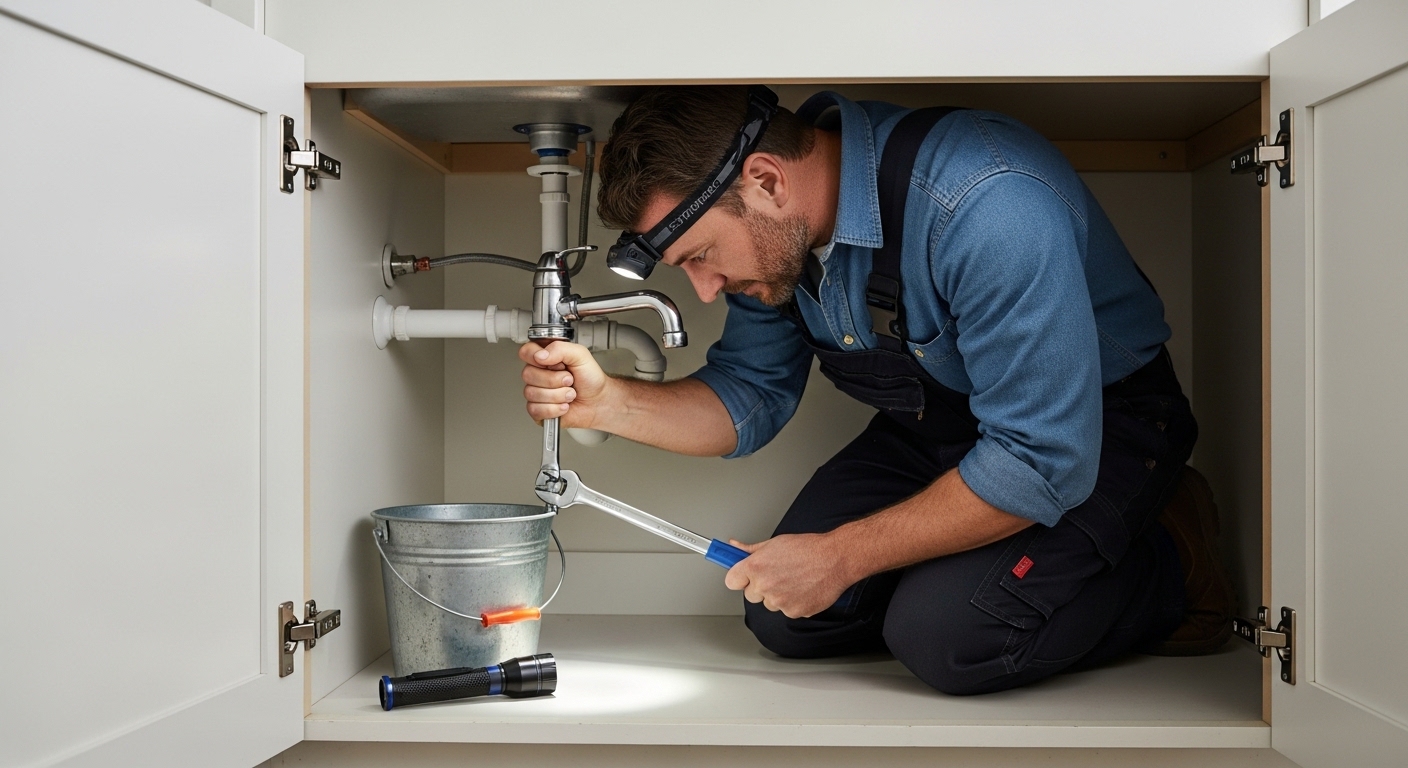
Learning how to change faucet in kitchen sink setups is one of the most rewarding DIY plumbing upgrades you can tackle in a single afternoon. Whether your old faucet is leaking, the finish is pitted, or you’re chasing a sleek pull-down sprayer with a magnetic dock, this guide walks you through every step — from shutting off the angle stops to torquing the final supply line. We’ll cover the tools you actually need, the mistakes that cause callbacks, and the exact sequence pros at wowowfaucet-net follow on every install.
By the end, you’ll know how to size your replacement faucet to your sink’s hole configuration, how to manage tight cabinet clearances, and how to test for leaks the way a licensed plumber would. Let’s get started.
Why Learning How to Change Faucet in Kitchen Sink Setups Matters
Kitchen faucets get punished. Between hot water cycling, mineral-laden tap water, and constant lever movement, the average residential faucet lasts 12–18 years before the cartridge, O-rings, or ceramic disc start to fail. Replacing the entire unit is often smarter than chasing individual leaks, especially if you’re already living with low flow, a corroded base, or a sprayer that won’t retract.
Beyond function, a new faucet is the single highest-impact visual upgrade you can make to a kitchen without remodeling. A matte black pull-down or a polished chrome bridge faucet changes the tone of the whole room. And if you’re not sure whether replacement is even necessary, our breakdown on how to tell if your faucet needs replacing covers the warning signs — drips that survive cartridge swaps, green corrosion at the base, and handles that wobble independent of the stem.
What This Job Will (and Won’t) Cost You
Hiring a plumber to swap a kitchen faucet runs $150–$450 depending on region and complexity. Doing it yourself costs the price of the faucet plus roughly $15 in consumables (plumber’s tape, maybe a new supply line pair). Time investment: 60 minutes for a straight swap on accessible plumbing, up to 2.5 hours if you’re fighting corroded mounting nuts or rerouting a sprayer hose.
Tools and Materials You’ll Need Before You Start
Half the battle when you change faucet in kitchen sink installations is having the right tools laid out before you crawl under the cabinet. Stopping mid-job to drive to the hardware store with the water off is the #1 frustration we hear from first-timers.
- Basin wrench — the long-handled tool with a swiveling jaw, essential for the mounting nuts hidden above the sink deck
- Adjustable wrench or channel-lock pliers — for supply line couplings
- Bucket and old towels — supply lines always have residual water, no exceptions
- Headlamp or magnetic LED work light — cabinet interiors are dark
- Plumber’s tape (PTFE) — wrap 3 times clockwise on every threaded connection
- Plumber’s putty or silicone — depending on whether your new faucet ships with a gasket
- Penetrating oil (PB Blaster or equivalent) — for stubborn nuts on faucets older than 8 years
- Bowl scraper or putty knife — to remove old caulk or putty residue
- New braided stainless supply lines — reuse the old ones only if they’re under 5 years old and crack-free
Step 1: Choose the Right Replacement Faucet
Before you touch a wrench, confirm your new faucet matches your sink. The number of pre-drilled holes in your sink deck dictates your options. Most North American kitchen sinks have 1, 3, or 4 holes spaced 4 or 8 inches apart on center.
Hole Configuration Compatibility
| Sink Holes | Compatible Faucet Type | Deck Plate Required? | Typical Use Case |
|---|---|---|---|
| 1 hole | Single-handle, single-hole only | No | Modern minimalist kitchens |
| 2 holes | Single-handle + side sprayer | Optional | Older builder-grade kitchens |
| 3 holes (4″ spread) | Centerset (lever or two-handle) | No | Traditional small kitchens |
| 3 holes (8″ spread) | Widespread two-handle or single-handle + deck plate | Yes (if single) | Most American kitchens |
| 4 holes | Two-handle + side sprayer + soap dispenser | No | Larger farmhouse kitchens |
The good news: most modern faucets ship with an optional escutcheon plate that covers up to three holes, so a single-hole faucet can adapt to a three-hole sink. The reverse is harder — you can’t add holes to stainless steel without a hole saw and a lot of nerve.
Spout Reach, Height, and Flow Rate
Measure from the back of your sink deck to the center of your drain. That’s your minimum spout reach. For a double-bowl sink, you want the spout to swing comfortably over both basins. Spout height matters too — anything under 8 inches struggles with stockpots, while gooseneck faucets at 14–17 inches handle anything you throw at them.
Flow rate is regulated by the EPA’s WaterSense program at 1.8 GPM for kitchen faucets sold today. If you’re curious whether your replacement qualifies for utility rebates, our piece on how to check if a faucet is eco-certified walks through the labels to look for.
Step 2: Shut Off the Water and Drain the Lines
Open the cabinet and look for two oval-handled angle stops on the wall behind the drain trap — one hot, one cold. Turn both clockwise until they stop. Then open the faucet handle to the mid-position and let any residual line pressure drain into the sink.
If the angle stops won’t turn (common in homes 20+ years old), do not force them — a snapped stem floods the kitchen. Shut off the main house supply at the meter or basement instead, and plan to replace the angle stops while you’re already under there. It adds 20 minutes and roughly $14 in parts.
Test That the Water Is Truly Off
Open both handles on the existing faucet fully. You should get a brief trickle, then nothing. If water keeps flowing, the angle stops are bypassing — shut off the main and check the stops for replacement.
Step 3: Disconnect the Old Faucet
With water confirmed off and a bucket positioned under the supply line ends, use your adjustable wrench to disconnect the supply lines from the angle stops first (less awkward than disconnecting them from the faucet shanks). Expect a small splash — that’s why the bucket is there.
If your faucet has a sprayer hose, disconnect the hose weight (the metal cylinder clipped onto the hose to help retraction) and any quick-connect couplings. Some pull-down faucets have a hex coupling about 8 inches below the faucet body — twist it counterclockwise to separate the hose.
Now the critical part: the mounting nuts. These are the plastic or brass nuts threaded onto the faucet shanks above your head, holding the faucet to the sink deck. This is where the basin wrench earns its keep. Slip the jaw around the nut, ratchet counterclockwise, and back the nut off completely. We’ve covered the full removal sequence in depth in our guide on how to remove a faucet from under the sink, including what to do when corrosion has fused everything in place.
When Mounting Nuts Won’t Budge
Apply penetrating oil and wait 15 minutes. Tap the nut lightly with the handle of a screwdriver to vibrate the threads. If it still won’t move, a reciprocating saw with a fine metal blade can cut the shank from above — but protect the sink with a strip of cardboard or painter’s tape first, and wear safety glasses.
Step 4: Clean the Sink Deck
Lift the old faucet straight up and out. Underneath, you’ll find a ring of old plumber’s putty, silicone, mineral scale, or all three. Scrape it clean with a plastic putty knife — metal scrapers can scratch stainless. A spritz of vinegar dissolves hard water stains, and a dab of mild dish soap removes silicone residue.
The new faucet needs a clean, flat surface to seat against, or you’ll have a slow weep at the base within weeks. Take an extra two minutes here.
Step 5: Install the New Faucet
Most modern kitchen faucets use a rubber or silicone gasket built into the base — no plumber’s putty needed. If yours doesn’t have one, roll a pencil-thick rope of plumber’s putty around the underside of the base before setting it in place.
- Feed the supply hoses and sprayer hose down through the center hole (or appropriate holes for centerset/widespread faucets)
- Seat the faucet body squarely on the sink deck, with the handle facing the correct orientation
- From below, slide on the mounting hardware — usually a horseshoe washer, then the mounting nut
- Hand-tighten, then snug a half-turn past hand-tight with the basin wrench. Do not overtighten — cracking the deck or distorting the gasket causes leaks
- Connect the pull-down sprayer hose to the faucet body, listening for the click on quick-connect designs
- Clip the hose weight onto the sprayer hose at the midpoint so it retracts properly
Connecting the Supply Lines
Wrap 3 turns of PTFE tape clockwise around the male threads of each supply line connection. Attach hot supply (left, often marked red) and cold supply (right, often marked blue) to the matching shanks. Hand-tighten, then a quarter-turn with a wrench. Over-cranking compresses the gasket inside the supply line and shortens its life.
For a deeper look at making these connections leak-free, our walkthrough on how to connect faucet hoses to shutoff valves covers thread direction, torque specs, and how to recognize a stripped fitting before it fails.
Step 6: Test for Leaks and Restore Service
Before you turn the water back on, do a final visual inspection. Wiggle the faucet — it should feel rock-solid with no rotation. Check that the spout swivels through its full arc without binding.
Turn the angle stops counterclockwise slowly, one full revolution at a time. Watch every connection: shanks, supply lines, angle stops, and the base of the faucet on the sink deck. A dry paper towel pressed against each joint reveals weeps that the eye misses.
With the cold handle fully open, remove the aerator from the spout (most twist off counterclockwise — see our quick guide on how to remove an aerator from a kitchen faucet) and run water for 60 seconds to flush construction debris from the lines. Reinstall the aerator, then test hot and cold independently and together.
What to Do If You See a Drip
| Leak Location | Likely Cause | Fix |
|---|---|---|
| Base of faucet on sink deck | Gasket pinched or putty gap | Loosen mounting nut, reseat faucet, retighten |
| Supply line nut at angle stop | Insufficient PTFE or cross-thread | Disconnect, re-tape, reconnect |
| Supply line nut at faucet shank | Worn gasket inside coupling | Replace supply line entirely |
| Sprayer head when stowed | Loose hose coupling under deck | Tighten the hex coupling by hand |
| Angle stop body itself | Stem packing failed when reopened | Replace the angle stop |
Common Mistakes That Lead to Callbacks
After installing thousands of faucets, the wowowfaucet-net technical team sees the same handful of missteps over and over. Avoid these and your DIY install will outlast the manufacturer’s warranty.
- Reusing brittle supply lines. Braided stainless lines have a rubber core that hardens over time. If yours are over 5 years old, replace them. A burst supply line at 60 PSI floods a kitchen in minutes.
- Overtightening the mounting nut. “Tighter is better” is wrong. Compressed gaskets distort and weep within months.
- Skipping the aerator flush. Solder bits, PTFE shreds, and pipe scale will clog the aerator screen within a week of use.
- Forgetting the hose weight. On pull-down faucets, an unweighted hose won’t retract. Clip the weight roughly halfway down the hose, well clear of the cabinet floor.
- Mismatching the deck plate. Single-hole faucets installed without an escutcheon on a 3-hole sink look unfinished and expose the extra holes to splash water.
Upgrading the Experience: Optional Add-Ons
Since you have the cabinet open and your hands dirty, consider these worthwhile upgrades while you’re already down there:
Quarter-Turn Angle Stops
If your old multi-turn angle stops were sticky, swap them for modern quarter-turn ball valves. They cost about $8 each and make the next emergency shutoff a 90-degree flip rather than a frantic spin.
Soap Dispenser or Filtered Water Tap
If your sink has an unused 4th hole, fill it with a built-in soap dispenser or an under-sink filtered water tap. The plumbing is essentially the same as a faucet install on a smaller scale.
Touchless Activation
Sensor faucets have come a long way. If you cook frequently with messy hands, the contactless wave-on/wave-off feature is genuinely useful. Our deep dive into touchless faucets and whether they’re worth the investment covers battery life, false triggers, and which sensor types hold up best.
Finish, Material, and Longevity Considerations
The right finish is more than a style choice — it affects how often you’ll be wiping fingerprints and watching for corrosion. Brass-bodied faucets outlast zinc-alloy units by a factor of 2–3 in hard water regions, and PVD (physical vapor deposition) finishes resist scratches better than electroplated equivalents. Industry testing per ASME A112.18.1 / CSA B125.1 standards subjects faucet finishes to abrasion, salt spray, and accelerated weathering before certification.
For finish comparisons and how they age over time, see our analyses on polished chrome vs. satin nickel and whether brushed nickel finish is going out of style.
When to Call a Pro Instead
DIY isn’t always the right call. Phone a licensed plumber if any of these apply:
- Your angle stops are seized and the main shutoff is also compromised
- You discover galvanized supply pipes (silvery-gray, threaded) — these often need rebuilding from the wall out
- The faucet hole spacing in your sink doesn’t match any available faucet, requiring sink replacement or hole drilling
- You have a tankless water heater with proprietary fittings on the hot line
- Local code requires a permit for fixture replacement (rare for kitchens, but check)
About the Author and Brand
This guide was prepared by the wowowfaucet-net product education team, drawing on more than a decade of designing, testing, and installing residential kitchen and bathroom fixtures. Every faucet we sell is independently tested to ASME A112.18.1 / CSA B125.1 standards for flow consistency, finish durability, and ceramic disc longevity, and is backed by a limited lifetime warranty on the body and finish plus a 5-year warranty on cartridges and electronic components. Our installation guides are reviewed by licensed plumbers before publication.
FAQ
How long does it take to change a kitchen faucet?
For a homeowner with the right tools and accessible plumbing, plan on 60–90 minutes. Add 30–60 minutes if the angle stops need replacing or if mounting nuts are corroded. First-timers should set aside a half-day to avoid rushing.
Do I need to turn off the main water supply?
Usually no — just close the two angle stops under the sink and open the faucet to relieve pressure. Only shut off the main if the angle stops won’t fully close or if you’re also replacing them.
Can I reuse my old supply lines with a new faucet?
Only if they’re less than 5 years old, the braided stainless jacket is intact with no kinks, and the rubber gaskets inside the couplings aren’t hardened. Braided lines are cheap insurance — replace them when in doubt.
What size basin wrench do I need?
A standard 10–11 inch telescoping basin wrench with a 1-inch jaw capacity handles virtually every residential kitchen faucet mounting nut. Some longer 16-inch models help in deep cabinets, but they’re optional.
Do I need plumber’s putty or silicone for a modern faucet?
Most contemporary kitchen faucets ship with a pre-installed rubber or silicone gasket and require no additional sealant. Read your manufacturer’s instructions — using putty where a gasket exists can actually create leak paths.
Why is my new faucet dripping after install?
Nine times out of ten, the issue is debris stuck in the cartridge or aerator from the lines. Remove the aerator and run water at full pressure for 60 seconds to flush. If the drip continues, recheck supply line connections and the cartridge orientation.
How do I match my new faucet’s flow rate to my dishwasher and disposal?
Kitchen faucets sold in the U.S. are capped at 2.2 GPM, with WaterSense models at 1.8 GPM. This is independent of your dishwasher (which has its own supply) and disposal (which uses cold water at faucet pressure). Just confirm your home’s static pressure is between 40–80 PSI for ideal performance.
您好!Sign In