 WOWOW Faucets
Is a Faucet Extender Pull Out Kit the Fix for a Short, Stiff Sink Sprayer?
View Count:119 CategoryProduct
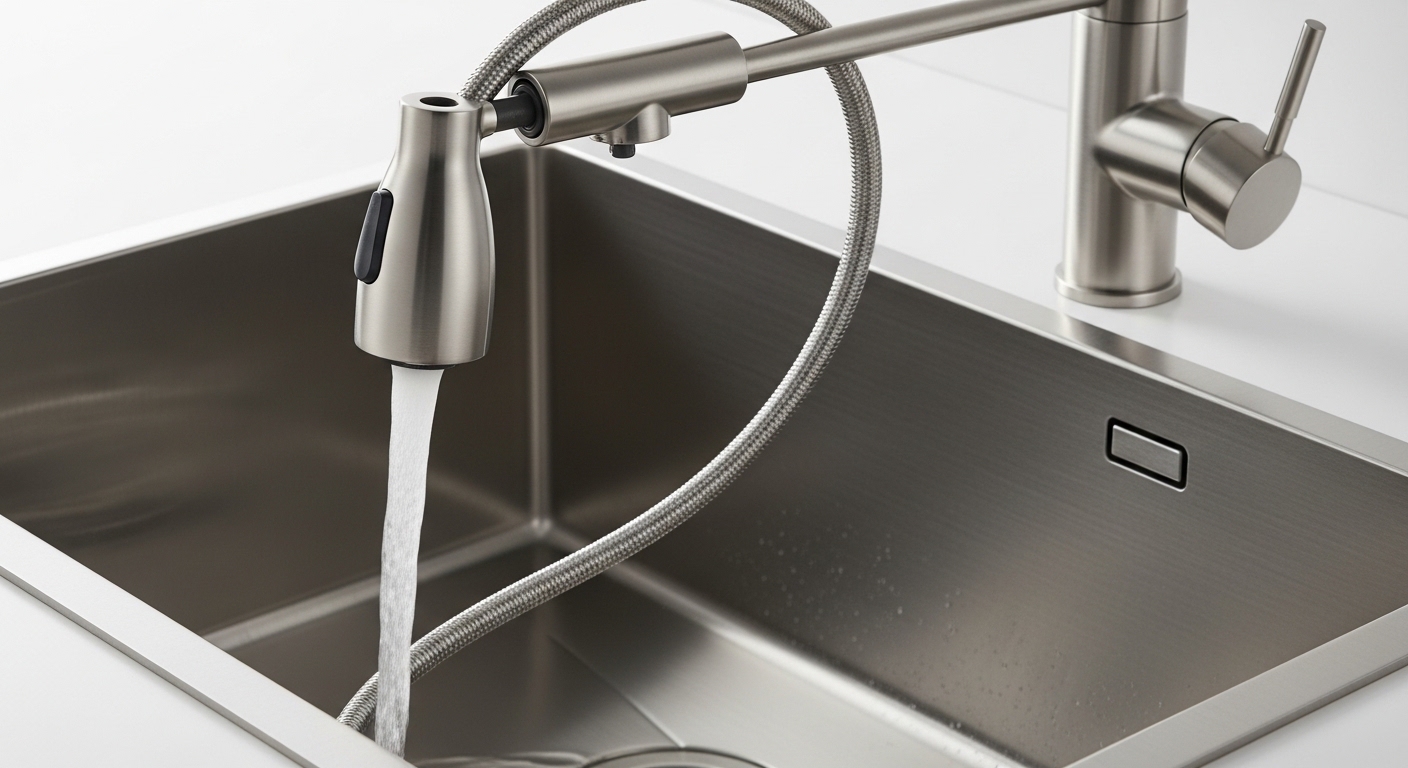
If you’ve been fighting a faucet that won’t reach the corners of your sink or a sprayer that barely stretches past the drain, a faucet extender pull out upgrade is one of the cheapest, highest-impact changes you can make in a kitchen. Instead of ripping out the whole faucet, you swap or add a pull-out spray head on a flexible hose so the water goes where you need it — rinsing a stockpot, filling a bucket on the counter, or cleaning the far basin. Below, I’ll walk you through what these kits actually are, when they work (and when they don’t), how to choose the right one, and how to install it without flooding the cabinet.
What Exactly Is a Faucet Extender Pull Out — and How Is It Different From a Pull-Down?
A faucet extender pull out is a spray head connected to a flexible, weighted hose that pulls horizontally out of the spout so you can move the water stream around the sink. The “extender” part simply means it lengthens your effective reach — typically 18 to 30 inches of usable hose. A pull-out faucet has a compact spray head that slides out toward you and is great for smaller or shallow sinks. A pull-down faucet has a tall gooseneck and a larger head that drops straight down into a deep basin.
There are really two products people mean when they search this term. The first is a full pull-out faucet or a factory-matched replacement hose/head for a faucet you already own. The second is a universal “extender” adapter — a small threaded fitting or short flexible extension that screws onto a fixed spout to buy you a few extra inches. They solve different problems, and confusing them is the number-one reason people end up returning the wrong part.
- Matched replacement pull-out hose + head: Best when your faucet’s own sprayer has quit, leaks, or won’t retract. Buy the part made for your model.
- Universal pull-out conversion / extender adapter: Best when you have a plain fixed spout and want spray-head flexibility without replacing the whole faucet.
- Full pull-out faucet replacement: Best when the faucet is old, corroded, or you want a finish and function refresh in one shot.
Do I Need a Pull-Out Extender, or Should I Just Replace the Whole Faucet?
Replace only the hose and head if the faucet body is solid and the finish still looks good; replace the whole faucet if the base leaks, the handle is loose at the deck, or the finish is pitting. A worn spray hose is a $20–$45 fix. A corroded faucet body is not worth chasing with patch parts.
Here’s the quick diagnostic I use. Turn the water on and watch the base of the faucet where it meets the deck. If water weeps there, the internal supply lines or the body seals are shot — that’s a replacement, not an extender job. Now pull the spray head out and let it retract. If it flops down and won’t spring back, the weight fell off the hose or the hose is kinked; both are cheap. If the head dribbles from the wrong spots or won’t switch between stream and spray, the head itself is worn — swap the head, keep the faucet.
One more scenario I see constantly: the faucet is fine, but water pressure at the sprayer is weak. Before you buy anything, rule out a clogged aerator or mineral buildup in the head, because low flow is often a cleaning problem, not a hardware problem. If your pressure feels off across the whole house, that’s a different rabbit hole — our guide on why your faucet water pressure is too low and how to fix it walks through the fastest checks before you spend a dime on parts.
How Do I Choose the Right Faucet Extender Pull Out for My Sink?
Match three things: the hose connection type, the hose length you need, and the spray-head weight system. Get those right and almost any quality pull-out will work; get them wrong and you’ll fight leaks and a sprayer that won’t retract.
Start with the connection. Most pull-out hoses end in a standard quick-connect or a threaded fitting (commonly 1/2-inch or a proprietary clip). If you’re replacing a factory hose, take a photo of the connector and buy the matching part number. If you’re converting a fixed spout, confirm the spout’s outlet thread — many aerators unscrew to a 15/16-inch male or 55/64-inch female thread, and universal extenders include several adapters.
Then think about depth and reach. A shallow bar sink is happy with a compact pull-out and 18–20 inches of hose. A deep, wide farmhouse sink wants a longer hose and a heavier counterweight so the head retracts cleanly. Finally, look at the head function you actually use — most people want a clean stream, a wide spray, and ideally a pause button. Don’t overpay for six spray modes you’ll never touch.
| Type | Best For | Typical Reach | Price Range | Install Difficulty |
|---|---|---|---|---|
| Matched replacement hose + head | Fixing a specific faucet model | Same as original (20–30″) | $20–$60 | Easy |
| Universal pull-out conversion kit | Adding spray to a fixed spout | 18–24″ | $25–$70 | Moderate |
| Screw-on extender adapter | A few extra inches, no hose | 3–6″ | $8–$20 | Very easy |
| Full pull-out faucet replacement | Old or leaking faucet | 20–30″ | $60–$250 | Moderate–Hard |
How Do You Install a Faucet Extender Pull Out Without Leaks (Step by Step)?
Shut off the water, disconnect the old hose or aerator, thread the new hose down through the spout, clip on the counterweight, and connect it to the supply outlet with a quick-connect or thread-sealed fitting. Most people finish in 20–40 minutes with an adjustable wrench, a flashlight, and plumber’s tape.
Here’s the reliable sequence I follow every time:
- Close the shutoff valves under the sink and open the faucet to bleed pressure. Lay a towel and a small bowl in the cabinet for drips.
- Disconnect the old hose. On a pull-out, the hose connects to the faucet outlet tube with a quick-connect clip or a threaded nut. Support the connection so you don’t twist the flex line.
- Feed the new hose down through the spout from the top, then reattach the spray head to the top of the hose so it seats against the spout.
- Clip the counterweight onto the hose at the manufacturer’s marked spot — usually the lowest point of the hose loop. This is what pulls the head back up after use.
- Make the connection. For threaded fittings, wrap the male threads with two or three turns of plumber’s tape. For quick-connects, push until you hear the click, then tug to confirm it’s locked.
- Turn the water back on slowly and check every joint with a dry paper towel. A damp towel means a loose fitting, not necessarily a bad part — snug it a quarter turn.
- Test retraction. Pull the head all the way out and let go. It should glide back and dock firmly. If it hangs, reposition the weight lower.
If your project is really a full faucet swap and you’re staring at a bracket you’ve never seen, the mechanics are similar to any modern kitchen unit — our step-by-step on Delta pull-down kitchen faucet parts, replacement and repair is a great visual reference for how hoses, weights, and quick-connects fit together, even if your brand is different.
Why Won’t My Pull-Out Sprayer Retract or Why Is It Leaking?
Nine times out of ten a pull-out that won’t retract has lost its counterweight or has a kinked hose, and a leaking one has a cracked hose or a loose quick-connect. Both are quick fixes and rarely mean you need a new faucet.
For retraction problems, open the cabinet and follow the hose down. If the weight slid off or was never re-clipped after a repair, the head has nothing pulling it home — snap the weight back on at the low point of the hose loop. If the hose rubs against the drain pipe, the disposal, or a shutoff valve, reroute it so it hangs free; friction is a silent killer of smooth retraction.
For leaks, the usual suspects are the head-to-hose joint and the hose-to-outlet connection. Reseat the head, check the small rubber gasket inside the collar, and re-tape any threaded fitting. If the hose itself is cracked — common on older braided lines that flex thousands of times a year — replace the hose; you can’t patch a pinhole in a pressurized line reliably.
And if your “leak” is actually a weak, spitting stream, the culprit is often mineral scale inside the spray head, especially with hard water. A soak clears it fast; here’s our full method for removing hard water deposits from a faucet head for good so the flow comes back to full strength.
Is a Pull-Out Worth It for a Small or Budget Kitchen Under $150?
Yes — a pull-out is arguably the best value upgrade in a small kitchen, because the retractable head does the work of a separate side sprayer while freeing up a deck hole and keeping the footprint tight. Under $150 you can get a solid stainless or brass-bodied pull-out with a decent spray head and a limited lifetime finish warranty.
In a compact kitchen, a pull-out beats a tall pull-down for a simple reason: the low, forward-sliding head clears cabinets and windowsills that a gooseneck would hit. It’s also easier for shorter users and kids to control. If you want the flexibility with a warmer, more decorative look, styles like an antique brass finish have exploded in popularity — our take on whether a pull-out kitchen tap in antique brass is worth it covers how those finishes hold up day to day.
Where I’d tell you to spend a little more: the spray head and the hose. Cheap heads clog and the buttons stick within a year; a mid-tier head with a silicone-nozzle spray face wipes clean and resists scale. A braided nylon hose outlasts a bare PVC one. Everything else — extra spray modes, magnetic docking, LED temperature lights — is nice but optional.
What Do I Need to Know About Water Quality, Standards, and Warranty?
Buy a pull-out that’s certified to the standard drinking-water and flow benchmarks (in North America, look for NSF/ANSI 61 and 372 for lead-free wetted parts, plus a labeled flow rate around 1.5–1.8 GPM), and register the product so the finish and function warranty actually applies. These aren’t marketing badges — they tell you the metal touching your water is genuinely lead-free and the flow meets code.
Hard water is the single biggest enemy of any pull-out spray head. If your area runs above roughly 7 grains per gallon, plan on a monthly quick soak of the spray face and check that your kit uses a head with cleanable rubber nozzles. That habit, plus a hose rated for the flex cycles of daily use, is what separates a faucet that still sprays evenly in year five from one that’s spitting sideways by month eight.
FAQ
Can I add a pull-out sprayer to a fixed-spout faucet I already have?
Sometimes. If your fixed spout has a removable aerator and enough internal clearance, a universal pull-out conversion or a screw-on extender adapter can add a few inches of reach or a short flexible spray. But you can’t turn a solid cast spout into a true 24-inch retractable pull-out — for that you replace the faucet. Check whether the aerator unscrews first; that tells you what adapters will fit.
How long is a typical pull-out faucet hose?
Most pull-out hoses give 20 to 30 inches of usable reach, with the full hose length inside the cabinet running longer to allow travel. Compact bar-sink models may offer 18 inches. Measure from your spout to the farthest corner of your sink and add a few inches of slack when choosing.
Why does my pull-out head fall down instead of springing back up?
The counterweight either fell off or is clipped too high on the hose. Open the cabinet, find the cylindrical weight, and clip it at the lowest point of the hose loop so gravity pulls the head back into the spout. If there’s no weight at all, order the matching one — they’re inexpensive and universal-ish by hose diameter.
Are pull-out and pull-down hoses interchangeable?
Not usually. They use different head sizes, hose lengths, and often different quick-connect fittings, and the spout geometry differs. Buy the hose and head matched to your faucet model or a conversion kit clearly rated for your spout type. Forcing a mismatched head causes leaks and poor retraction.
How much does it cost to install a faucet extender pull out yourself?
Just the part: $8–$20 for a simple extender adapter, $20–$60 for a matched replacement hose and head, and $60–$250 for a full pull-out faucet. DIY installation is free beyond a roll of plumber’s tape you likely already own, and takes 20–40 minutes. Hiring a plumber typically adds $100–$200 in labor.
Do faucet extenders reduce water pressure?
A good one shouldn’t noticeably. Quality pull-out heads are designed around a code-compliant flow rate, so pressure at the head feels normal. If flow drops after installing, check for a kinked hose, a half-open shutoff valve, or scale in the aerator — those are the usual causes, not the extender itself.
About the author: This guide was written by the WOWOW Faucet product team, who spend their days specifying, bench-testing, and troubleshooting kitchen and bathroom fixtures. We’ve installed and pressure-tested hundreds of pull-out and pull-down assemblies across sink types, from shallow bar sinks to deep farmhouse basins.
About WOWOW Faucet: WOWOW designs and manufactures kitchen and bathroom faucets, shower systems, and fixtures sold direct at www.wowowfaucet.net. Our pull-out kitchen faucets use lead-free, NSF-certified wetted materials and braided flex hoses, and are backed by a limited lifetime warranty on finish and function. Every model is flow-tested and cycle-tested before it ships, so the sprayer you install performs the same on day 1,000 as it did on day one.
您好!Sign In