 Faucet Online
Why Is My Faucet Water Pressure Too Low, and How Do I Fix It?
View Count:119 CategoryRepair
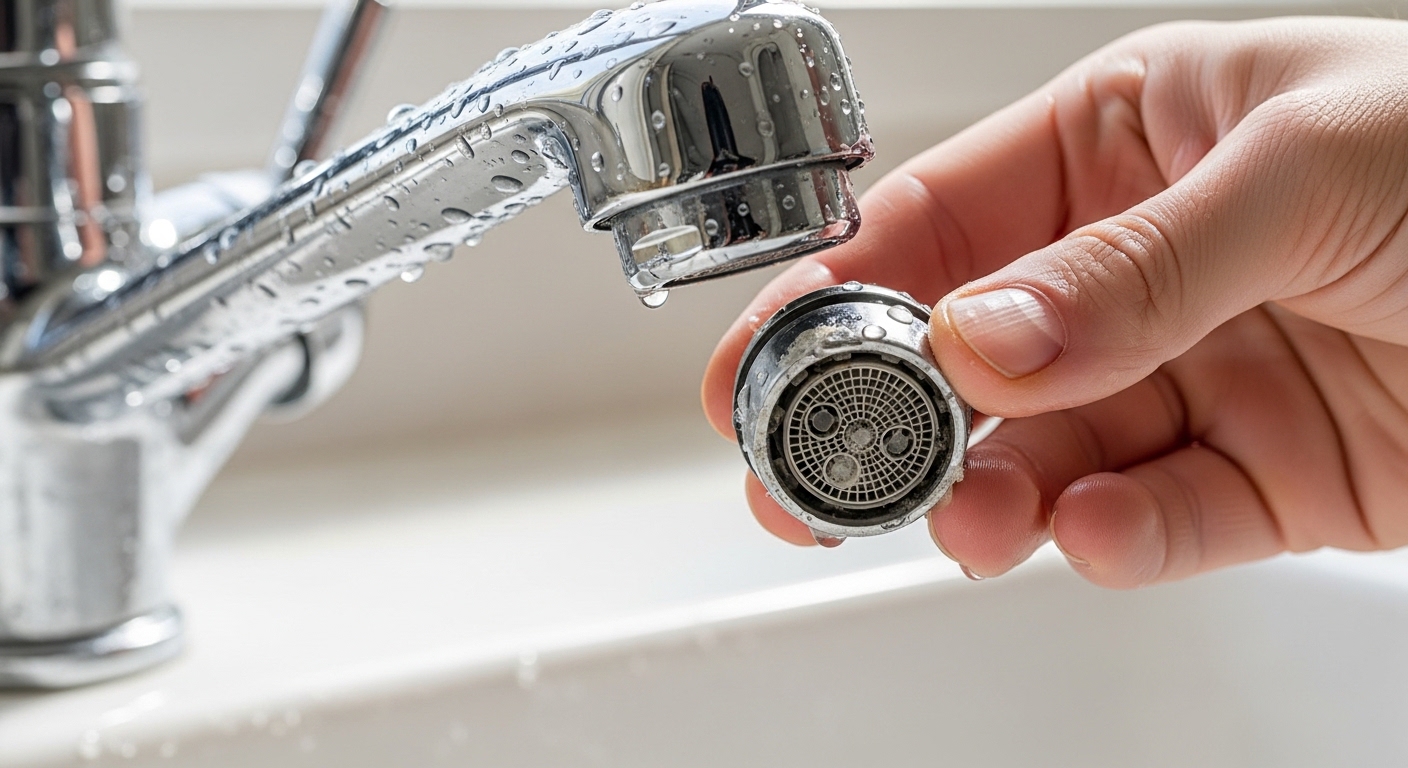
If your faucet water pressure too low problem showed up out of nowhere, the good news is that it’s almost never a broken pipe or a failing water main. Nine times out of ten, the culprit is something small and cheap sitting right inside the faucet: a gunked-up aerator, a limed-over cartridge, a kinked supply hose, or a valve that got bumped half-closed. This guide walks you through exactly how to find which one it is and fix it, starting with the two-minute checks and moving to the deeper stuff only if you need it.
I’ll keep it plain: a fast diagnosis flow, real numbers on what “normal” pressure looks like, a comparison table of causes ranked by how likely and how easy they are, and a step-by-step fix. Let’s get your flow back.
How do I quickly figure out why my faucet pressure dropped?
Run one simple test first: is the low pressure at one faucet or at every faucet in the house? That single question splits the whole problem in half. Low pressure at one faucet points to that faucet’s aerator, cartridge, or supply valve. Low pressure everywhere points to the main shut-off valve, the pressure regulator, or the municipal supply.
From there, check hot vs. cold separately. Turn on just the hot side, then just the cold. If only one temperature is weak, the problem is on that line — often a clogged supply line, a failing angle stop, or (for hot water) sediment in the water heater. If both are equally weak at a single tap, the shared parts are the suspects: the aerator and the cartridge.
- One faucet, both temps weak → aerator first, then cartridge.
- One faucet, one temp weak → that side’s supply line or shut-off valve.
- Whole house weak → main shut-off not fully open, pressure regulator failing, or utility issue.
- Slowly got worse over months → mineral/scale buildup (classic hard-water pattern).
- Sudden overnight drop → a valve moved, a hose kinked, or debris broke loose after recent plumbing work.
What is normal faucet water pressure — and how low is actually “too low”?
Normal residential water pressure sits between 40 and 60 psi, and a healthy modern faucet delivers roughly 1.5 to 2.2 gallons per minute (GPM). If your kitchen faucet is trickling out well under 1 GPM or feels weaker than a garden hose, that’s genuinely too low and worth fixing.
Here’s the nuance most people miss: newer faucets are designed to flow less than old ones. Federal standards cap kitchen faucets at 2.2 GPM and bathroom faucets at 1.2 GPM (some states like California go lower, to 1.8 and 1.2). WaterSense-labeled faucets are tested to hit those numbers while still feeling strong. So if you just installed a new faucet and it “feels weaker,” it may be working exactly as certified — the aerator is shaping the stream to use less water, not failing.
A quick way to measure: put a measuring cup or a marked container under the tap, run it wide open for exactly 10 seconds, then multiply the ounces by 6 and divide by 128. That gives you GPM. Under ~0.8 GPM at a kitchen tap means you have a real restriction to hunt down.
Why is only my kitchen faucet water pressure too low when the rest of the house is fine?
When just one faucet is weak and the others are strong, the restriction is inside that faucet — start with the aerator, because it’s the #1 cause and takes two minutes. The aerator is the little screw-on tip where the water exits; its fine mesh screen traps sand, rust flakes, and mineral scale, and it clogs faster than any other part.
Unscrew it by hand (turn it toward you as you face the spout) or wrap it in a cloth and use pliers gently so you don’t scratch the finish. Rinse the screen, and if it’s crusted with white mineral scale, soak it in white vinegar for 20–30 minutes and scrub with an old toothbrush. Reassemble and test. If flow jumps back to normal, you’re done — that’s the single most common fix for a faucet water pressure too low complaint. For a full walkthrough with the fiddly bits, see our guide on how to unclog a kitchen faucet aerator.
If the aerator is clean but flow is still weak, the next suspect on a single faucet is the cartridge — the valve inside the handle that mixes and meters water. Sediment and scale build up inside it too, and pull-down kitchen faucets add a third possibility: the pull-down spray hose or its internal check valve can clog or kink. Cleaning or replacing the cartridge usually restores full pressure; our step-by-step on installing a kitchen faucet cartridge yourself covers exactly how without calling a plumber.
Which causes are most likely, and how hard is each to fix?
Short answer: start at the top of this table and work down — it’s ordered by how common each cause is and how easy the fix is. Most people never make it past the first two rows.
| Cause | How common | Telltale sign | Difficulty | Typical cost |
|---|---|---|---|---|
| Clogged aerator | Very common | One faucet, both temps weak, worse over time | Easy (2 min) | $0–$8 |
| Scaled / worn cartridge | Common | Weak flow + hard to turn handle or temperature drift | Moderate (30 min) | $10–$40 |
| Partly closed shut-off valve | Common | Sudden drop after work under the sink | Easy (1 min) | $0 |
| Kinked or clogged supply line | Occasional | One temp side weak; visible bend in hose | Easy–Moderate | $5–$15 |
| Clogged pull-down spray hose/head | Occasional | Weak spray only in spray mode | Moderate | $0–$25 |
| Failing pressure regulator | Less common | Whole house low or fluctuating | Hard (call pro) | $250–$400 |
| Municipal supply / main issue | Less common | Whole house, neighbors affected too | Utility’s job | $0 |
How do I fix low faucet pressure myself, step by step?
Here’s the exact order to work through. Do them in sequence and stop as soon as pressure returns — there’s no need to go deeper than the fix that works.
- Check both shut-off valves under the sink. Turn each one fully counter-clockwise (open). A valve that’s only half-open chokes flow instantly. This is the fastest possible fix and costs nothing.
- Clean the aerator. Unscrew, rinse, soak in vinegar if scaled, scrub, reinstall. Test.
- Inspect the supply lines. Look for kinks or sharp bends behind the sink. Braided stainless lines can also collapse internally with age — disconnect and check that water shoots out strongly into a bucket. If reconnecting these feels intimidating, our guide on connecting faucet hoses to shut-off valves shows the leak-free way to do it.
- Descale or replace the cartridge. Shut off the water, pop the handle, pull the cartridge, soak it in vinegar or drop in a new matching one. Reassemble and test.
- Clean the pull-down spray head. If only the spray is weak, unscrew the spray head from the hose and soak it — the same mineral scale that clogs aerators clogs spray nozzles.
- Test the whole house. Still weak everywhere? Confirm the main shut-off is fully open, then have the pressure regulator checked. That’s where a pro comes in.
One tool tip: keep white vinegar and a soft toothbrush on hand — mineral scale is behind a huge share of low-pressure calls, and vinegar dissolves it for pennies.
Why does my faucet lose pressure again a few months after I clean it?
If pressure keeps coming back weak, you almost certainly have hard water, and the fix is to treat the buildup at the source instead of just the aerator. Hard water carries dissolved calcium and magnesium that precipitate into rock-hard scale on every surface water touches — the aerator screen, the cartridge, the spray nozzle, even the inside of the spout.
Cleaning the aerator only removes the scale you can reach. The rest keeps accumulating, which is why the problem returns on a predictable cycle. You have three real options: descale the whole faucet head more thoroughly and on a schedule (every 3–6 months in hard-water areas), install a whole-house or under-sink water softener/conditioner, or switch to a faucet with an easy-clean rubber-nozzle aerator that you can just rub the scale off of. Our deep dive on removing hard water deposits from a faucet head for good covers the long-term strategy so you’re not repeating this every season.
A telltale sign it’s hard water and not a one-off clog: you’ll also see white crust around the base of the spout, spotting on glassware, and soap that won’t lather well. If that’s your house, treat the water, not just the symptom.
When is low water pressure a sign of a bigger plumbing problem?
Call a plumber when the low pressure is house-wide, fluctuates wildly, or comes with discolored water — those point to the pressure regulator, corroded galvanized pipes, or a supply-side problem beyond the faucet. A faucet-level fix won’t touch any of those.
Specifically, watch for these red flags: pressure that surges and drops on its own (failing pressure-reducing valve), rusty or brown water (corroding pipes or a water-heater issue), a sudden whole-house drop with no work done (possible main-line leak), or hot water that’s dramatically weaker than cold across every fixture (sediment-packed water heater). Older homes with galvanized steel pipes are especially prone to internal corrosion that narrows the pipe like plaque in an artery — no amount of aerator cleaning fixes that. When you see these, it’s genuinely worth the service call.
FAQ
Why did my faucet water pressure suddenly drop overnight?
A sudden overnight drop usually means a valve moved, a supply hose kinked, or debris broke loose in the line — often after recent plumbing work, a water main repair in your area, or the water being shut off and back on. Check that both under-sink shut-offs and the main valve are fully open, then clean the aerator, which frequently catches sediment stirred up by pressure changes.
Can a clogged aerator really cause low water pressure?
Yes — a clogged aerator is the single most common cause of low pressure at a single faucet. Its fine mesh screen traps sediment and mineral scale until only a trickle gets through. Unscrewing and cleaning it (or soaking it in vinegar) restores full flow in the majority of cases and takes about two minutes.
How do I fix low water pressure in just my hot water?
Low pressure on only the hot side points to the hot supply line, the hot-side shut-off valve, or sediment in your water heater. Check that the hot angle stop is fully open and the hot supply hose isn’t kinked or internally collapsed. If those are fine, sediment buildup in the water heater tank is the likely cause — draining and flushing the tank often restores hot-water flow.
Is low water pressure the faucet’s fault or the plumbing’s?
If only one faucet is weak, it’s the faucet (aerator, cartridge, or spray head). If every faucet in the house is weak, it’s the plumbing — the main shut-off, the pressure regulator, or the municipal supply. Testing multiple faucets is the fastest way to tell which side of the problem you’re on before you spend money.
Will a new faucet fix my low water pressure?
Only if the old faucet’s internals are corroded or scaled beyond cleaning — a new faucet won’t help if the real problem is a closed valve, a kinked supply line, or house-wide pressure loss. Diagnose first. That said, if your current faucet is old, corroded internally, or you’re tired of descaling it, upgrading to a quality faucet with a serviceable cartridge and easy-clean aerator is a reasonable long-term fix.
How often should I clean my faucet aerator to keep pressure strong?
In average water, once a year is plenty. In hard-water areas, clean it every 3–6 months, because mineral scale rebuilds fast. If you’re cleaning it more often than that, treat your water hardness at the source rather than fighting the symptom at each faucet.
A note on expertise and standards
This guide was written by the WOWOW Faucet product and technical team, who design, pressure-test, and service kitchen and bathroom faucets every day. WOWOW faucets are built with ceramic-disc cartridges and lead-free brass bodies, tested to meet cUPC and (where applicable) WaterSense flow standards, and backed by our warranty on cartridges and finishes. The flow-rate figures and repair steps above reflect both federal fixture standards (2.2 GPM kitchen / 1.2 GPM bathroom caps) and hands-on bench testing of the failure points that most often cause weak flow. When a fix calls for a replacement part, always match your faucet’s brand and model, and don’t hesitate to call a licensed plumber for anything house-wide or supply-side.
您好!Sign In