 Faucet Online
What Is a Copper Faucet Adapter, and Which One Do You Actually Need?
View Count:20 CategoryProduct
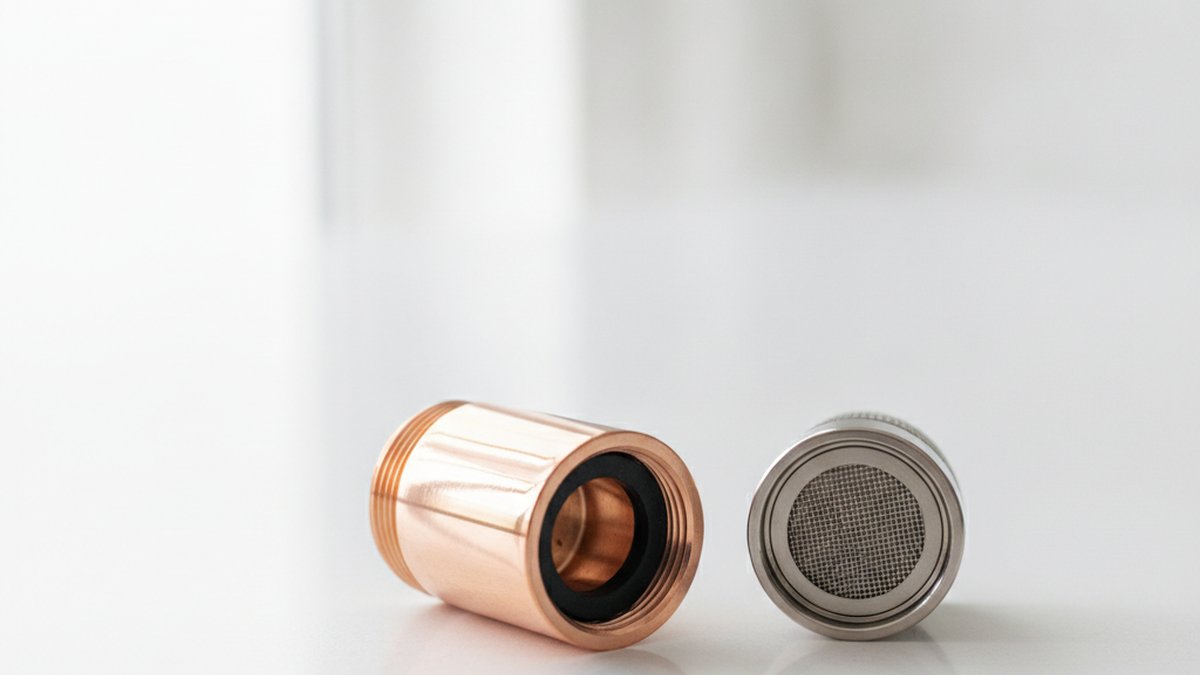
If you’ve ever tried to hook a garden hose, a countertop dishwasher, or a water filter up to your sink and the connection either wouldn’t thread on or dripped everywhere, a copper faucet adapter is almost always the missing piece. It’s one of the cheapest fixes in plumbing — usually $6 to $20 — but the wrong size or a cheap zinc knockoff will strip, leak, or corrode within months. This guide walks through exactly what a copper faucet adapter does, how to figure out which size and thread you need, how copper and brass compare to plastic, and how to install one without a plumber.
What does a copper faucet adapter actually do?
A copper faucet adapter converts your faucet’s threads into a standard connection point — most commonly a garden-hose thread (GHT, 3/4″) or a quick-connect fitting — so you can attach something that wasn’t designed to screw directly onto a faucet spout. In plain terms: it’s a translator between your faucet and a hose, sprayer, or appliance.
Faucet spouts don’t use the same threading as hoses or appliances. The tip of most kitchen and bathroom faucets has a small aerator with fine threads, while a garden hose uses coarse 3/4″ threads. The adapter bridges that gap. Depending on the model, one end grabs your aerator threads and the other end offers a hose bib, a barbed connector, a quick-disconnect, or a compression fitting for copper tubing. That’s why people reach for these for a huge range of jobs:
- Connecting a portable/countertop dishwasher or washing machine to the kitchen sink.
- Hooking up a reverse-osmosis or countertop water filter.
- Attaching a garden hose to a laundry or utility sink to fill buckets or water plants.
- Adding a handheld sprayer for washing hair, pets, or produce.
- Joining two lengths of copper supply tubing under the sink with a compression or sweat coupling.
The word “copper” here covers two slightly different products, and it’s worth knowing which one someone means. Some adapters are made of copper or copper-heavy brass alloy and thread onto the faucet tip. Others are true copper-pipe fittings (couplings, unions, adapters) used down at the supply line where copper tubing meets a threaded valve. Both are “copper faucet adapters,” but they solve different problems — spout connection versus supply-line connection.
How do I know what size copper faucet adapter I need?
Measure your aerator threads first — the two most common sizes are male 15/16″-27 (regular) and female 55/64″-27 (regular), plus junior sizes on smaller bathroom faucets. Match the adapter to that thread and you’re 90% done. If you’re connecting to copper supply tubing instead, measure the tube’s outside diameter (typically 3/8″, 1/2″, or 5/8″ OD).
Here’s the part that trips everyone up: faucet aerators come in “male” (threads on the outside of the faucet tip) and “female” (threads on the inside). Look at the very end of your spout. If you can see threads on the outside, it’s male and you need a female adapter. If the threads are hidden inside the tip, it’s female and you need a male adapter. A quick way to confirm size without special tools is to unscrew the existing aerator and take it to the hardware store, or measure the diameter with a caliper.
| Thread type | Common size | Where you’ll find it | Adapter you need |
|---|---|---|---|
| Male (regular) | 15/16″-27 | Most standard kitchen faucets | Female-thread adapter |
| Female (regular) | 55/64″-27 | Standard kitchen/bath faucets | Male-thread adapter |
| Male (junior) | 13/16″-27 | Smaller bathroom faucets | Female junior adapter |
| Female (junior) | 3/4″-27 | Compact/bar faucets | Male junior adapter |
| Garden hose thread (GHT) | 3/4″-11.5 | Hose/appliance end | Faucet-to-GHT adapter |
If your faucet has an unusual dual-thread aerator (many modern kitchen faucets do), you’ll often find both a male and female thread on the same tip — that gives you flexibility to pick whichever adapter is easier to source. When in doubt, a “multi-thread” or “universal” faucet adapter kit includes the common sizes plus washers, and it’s the safest bet if you can’t measure precisely.
Copper/brass vs. plastic faucet adapter — which is better?
For anything permanent, under pressure, or in contact with hot water, a copper or solid-brass adapter beats plastic every time — it won’t crack, warp, or strip, and it handles hot water and higher pressure without deforming. Plastic is fine only for light, temporary, cold-water jobs like a summer garden hose you’ll remove in a week.
The reason comes down to material behavior. Copper and brass are dimensionally stable: the threads stay true, so they seal against a washer cleanly and don’t cross-thread as easily. Plastic threads deform under torque — over-tighten them once and they’re done. Plastic also gets brittle with hot water cycling and UV exposure, which is why the plastic adapter that came free with an appliance so often cracks at the collar within a season. If you want the full breakdown of where plastic genuinely holds up and where it fails, our guide on whether a faucet extender plastic attachment is actually worth it or you should buy metal goes deeper on the trade-offs.
| Feature | Copper / solid brass | Plastic (ABS/nylon) |
|---|---|---|
| Hot water tolerance | Excellent | Poor–fair (can warp) |
| Thread durability | Very high, reusable | Strips easily |
| Corrosion resistance | High (brass), naturally antimicrobial (copper) | Won’t rust, but degrades/cracks |
| Pressure rating | High | Low–moderate |
| Typical lifespan | 5–15+ years | 1–3 years |
| Price | $6–$20 | $2–$6 |
One caution: watch out for cheap “brass-look” adapters that are actually zinc alloy (sometimes called “pot metal”) with a thin plating. Zinc corrodes fast where it contacts copper plumbing — a phenomenon called galvanic corrosion — and the threads can seize into a chalky white mess within a year. Genuine solid brass or copper avoids this. If a metal adapter is suspiciously light and cheap, it’s probably zinc.
Can I connect a copper faucet adapter to hard water without it corroding?
Yes — copper and solid brass hold up to hard water far better than zinc or plastic, but hard water will still build calcium scale inside any adapter, so plan to soak it in vinegar every few months. The adapter itself won’t rust, but mineral buildup can restrict flow and eventually cement the threads together.
If you’re on well water or in a hard-water region, the failure you’ll actually see isn’t corrosion — it’s clogging. White crusty scale forms on the aerator screen and inside the adapter, dropping your flow rate and making the fitting hard to remove later. A copper or brass body simply gives that scale nothing to eat into, unlike zinc which pits and flakes. To keep flow strong, unscrew the adapter every couple of months and drop it in white vinegar for an hour; the same routine that works for a clogged spout, covered in our walkthrough on removing hard water deposits from faucet head buildup for good. If your flow is already weak before the adapter even goes on, the culprit might be elsewhere in the line — our guide on why faucet water pressure is too low and how to fix it helps you isolate whether it’s the aerator, the supply valve, or the fixture.
How do you install a copper faucet adapter without leaks?
Unscrew the old aerator, seat a rubber washer inside the new copper adapter, hand-tighten it onto the faucet threads, then give it a gentle quarter-turn with pliers wrapped in a rag. That’s it — the rubber washer does the sealing, so you should never crank it hard. Over-tightening a metal-on-metal fitting is the #1 cause of stripped threads and leaks.
Here’s the step-by-step for a spout-mounted copper faucet adapter:
- Turn off the tap and lay a towel in the sink so you don’t lose small parts down the drain.
- Unscrew the existing aerator by hand, turning counterclockwise (as you look up at it). If it’s stuck with scale, wrap it in a vinegar-soaked cloth for 20 minutes first, or grip it with rag-padded pliers.
- Check the washer. Make sure a rubber or silicone washer is seated flat inside the adapter — this is what creates the seal. No washer, guaranteed drip.
- Match the thread direction. Female adapter onto a male faucet tip, or vice versa. Start threading by hand to avoid cross-threading; it should spin on smoothly.
- Snug it up hand-tight, then a quarter-turn more with padded pliers. Don’t force it.
- Test. Run the water and check the collar for drips. If it weeps, back it off, reseat the washer, and try again — don’t just tighten harder.
For a supply-line copper adapter (compression fitting under the sink), the process is different: you slide the compression nut and brass ferrule onto the copper tube, insert it into the adapter body, and tighten the nut until the ferrule bites and seals. No Teflon tape is needed on a compression joint — the ferrule does the work — but you do want tape or pipe dope on any tapered NPT threads. If your supply line comes up short after adding fittings, don’t stretch it; our guide on what to do when your faucet supply line is too short covers safe ways to extend it. And if you’re adapting a bathtub spout to take a handheld shower or hose instead of a kitchen faucet, the right faucet adapter for bathtub owners is a slightly different beast — worth reading before you buy the wrong thread.
What should you look for when buying a copper faucet adapter?
Prioritize solid brass or copper construction, a lead-free certification, an included rubber washer, and the exact thread size that matches your faucet. Skip anything advertised only as “metal” without specifying the alloy — that’s usually the zinc-alloy tell.
A quick buying checklist:
- Material: “solid brass,” “lead-free brass,” or “copper” — not just “metal” or “brass-finished.”
- Lead-free certification: look for compliance with NSF/ANSI 61 and 372, or the “lead-free” mark. This matters because the adapter touches your drinking water.
- Thread spec listed clearly: the good listings tell you male/female and the size (e.g., 15/16″-27M / 55/64″-27F). Vague listings are a red flag.
- Included washer(s): ideally rubber or silicone, and a spare.
- Finish match: if the adapter stays visible on a nice faucet, chrome, brushed nickel, or matte black finishes are available — bare copper patinas over time.
For utility and laundry setups where a hose connection lives permanently on the faucet, it’s worth pairing the adapter with the right base hardware; our overview of laundry faucet home hardware you actually need shows how the adapter fits into a full utility-sink hookup. And if you’re taking a faucet-to-hose setup outdoors, a garden hose faucet elbow can relieve strain on the connection so the hose doesn’t kink or torque the adapter loose.
Author note & why you can trust this guide
This guide was written by the WOWOW Faucet product team, drawing on hands-on testing of adapters, aerators, and supply fittings across dozens of faucet models. WOWOW designs and manufactures kitchen and bathroom faucets and fixtures built to U.S. plumbing standards, and our brass components are tested for lead-free compliance (NSF/ANSI 61 & 372) and backed by our product warranty. We’ve fit-tested the thread sizes and washer configurations described above against real faucets, not just spec sheets — because the difference between a leak-free seal and a countertop puddle is usually one wrong washer or one over-torqued turn. When in doubt about a specific model, check the thread stamp on your existing aerator and match it exactly.
FAQ
Is a copper faucet adapter safe for drinking water?
Yes, as long as it’s genuine lead-free brass or copper certified to NSF/ANSI 61 and 372. Copper itself is naturally antimicrobial and used throughout home plumbing. Avoid uncertified zinc-alloy adapters, which can leach into water and corrode where they meet copper pipe.
What’s the difference between a copper adapter and a brass adapter?
Brass is an alloy of copper and zinc, so most “copper” faucet adapters are actually high-copper brass — and that’s a good thing, because brass is stronger and machines into clean threads. Pure-copper fittings are more common on the supply-line side (sweat/compression couplings). For faucet-tip adapters, solid lead-free brass is the practical, durable choice.
My adapter leaks even when tightened — what’s wrong?
Ninety percent of the time it’s the washer: it’s missing, cracked, sitting crooked, or the wrong size. Back the adapter off, reseat a fresh rubber washer flat inside it, and hand-tighten plus a quarter-turn. Over-tightening actually makes leaks worse by distorting the washer. If the threads themselves feel gritty, soak the faucet tip in vinegar to clear scale before reinstalling.
Can I connect a garden hose directly to my kitchen faucet with one?
Yes — that’s one of the most common uses. You need a faucet-aerator-to-garden-hose-thread (GHT) adapter. Match the aerator side to your faucet’s thread (male or female, 15/16″-27 or 55/64″-27), and the other end will accept any standard 3/4″ garden hose. For hard-turning setups outdoors, add an elbow so the hose weight doesn’t strain the connection.
How long does a copper faucet adapter last?
A solid brass or copper adapter typically lasts 5 to 15 years or more, versus 1 to 3 years for plastic. The main thing that shortens its life is hard-water scale locking up the threads — a periodic vinegar soak prevents that. Zinc-alloy adapters fail fastest because they corrode against copper plumbing.
Do I need Teflon tape on a copper faucet adapter?
Not on the faucet-tip connection — that seals with a rubber washer, and tape there just makes a mess. You do want Teflon tape (or pipe dope) on any tapered NPT pipe threads further down the line, such as where the adapter meets a threaded valve or hose bib. Compression fittings on copper tube need neither; the ferrule seals them.
您好!Sign In