 Faucet Online
What Is a Garden Hose Faucet Elbow, and Do You Really Need One for Your Outdoor Spigot?
View Count:80 CategoryProduct
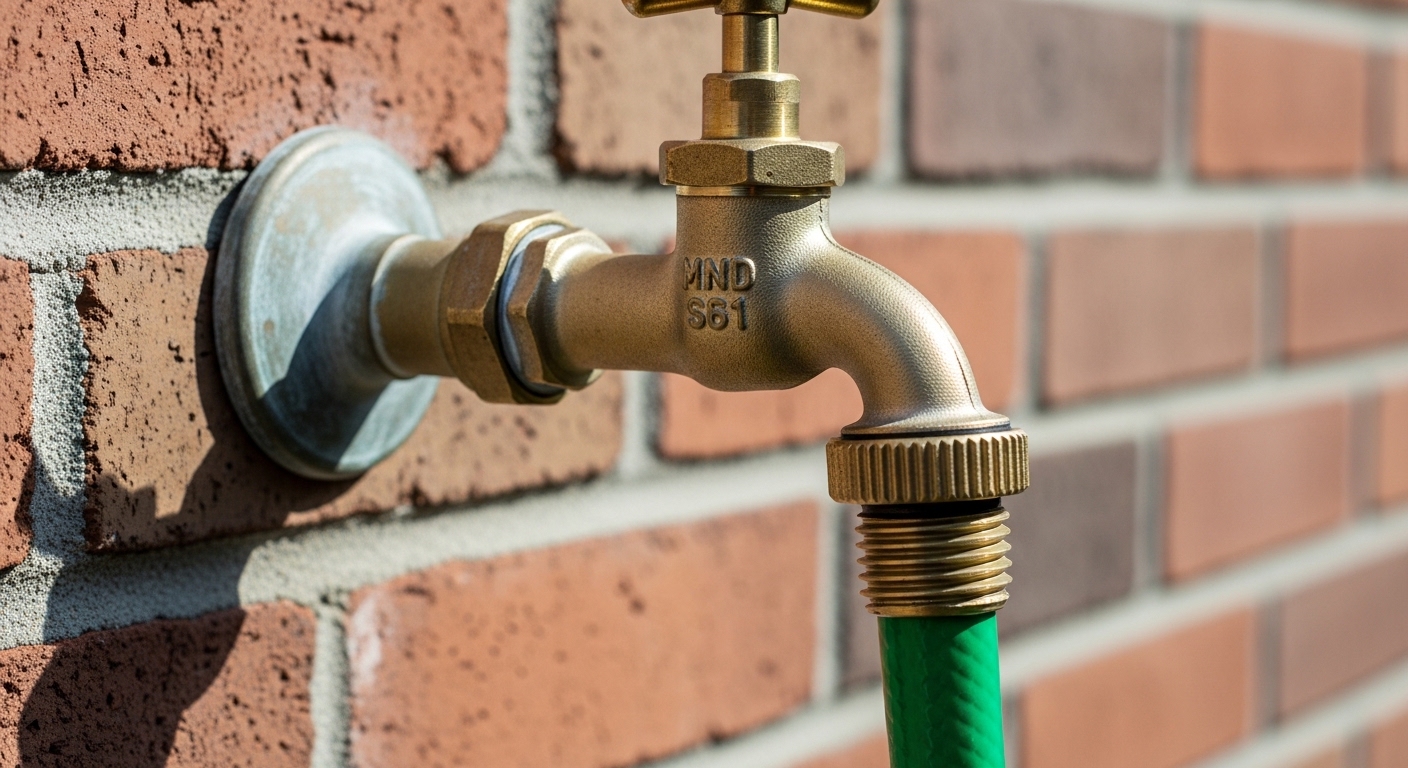
A garden hose faucet elbow solves a problem almost every homeowner has felt but never named: your garden hose hangs off the spigot at an awkward angle, yanking the threaded connection every time you pull it around the yard. That constant sideways force is exactly what loosens the coupling, wears out the rubber washer, and eventually cracks the faucet valve inside the wall. The elbow is a simple 90-degree adapter — female threads on one side to screw onto the spigot, male hose threads on the other for your hose — that turns the water flow (and the pull) straight down. It’s a tiny part, but it protects a part that’s genuinely expensive to replace.
Below I’ll answer the real questions people actually ask before buying one: whether you need it, what material to get, how to stop it from leaking, and how it compares to a quick-connect or a Y-splitter. Let’s get into it.
Do I actually need a garden hose faucet elbow, or is it just a gimmick?
You need one if your hose pulls sideways on the spigot, if the spigot sits close to the wall or ground, or if your connection keeps leaking at the threads. It’s not a gimmick — it’s a stress-relief fitting. If your spigot points straight out from the wall and your hose naturally drapes downward without tension, you can live without one.
Here’s the mechanical reality. Most outdoor faucets (also called hose bibs or sillcocks) point horizontally out of the wall. When you attach a hose, gravity and every tug pull that hose down and sideways. All of that leverage lands on two weak points: the brass threads on the spigot and the valve stem inside the faucet body. Over a few seasons, that repeated stress is what causes the “wiggle” in a spigot, the slow drip at the connection, and in cold climates, cracked pipes when a stressed connection doesn’t drain fully before a freeze.
An elbow redirects the hose so it runs straight down the wall. The pull is now vertical and aligned with the wall instead of prying on the threads. People with the spigot mounted low (near a deck or garden bed) benefit most, because without an elbow the hose bends into a tight U-turn and kinks right at the coupling — cutting off your water flow every time you move it.
What’s the best material for a garden hose faucet elbow — brass, zinc, or plastic?
Solid brass is the best material for a garden hose faucet elbow. It resists corrosion, handles freezing better than zinc, and won’t crack under a wrench. Zinc-alloy (often sold as “metal”) is cheaper but corrodes and can seize onto the spigot; plastic is fine for light seasonal use but strips easily. If you want one you’ll never think about again, buy brass.
The material decision matters more than most people expect, because this fitting lives outdoors year-round and takes mechanical abuse. Here’s a straight comparison:
| Material | Durability | Freeze/Corrosion | Typical Price | Best For |
|---|---|---|---|---|
| Solid Brass | Excellent — 10+ years | Resists both very well | $12–$25 | Anyone wanting a permanent, leave-it-on fitting |
| Zinc Alloy (“metal”) | Fair — 2–4 years | Corrodes; can seize on threads | $6–$12 | Budget, mild climates, occasional use |
| Stainless Steel | Excellent | Best corrosion resistance | $18–$30 | Coastal/salt-air areas |
| Reinforced Plastic/Nylon | Low–Fair | Won’t corrode, but brittle in cold | $5–$9 | Light seasonal, quick temporary setups |
One warning: avoid mixing raw dissimilar metals at a threaded joint if you can help it. A zinc elbow on a brass spigot can, over time, encourage galvanic corrosion that fuses the two together — the day you finally try to remove it, the threads come with it. Brass-on-brass is the safe, standard pairing plumbers reach for. If corrosion is already a concern on your outdoor lines, our guide on where to find copper tape for a faucet or plumbing project covers a related fix for protecting exposed metal.
How do I install a garden hose faucet elbow so it doesn’t leak?
To install a leak-free garden hose faucet elbow: check that the rubber washer is seated inside the female end, wrap the spigot’s male threads with 2–3 turns of thread-seal (PTFE) tape, hand-tighten the elbow on, then give it a quarter-turn with a wrench. The washer does the sealing — over-tightening actually causes leaks by deforming it.
Most “my elbow leaks” complaints come down to one of three things, and all are easy to fix. Here’s the full process:
- Turn off the water — either the outdoor faucet handle fully, or the interior shutoff if there is one. If you’re not sure how outdoor shutoffs relate to your indoor supply lines, our walkthrough on how to connect faucet hoses to shutoff valves explains the whole chain.
- Clean the spigot threads. Wipe off mineral crust, old tape, and grit. Dirty threads are the #1 cause of a joint that won’t seal.
- Confirm the rubber washer is in place inside the elbow’s female (spigot-side) end. If it’s missing or flattened, replace it — a $2 fix. This washer, not the metal, is what stops the leak.
- Wrap PTFE tape clockwise around the spigot’s male threads, 2–3 wraps. This helps a little on the seal but mostly lets the fitting turn on smoothly.
- Thread it on by hand until snug, then snug it a further quarter to half turn with a wrench or adjustable pliers. Stop there.
- Attach your hose to the elbow’s outlet (with its own washer), turn the water on, and watch for drips at both joints for 30 seconds.
If it still weeps after that, the culprit is almost always a bad washer or cross-threaded connection — not insufficient force. Back it off and start over rather than cranking harder.
My outdoor faucet leaks even when it’s off — will an elbow fix that?
No — an elbow won’t fix a faucet that leaks or sprays when it’s turned off. That’s an internal valve, washer, or vacuum-breaker problem inside the spigot itself, and the elbow only attaches to the outside threads. Fix the faucet first, then add the elbow to prevent the strain that caused the wear.
This is an important distinction because people buy an elbow hoping it’ll cure a drip it can’t reach. If water escapes from the spout or the anti-siphon cap when the handle is fully closed, the problem is upstream of anything you screw onto the front. We break the causes down in detail in our guide on what it means when your outdoor faucet sprays when turned off — usually it’s a worn vacuum breaker or a failed valve washer. Sort that out first. Where the elbow genuinely helps is prevention: by removing the sideways leverage on the spigot, it slows the wear that leads to those internal leaks in the first place.
Garden hose faucet elbow vs. quick-connect vs. Y-splitter — which one do I need?
Get a garden hose faucet elbow if your goal is to redirect the hose and protect the spigot from strain. Get a quick-connect if you want to snap hoses on and off fast, and a Y-splitter if you want to run two hoses from one spigot. They solve different problems, and many people end up stacking an elbow plus a quick-connect together.
These aren’t really competitors — they’re a stack. Here’s how they line up:
| Fitting | What it does | Solves | Can combine with elbow? |
|---|---|---|---|
| Faucet Elbow | 90° redirect + strain relief | Kinking, sideways pull, thread wear | — |
| Quick-Connect | Snap-on/off coupler | Slow, fiddly hose swaps | Yes — screw onto elbow outlet |
| Y-Splitter | Two outlets, each with a valve | Running two hoses at once | Yes |
| Pressure Regulator | Caps incoming PSI | Protecting drip lines/sprinklers | Yes |
A very common, genuinely smart setup: spigot → brass elbow → quick-connect. The elbow points everything down and off the threads, and the quick-connect lets you swap between a hose, a pressure washer, or a drip line in one second without unscrewing anything. If you’re outfitting a utility or laundry area rather than a garden wall, you might also be shopping for the faucet itself — our roundup on which laundry taps to actually buy and where to find them covers threaded outlets that these same elbows fit.
What size and thread does a garden hose faucet elbow use?
Standard garden hose faucet elbows use 3/4-inch GHT (Garden Hose Thread) — the universal North American hose-thread size. As long as your spigot has standard hose threads (which nearly all do), a 3/4″ GHT elbow will fit. Watch out for spigots with 1/2″ or 3/4″ NPT pipe threads instead, which need an adapter.
A few sizing notes that save a wasted trip to the store:
- GHT ≠ NPT. Garden Hose Thread is coarser and shaped differently than National Pipe Thread. Most outdoor spigots are already GHT on the outlet, so a standard elbow screws right on. If yours has NPT (common on some utility and basement spigots), grab a GHT-to-NPT adapter.
- Female-to-male is the standard. The elbow’s inlet (spigot side) is female GHT; the outlet (hose side) is male GHT. That’s the configuration you want 95% of the time.
- Check the bore. Cheaper elbows have a narrow internal channel that chokes flow. A full 3/4″ bore keeps your pressure up for sprinklers and pressure washers.
- Mind the vacuum breaker. If your spigot has an anti-siphon cap sticking out, make sure the elbow has clearance to thread on past it.
Author’s Note & Why Trust This Guide
This guide was written by the WOWOW Faucet product team — we design, pressure-test, and sell faucets and plumbing fittings for kitchens, baths, and outdoor use, so we handle threaded connections and washer seals every single day. Every recommendation here is based on hands-on installation and the same failure patterns we see in returns and support tickets: cross-threading, flattened washers, and zinc fittings that corrode onto spigots.
On standards: look for fittings that meet ANSI/NSF-372 “lead-free” compliance for anything touching water you might drink or use on edibles, and choose brass rated for potable water. Quality hose fittings from reputable makers typically carry a limited lifetime or multi-year warranty against manufacturing defects — a good signal that the brass and washer are built to last. When you’re doing related indoor work, the same care applies; our step-by-steps like connecting faucet hoses to shutoff valves follow the same “let the washer seal, don’t overtighten” principle.
FAQ
How much does a garden hose faucet elbow cost?
Expect $6–$12 for zinc or plastic and $12–$25 for solid brass. Stainless steel runs $18–$30. For a fitting that protects a spigot that costs $80–$200+ to replace, the brass version is the obvious value — it’s the cheapest insurance you can buy for an outdoor faucet.
Will a faucet elbow reduce my water pressure?
A quality full-bore brass elbow has essentially no measurable effect on pressure. Cheap fittings with a narrow internal channel can cause a small drop. If pressure matters for a sprinkler or pressure washer, buy an elbow with a full 3/4-inch bore and you won’t notice a difference.
Can I leave a brass elbow on the spigot through winter?
You can leave a brass elbow on year-round in mild climates. In freezing climates, disconnect the hose, drain the spigot, and ideally remove the elbow so no trapped water freezes and expands inside the fitting. Brass tolerates cold well, but any standing water in a closed fitting can crack it when it freezes.
Why does my hose still kink even with an elbow installed?
If it still kinks, the spigot is likely mounted very low or very close to the ground, so the hose can’t fall straight down. Add a hose guide or reel, or pair the elbow with a short “leader” hose that curves gently to the ground. The elbow removes the tight U-turn at the threads, but the hose still needs room to hang.
Do I need thread-seal tape and a washer, or just one?
You need the rubber washer — it’s what actually seals a garden hose thread connection. PTFE tape is optional on GHT and mainly helps the fitting spin on smoothly and seal any minor thread imperfections. Never skip the washer; that’s the part that stops leaks. On tapered NPT adapters, the tape does more of the sealing work.
Can one elbow work with a pressure washer?
Yes, as long as it’s on the low-pressure supply side (the garden hose feeding the washer), not the high-pressure output. A brass elbow easily handles standard household supply pressure. Never put a garden hose elbow on a pressure washer’s high-pressure outlet — that side uses entirely different, rated fittings.
您好!Sign In