 WOWOW Faucets
Zero Water Faucet Filter Replacement: The Complete Buyer’s Guide for 2026
View Count:217 CategoryProduct
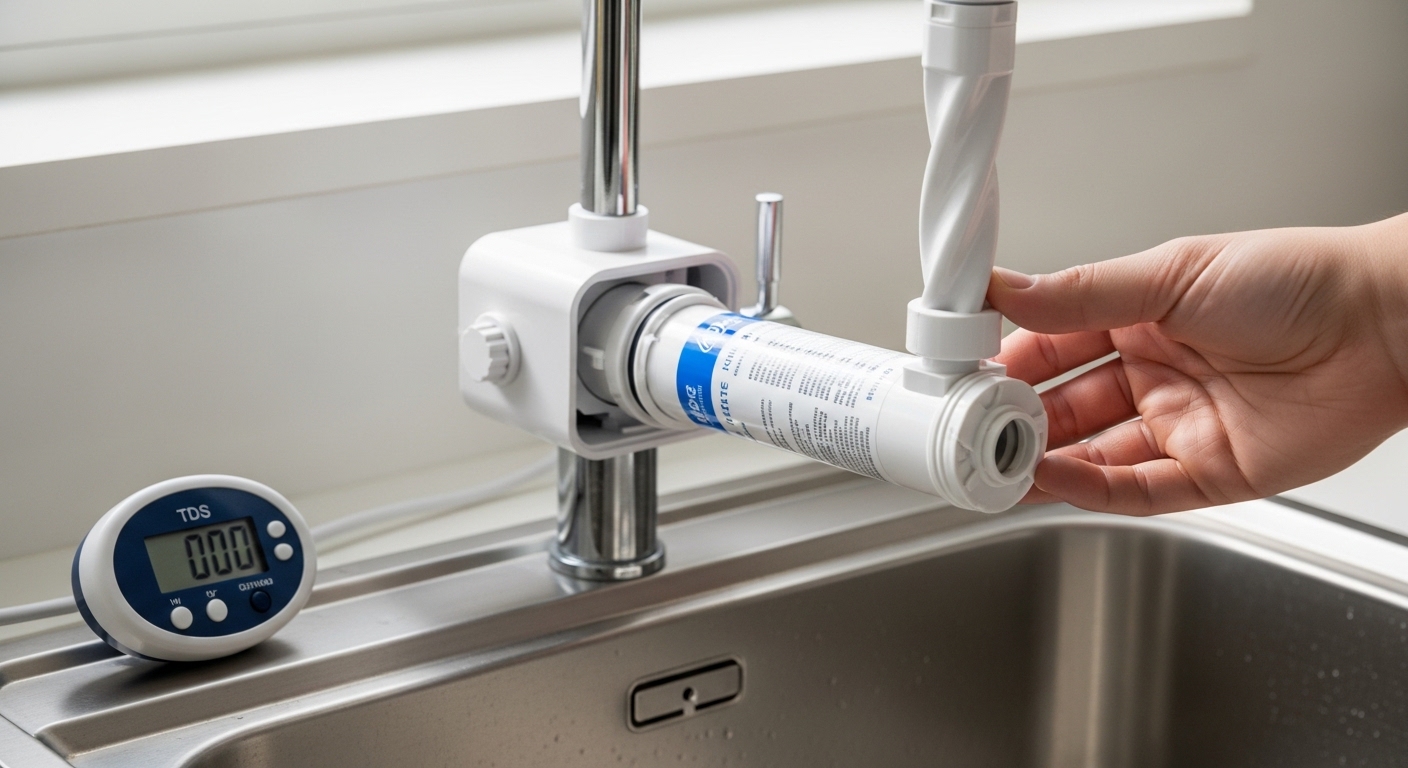
If your faucet-mounted filtration system has started tasting “off” or your meter is creeping above zero, a zero water faucet filter replacement is almost certainly what you need. ZeroWater-style five-stage filters are designed to pull dissolved solids out of your tap water, but they are consumable parts — once the ion-exchange resin is saturated, the cartridge stops performing and needs to be replaced. The good news: replacing it is one of the easiest maintenance jobs in the whole bathroom and kitchen, and getting it right protects both your water quality and the faucet hardware behind it.
At wowowfaucet-net, we sell and service faucets every day, so we see what happens when filtration is neglected — clogged aerators, scale buildup, and premature cartridge wear. This guide pulls together what we tell our own customers so you can buy the correct replacement the first time.
Why a Zero Water Faucet Filter Replacement Matters
The whole selling point of a ZeroWater-style system is the 000 reading on the included total dissolved solids (TDS) meter. Standard carbon pitcher filters typically bring water down to a 200–350 TDS range. A five-stage system uses ion-exchange resin to go all the way to zero. But that resin has a finite capacity. Once it is exhausted, performance does not slowly fade in a way you would notice by taste alone — it can drop off quickly, and a saturated filter can even release previously captured solids back into your water.
That is why a timely zero water faucet filter replacement is not optional maintenance — it is the entire point of owning the system. Running an exhausted cartridge gives you a false sense of security while delivering water no better than your untreated tap.
Signs Your Filter Is Due for Replacement
- TDS meter reads above 006. ZeroWater’s own guidance is to replace the filter once your reading hits 006. This is the most reliable signal.
- A fishy or off smell or taste. This is a classic sign the ion-exchange resin is fully saturated and should be swapped immediately.
- Noticeably slower flow. Sediment loading on the early stages restricts flow well before the resin is done.
- It has simply been too long. Even with light use, manufacturers recommend replacement on a schedule — see the table below.
If your flow has dropped but your TDS is still low, the restriction may actually be in the faucet itself rather than the filter. Our guide on how to unclog a kitchen faucet aerator is worth a read before you assume the cartridge is the culprit.
How Often Do You Need a Zero Water Faucet Filter Replacement?
There is no single answer, because filter life is driven almost entirely by your starting water quality. The higher your incoming TDS, the faster the resin saturates. A home on soft municipal water might stretch a cartridge for months, while a home on hard well water could exhaust the same filter in a couple of weeks.
| Incoming Tap Water TDS | Approx. Gallons Per Filter | Typical Replacement Interval |
|---|---|---|
| 000–050 (very soft) | ~25–40 gallons | Every 3–5 months |
| 051–200 (average city water) | ~15–25 gallons | Every 2–3 months |
| 201–350 (hard water) | ~8–15 gallons | Every 4–6 weeks |
| 351+ (very hard / well water) | ~5–8 gallons | Every 2–4 weeks |
The single best habit you can build is to test your water with the included meter once a week. It takes ten seconds and removes all the guesswork. If you do not know how hard your local water is, your municipal water quality report — or a quick well test — will tell you, and that number predicts your replacement cadence better than anything else.
Choosing the Right Zero Water Faucet Filter Replacement
Not every replacement cartridge fits every system, and this is where buyers most often go wrong. Before you order, confirm three things.
1. Match the System Generation
ZeroWater-style systems have gone through several housing designs. A cartridge built for a current five-stage housing will not necessarily seat correctly in an older unit. Check the model number printed on your housing or base, not just the brand name.
2. Filter-Mounted vs. Pitcher vs. Faucet-Mount
“Faucet filter” can mean a few different things. Some systems screw directly onto the faucet spout in place of the aerator; others are pitcher cartridges; others are under-sink. Make sure the replacement you are buying is the same form factor. If yours threads onto the spout, you will also want to know your aerator thread size — our walkthrough on how to remove an aerator from a kitchen faucet shows you exactly where to find that.
3. Genuine vs. Third-Party Cartridges
The aftermarket is full of compatible cartridges at lower prices. Some are excellent; some use less resin and exhaust far faster, erasing any savings. The table below lays out the trade-offs honestly.
| Option | Typical Price (each, multi-pack) | Pros | Cons |
|---|---|---|---|
| Genuine OEM 5-stage cartridge | $13–$18 | Guaranteed fit, full resin charge, certified performance | Highest per-unit cost |
| Reputable third-party compatible | $8–$12 | Lower cost, usually good fit | Resin volume varies; check reviews and certification |
| Bargain no-name cartridge | $4–$7 | Cheapest upfront | Often shorter life, possible leaks, no testing data |
Our recommendation: whatever you choose, look for an NSF/ANSI certification claim (Standard 42 for taste/odor, 53 for health contaminants, 58 for reverse-osmosis-grade reduction). A genuine cartridge that lasts twice as long is usually the better value even at a higher sticker price.
How to Install a Zero Water Faucet Filter Replacement
This is genuinely a five-minute job with no tools required for most spout-mounted and pitcher-style units. Here is the process.
- Turn off the water if your system has a diverter valve, or simply make sure the faucet is off.
- Remove the old cartridge. For pitcher-style units, lift it straight out of the reservoir. For housing-style units, twist counterclockwise and pull down.
- Rinse the housing. Wipe out any sediment or slime from the housing seat — this protects the new seal.
- Pre-soak or rinse the new cartridge if the manufacturer instructs it. Many five-stage cartridges do not require soaking, but always check the insert.
- Seat the new cartridge. Push or twist it in until it is fully seated. You should feel it bottom out — a partial seat is the number one cause of leaks and bypassed water.
- Flush the system. Run the first reservoir or first 8–16 ounces of water and discard it. This clears resin dust.
- Test with the TDS meter. A correctly installed fresh cartridge should read 000–002. Anything higher means it is not seated or the cartridge is defective.
If you have a spout-mounted unit and you are getting leaks at the threads even after reseating, the issue is often a worn washer or cross-threaded connection rather than the cartridge. The same fundamentals from our guide on how to fix a faucet that sprays water everywhere apply to filter attachments too.
Getting the Longest Life From Every Cartridge
You cannot change your incoming water hardness, but you can avoid wasting filter capacity. A few habits make a real difference.
- Do not filter water you are not drinking. Using filtered water to fill pots for boiling, water plants, or rinse dishes burns capacity for no benefit.
- Keep the system cool. Heat accelerates resin breakdown. Do not run hot water through a filter rated for cold only.
- Store the unit clean. Slime and biofilm in the housing shorten cartridge life and can contaminate fresh water. Our article on how to prevent bacteria growth in faucets covers the cleaning routine that applies directly here.
- Address very hard water upstream. If you are replacing cartridges every two weeks, a whole-home softener or a sediment pre-filter will pay for itself quickly in cartridge savings.
It is also worth thinking about your overall water usage. Households focused on filtration are often the same ones interested in conservation — if that is you, our guide on how to retrofit your faucet to use less water pairs well with a filtration setup, since lower flow means each cartridge treats the water you actually drink rather than water that goes down the drain.
Cost of Ownership: Is It Worth It?
Let’s be honest about the math, because the recurring cost is the real consideration with any faucet filter. On average city water, expect to spend somewhere between $60 and $120 per year on replacement cartridges for a household of two to four people. On very hard water, that figure can climb past $200 unless you add pre-treatment.
Compared to bottled water — which a typical family can easily spend $300–$600 a year on — a ZeroWater-style system still comes out well ahead, and it eliminates a large volume of plastic waste. Compared to a simple carbon pitcher, you pay more per cartridge but you get the 000 TDS result that carbon filters simply cannot reach. The decision really comes down to whether that last bit of purity matters to you. For households with high TDS, hard well water, or specific contaminant concerns, it usually does.
When a Different System Might Suit You Better
If you find the replacement cadence frustrating, an under-sink reverse osmosis system has a much higher upfront cost but far longer service intervals — typically 6–12 months between filter changes and 2–3 years on the RO membrane. Faucet-mounted ZeroWater-style units win on price and simplicity; RO wins on convenience over time. There is no wrong answer, only the one that fits your water and your patience.
Protecting the Faucet Behind the Filter
One detail people overlook: a clogged or poorly maintained filter pushes back pressure into your faucet. Over months, that added strain can stress cartridges, washers, and aerator threads. If you have noticed your handle getting stiff or your flow behaving strangely since adding a filter, it is worth checking the faucet itself — a stuck or worn faucet cartridge is a separate issue from your water filter cartridge, and the two are easy to confuse by name alone.
Keeping both in good shape means your filtration system performs as designed and your faucet lasts its full expected life. That is the whole reason we treat filter maintenance as part of faucet care, not a separate topic.
Author Note & Brand Credibility
Written by the wowowfaucet-net product team. Our team has spent over a decade designing, testing, and servicing kitchen and bathroom faucets, and we field filtration questions from customers every week. Every faucet we sell is pressure-tested and built to meet recognized North American plumbing standards, and our fixtures carry a manufacturer’s warranty so you are covered if a defect ever shows up. The recommendations in this guide reflect what we tell our own customers — practical, tested, and focused on getting your water right rather than selling you the most expensive option.
While we manufacture faucets rather than filter cartridges, we recommend always pairing your fixture with a filtration cartridge that carries a current NSF/ANSI certification, and following the cartridge manufacturer’s stated replacement schedule to keep that certification meaningful.
FAQ
How do I know when my zero water faucet filter replacement is actually due?
Test weekly with the included TDS meter. ZeroWater’s guidance is to replace once the reading reaches 006, but a fishy smell or taste means you should swap it immediately regardless of the number. Slower flow alone usually points to sediment loading and is another reliable cue.
Can I use a third-party cartridge instead of the genuine one?
Yes, and many reputable third-party cartridges perform well. The risk is resin volume — cheaper cartridges sometimes use less ion-exchange resin and exhaust much faster, which erases the savings. Look for an NSF/ANSI certification claim and confirm the cartridge matches your system generation and form factor.
Why does my new filter still read above zero?
The most common cause is a cartridge that is not fully seated — push or twist it until it bottoms out completely. If it is seated correctly and still reads high after flushing, the cartridge may be defective or have been stored too long. A fresh, properly installed cartridge should read 000–002.
Is it safe to drink water from an expired zero water filter?
It is not dangerous in the short term, but it is no longer doing its job. A saturated ion-exchange resin can release previously captured dissolved solids back into your water, so you may actually be drinking water worse than your untreated tap. Replace it promptly once your meter climbs.
Why is my filter exhausting so fast?
High incoming TDS is almost always the reason — hard or well water saturates the resin quickly. Filtering water you do not drink (for cooking, plants, or rinsing) also burns capacity. If you are replacing cartridges every couple of weeks, a sediment pre-filter or whole-home softener will dramatically extend cartridge life.
Does a faucet filter affect my faucet’s water pressure?
Yes. Any filter restricts flow somewhat, and a clogged or exhausted cartridge restricts it more. If your pressure drops noticeably, replace the cartridge first; if that does not fix it, check the faucet aerator and cartridge, since those are separate components that can clog independently.
您好!Sign In