 Faucet Online
What Is the Standard Bath Tap Hole Size UK Homeowners Need Before They Buy?
View Count:5 CategoryInstall
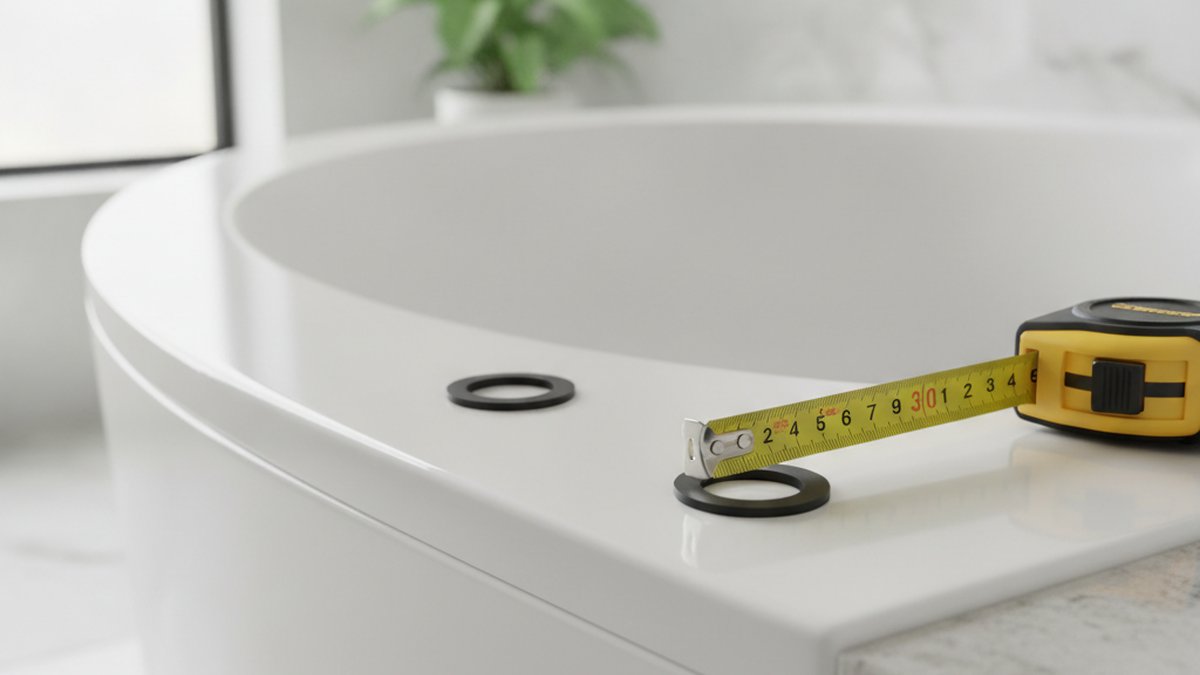
If you’re staring at a bath wondering whether a new tap will actually fit, the bath tap hole size UK standard is what you need to check first — and the answer is refreshingly simple: 35mm. That single measurement decides whether the shiny mixer you’ve been eyeing will drop straight into your bath or leave you with a wobbling tap and a leaking seal. In this guide I’ll walk you through the exact numbers, how to measure your own bath, what to do when the holes are the wrong size or spacing, and the specific pitfalls that catch people out — from acrylic vs. steel baths to the difference between the hole and the thread.
Bath taps sit at the crossover of two measurements people mix up constantly: the hole the tap sits in, and the thread (the “tail”) that pokes through underneath. Get those two straight and everything else falls into place.
What Is the Standard Bath Tap Hole Size in the UK — 35mm or Something Else?
The standard UK bath tap hole is 35mm in diameter. That’s the size manufacturers cut into pre-drilled baths and the size virtually every high-street and online bath tap in Britain is designed to drop into. Some sources quote a range of 33mm to 36mm, and that’s because a bath tap tail is much narrower than the hole — the hole just needs to be big enough to pass the tap’s back-nut and shroud through, so a couple of millimetres either way rarely matters.
Here’s the important distinction that trips people up. The hole is 35mm. The thread on the tap — the bit that carries the water and takes the flexible connector — is a separate, smaller measurement: it’s ¾ inch BSP (British Standard Pipe) for bath taps, which works out to roughly 26mm across the thread. So a 35mm hole comfortably swallows a ¾” tap tail with room to spare for the sealing washer and back-nut.
Why 35mm specifically? It became the norm because it accommodates the shroud (the decorative base of the tap), the top hat washer, and the tap body all at once, while leaving a snug-but-not-tight fit. Basin taps, by contrast, use a slightly smaller hole — typically 28–32mm — because basin taps run a narrower ½” BSP thread. That’s the single most common mix-up: people try to fit a bath tap in a basin hole or vice versa. They are not interchangeable.
| Fixture | Standard hole diameter | Tap tail thread (BSP) | Typical use |
|---|---|---|---|
| Bath taps / bath mixer | 35mm | ¾ inch | Baths, bath-shower mixers |
| Basin taps | 28–32mm | ½ inch | Bathroom sinks / basins |
| Kitchen taps (mono) | 32–35mm | ½ inch (with fixing plate) | Kitchen sinks |
| Freestanding bath tap | Floor-mounted (no deck hole) | ¾ inch | Freestanding baths |
One more thing worth knowing: the ¾” vs. ½” divide is about flow. A bath needs to fill fast, so it uses the fatter ¾” tail to move more water; a basin only needs a trickle, so ½” is fine. This is also why you can’t just swap a basin tap onto a bath and expect a quick fill — even if you bodged the hole size, you’d be throttling the flow.
How Do I Measure My Bath Tap Holes Correctly Before Buying a New Tap?
Measure the diameter of the existing hole across its widest point with a tape measure or steel rule — you’re looking for roughly 35mm — and separately measure the centre-to-centre distance between the two holes if your bath has a pair. Those two numbers tell you almost everything you need.
Here’s the exact order I’d do it in:
- Diameter of each hole: lay a rule across the open hole (remove the old tap first if you can). Around 35mm confirms a standard bath tap hole. If it reads closer to 28–30mm, you may have basin-sized holes.
- Hole centres (the spread): measure from the middle of one hole to the middle of the other. UK two-tap-hole baths are commonly spaced at 180mm centres, though this varies. This matters if you want a two-hole bath filler or a deck mixer that bridges both holes.
- Number of holes: one hole = you need a mono/monobloc bath mixer. Two holes = you need pillar taps (a hot and a cold) or a two-hole mixer. Three or four holes = a bath-shower mixer set with separate valve and spout.
- Deck thickness: measure how thick the bath rim is where the tap sits. Acrylic baths are often 5–10mm; steel and stone resin can be much thicker. This affects whether the tap’s threaded tail is long enough to reach the back-nut underneath.
That last point — deck thickness — is the silent killer of tap installs. A tap designed for a thin acrylic rim may not have enough thread to bite on a thick stone-resin bath, leaving the back-nut with nothing to grip. Always check the tap’s specified maximum deck thickness against your bath.
What if my bath has only one hole, or three, or none at all?
Match the tap to the hole count, not the other way around. One hole means a monobloc bath mixer — a single body with the spout and both controls combined. Two holes means either traditional pillar taps or a two-hole deck mixer. Three or four holes usually means a bath-shower mixer where the spout, the two handles, and sometimes a hand-shower each get their own hole. No holes at all (a plain bath rim or a freestanding tub) means you’re going floor-mounted or wall-mounted, and hole size stops mattering entirely — you’re into pipe routing instead.
My Bath Holes Are the Wrong Size — Can I Still Fit the Tap I Want?
Yes, in most cases — you can usually enlarge a hole that’s too small, and you can fill or cap a hole that’s unwanted, but you cannot shrink a hole that’s too big. So the golden rule is: if in doubt, buy the tap that fits the holes you already have, because modifying the bath is the harder path.
Here’s how each scenario plays out:
- Hole too small (e.g. 28mm and you need 35mm): you can enlarge it. On an acrylic bath this is straightforward with a step drill bit or a round file — acrylic cuts easily. On a steel or cast-iron bath it’s much harder and risks chipping the enamel, so many people prefer to buy a tap that fits or call a fitter.
- Hole too big (e.g. 40mm+): you can’t shrink it, but a larger decorative base plate, a shroud, or a stepped washer can cover the gap so the tap still seals and looks tidy. Some tap ranges include a wider cover plate specifically for this.
- Wrong spacing between two holes: a bridge-style or plate-mounted mixer that spans both holes can hide non-standard centres. Otherwise you fit two separate pillar taps that don’t care about the spread.
- Unwanted extra hole: a chrome blanking plug or hole stopper fills it cleanly, which is common when you switch from a four-hole set to a mono mixer.
If you do end up modifying supply pipework to reposition taps, that’s a different job — and if your existing connectors don’t reach, our guide on what to do when a faucet supply line is too short walks through the safe fixes without over-stretching or kinking the flexi tails.
Do I need flexible tap connectors, and what size for a bath tap?
For UK bath taps you’ll almost always use ¾ inch flexible tap connectors — they screw onto the ¾” tap tail at one end and connect to your 22mm (or 15mm with a reducer) copper supply at the other. Flexi connectors have largely replaced rigid copper tails because they let you position the tap and then bend the pipe to meet the supply, which is a lifesaver in tight bath panels. Just don’t over-tighten them, and never twist the braided section.
Bath Tap Holes vs. Basin Tap Holes — Why Can’t I Just Swap Them?
You can’t swap them because bath and basin taps use different hole sizes and different thread sizes for a reason: baths need high flow (¾” thread, 35mm hole) and basins need controlled low flow (½” thread, ~28–32mm hole). Force a bath tap into a basin hole and it won’t physically fit; force a basin tap onto a bath and you’ll get a painfully slow fill.
This is the single most common ordering mistake we see. Someone finds a gorgeous tap online, orders it because the finish is right, and only discovers on install day that it’s a basin tap trying to sit in a bath hole. Always confirm the product is specifically sold as a bath tap or bath mixer, not a basin tap, before you buy — the finish might be identical, but the plumbing underneath is not.
If you’re weighing up build quality alongside sizing, it’s worth understanding what you’re paying for underneath the chrome. Our deep-dive on whether a bathtub faucet brass build is worth the money explains why the tap body material matters as much as the hole it sits in — a solid brass body outlasts a zinc-alloy one by years, especially in hard-water areas.
What About Freestanding, Wall-Mounted and Deck-Mounted Bath Taps — Does Hole Size Still Matter?
Hole size only matters for deck-mounted taps that sit on the rim of the bath — for freestanding (floor-mounted) and wall-mounted taps, there are no deck holes, so the 35mm rule is irrelevant and you focus on pipe centres and mounting instead. Knowing which mounting style you have (or want) tells you immediately whether you even need to think about hole size.
| Mounting type | Does hole size matter? | What to check instead |
|---|---|---|
| Deck-mounted (on bath rim) | Yes — 35mm holes | Hole diameter, centres, deck thickness |
| Freestanding (floor) | No deck holes | Floor pipe centres, standpipe height |
| Wall-mounted | No deck holes | Wall pipe centres (commonly 150mm) |
| Roll-top / bath-mounted feet | Sometimes (edge holes) | Edge thickness, hole spread |
Freestanding baths are their own world. If you’re going that route, the tap usually rises from the floor on a standpipe, and the numbers that matter are the pipe centres and the height, not any hole in the bath. For a real-world look at how a premium floor-mounted filler goes together, our review of the Metris freestanding tub filler with 1.75 GPM handshower shows what to expect from a proper freestanding setup — and why flow rate becomes the headline spec once hole size drops out of the equation.
Are UK and US bath tap hole sizes the same?
No — and this catches out anyone buying imported taps. The UK standard bath tap hole is 35mm with ¾” BSP threads, while US fixtures often use different hole sizes and NPT (National Pipe Thread) rather than BSP. BSP and NPT threads look similar but don’t seal reliably together. If you buy a US-market tap, check that it either meets UK sizing or comes with the correct adapters, or you’ll be chasing leaks. When in doubt, buy taps sold specifically for the UK market.
Quick Buyer’s Checklist Before You Order a Bath Tap
Before you click “buy”, confirm these five things and you’ll avoid 95% of fitment problems: hole diameter (~35mm), hole count, hole centres, deck thickness, and thread size (¾” BSP). Run through them in order and any tap that passes will fit.
- Hole diameter: ~35mm for a standard bath tap.
- Number of holes: 1 = mono mixer, 2 = pillar taps or two-hole mixer, 3–4 = bath-shower mixer set.
- Hole centres: measure centre-to-centre if you have two or more.
- Deck thickness: check it against the tap’s max deck-thickness spec.
- Thread & connectors: ¾” BSP tails with ¾” flexible connectors.
FAQ
What size is a standard UK bath tap hole?
35mm in diameter. That’s the size pre-drilled into UK baths and the size nearly every deck-mounted bath tap or mixer is built to fit. A few millimetres of tolerance (33–36mm) is normal because the tap tail is much narrower than the hole.
Is a bath tap thread ¾ inch or ½ inch?
Bath taps use a ¾ inch BSP thread on the tail, while basin taps use ½ inch. The larger ¾” thread lets a bath fill faster. This is separate from the 35mm hole size — the hole holds the tap, the thread carries the water.
Can I fit a basin tap in a bath tap hole?
Not reliably. A basin tap has a smaller ½” tail and is designed for a smaller (28–32mm) hole, so in a 35mm bath hole it may not seal well, and its lower flow rate will make the bath painfully slow to fill. Always use a tap specifically sold as a bath tap.
What if my bath tap holes are spaced differently from the tap I want?
Measure the centre-to-centre distance first. If it doesn’t match a two-hole mixer, fit two separate pillar taps (which don’t care about spacing) or choose a plate/bridge-mounted mixer that spans and hides non-standard centres. UK two-hole baths are commonly around 180mm centres.
How thick can my bath rim be for a deck-mounted tap?
It depends on the tap — check the manufacturer’s stated maximum deck thickness. Thin acrylic baths (5–10mm) suit almost any tap; thick steel or stone-resin rims may need a tap with a longer threaded tail so the back-nut has enough thread to grip underneath.
Do I need special connectors for a bath tap?
Use ¾ inch flexible tap connectors. They screw onto the ¾” bath tap tail and connect to your copper supply, and their bendable braided section makes positioning far easier inside a cramped bath panel. Hand-tighten plus a gentle nip with a spanner — never over-tighten or twist the braid.
A Note on Expertise and Standards
This guide was written by the WOWOW Faucet product team, drawing on hands-on fitting experience across acrylic, steel and stone-resin UK baths. WOWOW designs and manufactures faucets and bath fixtures with solid brass bodies and ceramic-disc cartridges, and our bath taps are built to UK sizing conventions (35mm holes, ¾” BSP tails) so they drop into standard pre-drilled baths. Our fixtures are pressure- and durability-tested against recognised plumbing standards, finished to resist tarnishing in hard-water areas, and backed by a manufacturer’s warranty for lasting peace of mind. As always with plumbing work, if you’re not confident isolating the water supply or modifying a bath, bring in a qualified plumber — the cost of a fitter is far less than the cost of a cracked bath or a hidden leak.
Author’s note: I’ve fitted more bath taps than I can count, and the same two numbers solve almost every problem — 35mm for the hole, ¾ inch for the thread. Measure those, count your holes, check your deck thickness, and you’ll order the right tap the first time.
您好!Sign In