 WOWOW Faucets

What’s the Best Shower System in Canada, and How Do You Choose One in 2026?
View Count:46 CategoryProduct
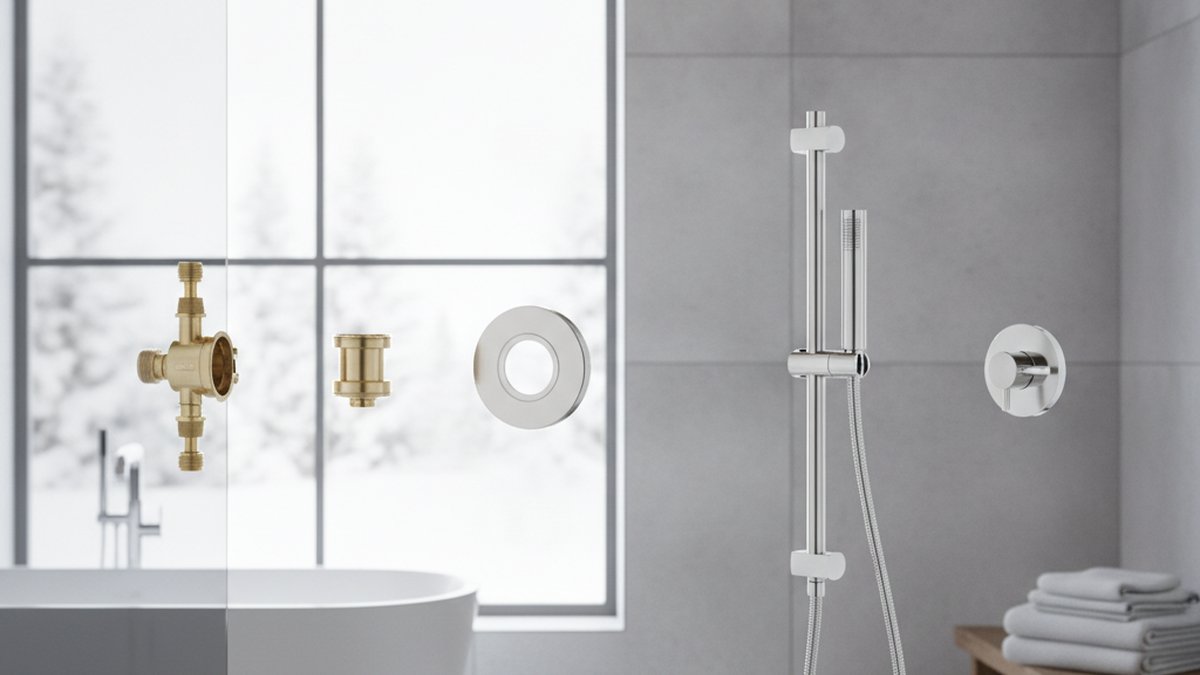
Choosing a shower system canada buyers can actually rely on comes down to three things Canadian bathrooms demand more than most: certified anti-scald temperature control, a valve body that won’t crack in a cold exterior wall, and a flow rate that satisfies both federal and provincial water-efficiency rules. Get those right and the finish, spray style, and price sort themselves out. Below, we walk through exactly how to pick one — with real numbers, real scenarios, and the certifications that matter north of the border.
A “shower system” isn’t just a shower head. It’s the whole package: the valve hidden in the wall, the trim you see, the diverter that switches between outlets, and the spray outlets themselves (rain head, handheld, body jets, or a tub spout). In Canada, the part that trips people up is almost always the valve and its certification — not the pretty chrome disc on the ceiling.
What exactly counts as a “shower system,” and what comes in the box?
A shower system is any set that combines a control valve with two or more water outlets — typically a fixed head plus a handheld, or a rain head plus body sprays. A basic single-head shower faucet is not a “system”; the word implies a diverter and multiple spray options.
When you buy a complete kit in Canada, most reputable sets include the rough-in valve body, the thermostatic or pressure-balance cartridge, the trim plate and handle(s), the rain or fixed head with its arm, a handheld sprayer with hose, a mounting bracket or slide bar, and the mounting hardware. Cheaper “combo” listings sometimes ship trim only — meaning no valve inside — so you’re buying the visible parts and nothing that actually controls the water. Always confirm the valve is included before you check out. If you’re unclear on the difference between trim, valve, and a full set, our guide to what comes in a shower faucet set breaks the components down piece by piece, and the deeper explainer on the shower faucet unit covers which configuration suits which bathroom.
- Valve body — the brass or DZR-brass cartridge housing buried in the wall.
- Trim kit — the visible handle, escutcheon plate, and finish.
- Diverter — sends water to the rain head, the handheld, or both.
- Outlets — rain/fixed head, handheld sprayer, optional body jets or tub spout.
Thermostatic or pressure-balance: which valve is best for a Canadian home?
For most Canadian homes, a thermostatic valve is the better choice, and it’s often worth the extra CA$80–$150 over a pressure-balance valve. A thermostatic valve holds your set temperature to within about ±1–2°C even when someone flushes a toilet or the well pump cycles; a pressure-balance valve only prevents scalding by keeping the hot/cold ratio steady — the temperature can still drift.
That difference matters more in Canada than in warmer climates. Incoming municipal water can sit near 4°C in winter and climb well above 15°C in summer, so a pressure-balance valve set at a comfortable temperature in January can run noticeably cooler in July at the same handle position. A thermostatic valve compensates automatically. Both types are required by CSA B125.1 to include anti-scald protection, so either is safe — thermostatic just adds comfort and consistency.
| Valve type | How it works | Best for | Typical price (CAD) |
|---|---|---|---|
| Pressure-balance | Keeps hot/cold ratio constant, prevents scald spikes | Budget builds, single-outlet showers, rentals | $120–$300 |
| Thermostatic | Holds an exact set temperature regardless of pressure or supply temp | Cold-climate homes, well water, multi-outlet systems | $250–$700 |
| Thermostatic + diverter (multi-function) | Independent volume + temperature control across 2–3 outlets | Rain-plus-handheld or body-jet systems | $400–$1,000+ |
If you’re running two or more outlets — say a rain head and a handheld you actually want to use at the same time — look for a thermostatic valve with independent volume controls per outlet, not just a diverter. A diverter forces you to pick one outlet at a time; a proper multi-function thermostatic lets you run both, though it needs the water pressure and flow to support it.
Which certifications does a shower system need to be legal in Canada?
To be sold and installed legally in Canada, a shower system’s valve must carry cUPC or CSA certification, and the whole assembly should meet CSA B125.1 (plumbing fittings) and the anti-scald standard ASME A112.18.1/CSA B125.1. Municipal inspectors look for these marks; an uncertified valve can fail inspection and even void your home insurance after a water-damage claim.
Here’s what to actually check on the box or spec sheet before buying:
- cUPC or CSA mark — confirms the product is certified for the Canadian market, not just the U.S.
- Lead-free compliance — must meet the weighted-average 0.25% lead limit (harmonized with NSF/ANSI 372), which is federal law in Canada.
- Flow rate — Canada’s federal maximum for shower heads is 9.5 L/min (2.5 GPM), but several provinces and many efficiency rebate programs push for 7.6 L/min (2.0 GPM) or lower.
- Anti-scald / temperature limit stop — required under CSA B125.1 for all new shower valves.
Buying a “great deal” imported set with no cUPC or CSA mark is the single most common mistake we see. It may install fine, but it can fail inspection and it usually isn’t backed by a warranty that’s honoured in Canada.
Will a shower system hold up in a cold Canadian bathroom on an exterior wall?
Yes — but only if the valve is solid brass or DZR (dezincification-resistant) brass and the rough-in is insulated properly, kept off the cold face of an exterior wall. The valve itself doesn’t freeze from the air; the water sitting in the supply lines behind it does, and a cracked valve body is an expensive, in-wall repair.
Two rules keep a Canadian shower system alive through winter. First, never mount the valve in the cold cavity of an exterior wall without insulation behind it — bring the plumbing to the warm (interior) side of the insulation. Second, use a valve body made of forged brass, not zinc alloy or plastic; brass tolerates the expansion-contraction cycle of Canadian temperature swings far better and resists the mineral corrosion common with hard well water. When you’re plumbing the rough-in, PEX is the go-to in most of the country because it tolerates a freeze far better than copper — our walkthrough on doing a shower valve rough-in with PEX covers the connections and support spacing that pass inspection.
If your system feeds a tub as well, the spout connection is another spot where cold-wall installs go wrong. A loose or wrong-length drop-ear can leak inside the wall for months before you notice — see how to install a tub spout elbow without leaks before you close up the wall.
What size and spray setup should you actually buy for your bathroom?
For a standard Canadian bathroom (a 32″–60″ alcove or a walk-in), an 8″–10″ rain head plus a handheld on a slide bar is the most versatile setup and fits almost any ceiling height. Go bigger — 12″ or larger rain heads — only if you have 8’+ ceilings and the water pressure to feed it, because a large low-pressure rain head can feel like a weak drizzle.
Match the hardware to your space and your water:
- Small or low-ceiling bathrooms: wall-mounted 8″ rain head + handheld. Avoid ceiling-mount arms under 7’6″ ceilings.
- Low water pressure (common on older or rural systems): choose a head rated to perform at low pressure and keep the flow rate at 1.75–2.0 GPM so the pressure isn’t spread thin across a huge face.
- Hard water / well water: pick heads with silicone rubber spray nozzles you can rub clean, and plan on periodic descaling.
- Accessibility or bath-and-kids use: a handheld on an adjustable slide bar is far more practical than a fixed head alone.
The handheld you choose also has to physically fit its bracket and hose length. Getting the diameter and hose reach right sounds trivial until you’re standing in a finished shower with a sprayer that won’t reach the far corner — our breakdown of handheld shower head dimensions helps you size it before you buy.
How much should you spend, and what does the price actually buy you?
Plan on CA$250–$700 for a quality mid-range complete shower system, valve included. Below CA$200 you’re usually looking at zinc-alloy or trim-only kits; above CA$1,000 you’re paying for premium brands, multiple body jets, and digital controls. The sweet spot for most Canadian homeowners is CA$300–$500 for a thermostatic rain-plus-handheld set from a brand that certifies for Canada and honours its warranty here.
What the extra money buys, concretely: a forged-brass valve body instead of zinc, a genuine thermostatic cartridge instead of pressure-balance, a corrosion-resistant PVD finish instead of thin electroplate, and a warranty that’s actually serviceable in Canada. Those are the four things that decide whether a shower system lasts 3 years or 20.
Author note, brand credibility, and the warranty question
About the author: This guide was written by the WOWOW Faucet product team, drawing on hands-on testing of shower valves and trim kits, flow-rate bench measurements, and years of fielding installation questions from Canadian homeowners and plumbers. We install, pressure-test, and cold-cycle the fixtures we write about rather than repeating spec sheets.
Why trust WOWOW: WOWOW Faucet designs faucets, shower systems, and bathroom fixtures built to cUPC and CSA-relevant standards, with lead-free waterways and thermostatic and pressure-balance valve options rated for North American plumbing. Our shower systems are pressure-tested and finish-tested before shipping, and our products are backed by a limited lifetime warranty against manufacturing defects on the valve body and finish. Before you finalize any purchase in Canada, confirm the specific model’s certification marks and that the warranty is administered for Canadian buyers — reputable brands, including ours, state this clearly on the product page.
FAQ
Is a rain shower head worth it in a cold climate like Canada’s?
Yes, as long as you pair it with a thermostatic valve and don’t oversize the head. A large rain head spreads water over a wide area, which can feel cooler as droplets lose heat on the way down — a thermostatic valve holds the temperature steady, and an 8″–10″ head keeps the water dense enough to stay warm. Keep the flow at 1.75–2.0 GPM for the best balance of coverage and warmth.
Do I need a plumber to install a shower system in Canada, or can I DIY it?
You can DIY the trim and head swap, but the valve rough-in and any soldering or PEX crimping should meet local plumbing code, and many municipalities require permits and inspection for in-wall work. If you’re only replacing trim on an existing valve, that’s a confident DIY job; if you’re relocating or installing a new valve, either use a licensed plumber or confirm your municipality allows homeowner permits.
What flow rate is legal for shower heads in Canada?
The federal maximum is 9.5 L/min (2.5 GPM), but many provinces and efficiency-rebate programs favour 7.6 L/min (2.0 GPM) or lower. Choosing a 1.75–2.0 GPM head keeps you compliant everywhere, often qualifies for water-saving rebates, and still delivers a strong spray on a well-designed head.
Thermostatic vs pressure-balance — which do I really need?
If your budget allows and you have well water, multiple outlets, or a household where several fixtures run at once, choose thermostatic for consistent temperature. For a simple single-head shower on stable municipal pressure, a pressure-balance valve is safe, code-compliant, and saves money. Both must include anti-scald protection to be sold in Canada.
Will a U.S. shower system work in Canada?
Sometimes physically, but not always legally. U.S. plumbing connections (1/2″ NPT) are generally compatible, but the product must carry cUPC or CSA certification to pass Canadian inspection and to keep your warranty and insurance valid. Buy a version certified for the Canadian market rather than a grey-market U.S. import.
How long should a good shower system last?
A quality brass-bodied, thermostatic shower system should last 15–20 years, with the cartridge being the only part you’re likely to service in that time. Cheaper zinc-alloy systems often start leaking or seizing within 3–5 years, especially with hard water. Choosing forged brass and a serviceable cartridge is what buys you the longer lifespan.
您好!Sign In