 Faucet Online
Do Touchless Faucets Plug In, and Is a Plug-In Touchless Faucet Worth It?
View Count:4 CategoryProduct
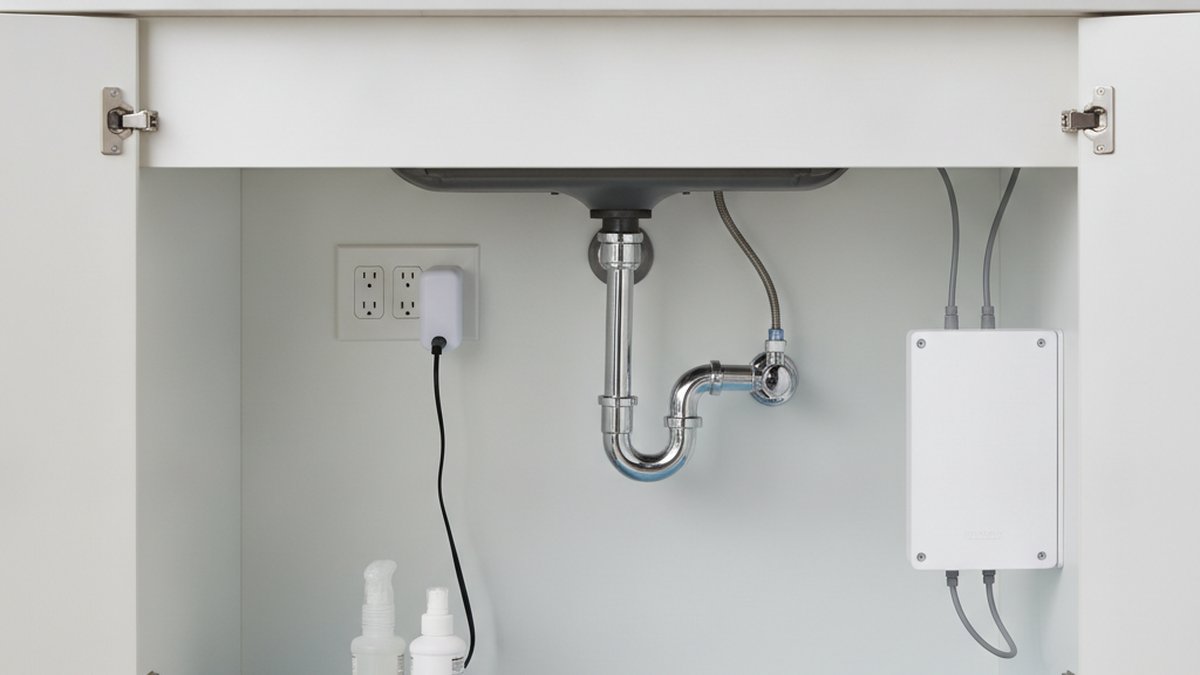
If you’ve been shopping for a hands-free kitchen or bathroom fixture, you’ve probably hit the big question fast: does a touchless faucet plug in to the wall, or does it run on batteries? The short version is that many of the best touchless faucets plug in using a low-voltage AC adapter that connects to a standard outlet inside your sink cabinet, and that single design choice changes everything about how the faucet feels to live with day to day. No dead batteries at Thanksgiving, no mystery “why won’t the sensor respond” moments, no crawling under the sink twice a year. But plug-in power also comes with its own requirements, and getting them wrong is the number one reason people return these faucets.
This guide answers the real questions people actually ask before buying — the ones you’d type into Google or ask an AI assistant out loud: how the power works, whether you need an outlet, what happens in a power outage, and how plug-in stacks up against battery models for your specific setup and budget. Let’s get into it.
Does a Touchless Faucet Plug Into the Wall, or Run on Batteries?
Both exist — and many faucets do both. A plug-in touchless faucet uses an AC power adapter (usually 6V DC output) that plugs into a standard 120V wall outlet under the sink, then feeds a small control box wired to the sensor. Battery models run on 4–6 AA batteries housed in that same control box. A growing number of premium faucets are “dual-power”: they plug in as the main source but hold batteries as an automatic backup.
Here’s why the distinction matters. The sensor, solenoid valve, and control electronics need a constant trickle of power to stay in “ready” mode 24/7. Plug-in power supplies that endlessly. Batteries drain — typically lasting 6 months to 2 years depending on how often the faucet fires and whether it’s a high-quality solenoid. If you run a busy family kitchen, plug-in power quietly removes an annoyance you’d otherwise fight forever.
- Plug-in only: Cleanest, most reliable, but dead in a power outage and requires an available outlet.
- Battery only: Installs anywhere, no electrician, but you’ll replace batteries and risk a dead faucet at the worst time.
- Dual-power (plug-in + battery backup): The best of both — runs on wall power, falls back to batteries only when the power’s out. This is what we recommend for most kitchens.
Do I Need an Outlet Under My Sink for a Plug-In Touchless Faucet?
Yes — a plug-in touchless faucet needs a working 120V outlet inside or near the sink cabinet, within the reach of the adapter’s cord (usually 3–5 feet). If you don’t have one, you have three options: use a battery or dual-power model instead, run an extension from a nearby outlet (not ideal long-term), or hire an electrician to add a receptacle.
Before you buy, open your sink cabinet and check. Many modern kitchens already have an outlet under the sink because it powers a garbage disposal or dishwasher air gap. If you see one and it has a free slot, you’re set. If the only outlet is fully occupied by a disposal, you can add a plug-in power strip or an outlet splitter rated for the load — the faucet adapter draws very little (typically under 10 watts).
If there’s no outlet at all — common in older homes and most bathroom vanities — get an electrician’s quote before committing to a plug-in-only model. Adding a receptacle usually runs $150–$350 depending on access. Honestly, for a bathroom vanity with no outlet, a battery or dual-power faucet is often the smarter, cheaper call. While you’re under there, it’s also a good moment to check that your supply lines actually reach; if you find yours come up short, our guide on fixing a faucet supply line that’s too short walks through the safe fixes.
How Do You Install a Plug-In Touchless Faucet Yourself?
You can absolutely DIY a plug-in touchless faucet in about 45–90 minutes with basic tools — the plumbing is identical to a normal faucet, and the “electrical” part is just plugging an adapter into an outlet. No wiring into your home’s circuits is required.
The general sequence looks like this:
- Shut off the hot and cold supply valves under the sink and open the old faucet to release pressure.
- Disconnect and remove the old faucet (a basin wrench helps in tight spots).
- Drop the new faucet through the mounting hole and tighten the mounting nut from below.
- Connect the hot and cold supply lines to the faucet’s inlet hoses and to the control box/solenoid valve — follow the color-coded fittings.
- Mount the control box to the cabinet wall with the included screws or double-sided tape, keeping it off the cabinet floor in case of leaks.
- Plug the AC adapter into your outlet. If it’s a dual-power model, load the backup batteries now.
- Turn the water back on, run it to purge air, and wave your hand to test the sensor.
The single most common mistake is over-tightening the plastic hex nuts on the control box inlets — hand-tight plus a quarter turn is plenty; a wrench cracks them. If you want a real-world walkthrough with a specific brand, our step-by-step on doing a Kohler touchless faucet installation yourself covers the sensor calibration quirks that apply to almost every brand, including WOWOW.
Plug-In vs. Battery vs. Dual-Power: Which Touchless Faucet Should You Buy?
Buy dual-power if you have an outlet and want zero hassle; buy battery-only if adding an outlet isn’t worth it; buy plug-in-only if you want the lowest lifetime cost and don’t mind losing touchless function during rare outages. Here’s the honest comparison.
| Feature | Plug-In Only | Battery Only | Dual-Power (Plug-In + Battery Backup) |
|---|---|---|---|
| Needs an outlet | Yes, required | No | Yes, for main power |
| Battery replacement | Never | Every 6–24 months | Only after an outage or years of standby |
| Works during a power outage | No (manual handle still works) | Yes | Yes (auto-switches to battery) |
| Typical price range | $120–$300 | $90–$250 | $150–$400 |
| Best for | Busy kitchens with an outlet | Bathrooms / no outlet | Most homes wanting reliability |
| Lifetime running cost | Lowest | Highest | Low |
One reassuring detail people miss: every quality touchless faucet still has a manual handle for temperature and to force water on/off. So even a plug-in-only model during a power outage isn’t a dead faucet — you just lose the hands-free sensor and operate it like a normal faucet until the lights come back. You’ll never be stuck unable to get water.
What Happens to a Plug-In Touchless Faucet in a Power Outage?
During a power outage, a plug-in-only touchless faucet loses its sensor and auto-shutoff, but the manual lever still delivers water normally. A dual-power model automatically switches to its backup batteries and keeps working touchlessly, which is exactly why we push most buyers toward dual-power.
There’s a subtle safety point here too. The solenoid valve — the electronic gate that opens and closes the water — defaults to a set state when power is lost. On well-designed faucets, that default is “closed,” so you won’t get a surprise flood. When power returns, the sensor recalibrates itself within a few seconds. If yours starts behaving erratically after an outage (running on its own, or not responding), it usually just needs a quick reset: unplug the adapter for 30 seconds, then plug it back in.
Are Plug-In Touchless Faucets Reliable, or Do They Break More Than Regular Faucets?
Plug-in touchless faucets are just as reliable as standard faucets for the plumbing itself, and the electronics are genuinely low-maintenance — the sensor and solenoid are solid-state with no moving parts to wear out. The failures people report are almost always installation or hard-water issues, not the touchless technology.
The two real-world problems to know about:
- Mineral buildup in the aerator and solenoid. Hard water clogs the fine screens over time, causing weak or spitting flow. This isn’t a touchless flaw — it happens to all faucets. A periodic clean fixes it; our guide on cleaning a clogged or spitting kitchen faucet head applies directly.
- False triggers or dead zones. Almost always a sensor placement or reflection issue, fixable by adjusting sensitivity (many control boxes have a dip switch or button).
If your flow is weak but the aerator is clean, the culprit might be upstream water pressure rather than the faucet — worth ruling out with our breakdown of why faucet water pressure runs too low and how to fix it before you assume the sensor’s at fault.
How Much Does a Good Plug-In Touchless Faucet Cost in 2026?
Expect to pay $120–$300 for a quality plug-in or dual-power touchless kitchen faucet in 2026, with the sweet spot for a durable, name-brand model around $160–$220. Below $100 you’re usually getting thin metal, a cheap solenoid that fails early, and a laggy sensor. Above $300 you’re paying for premium finishes and smart-home features (voice control, metered dispensing) that are nice but not essential.
What actually drives long-term value at any price:
- Solid brass body over zinc alloy — brass resists corrosion and lasts decades.
- A quality solenoid valve — the part that opens and closes thousands of times; the most common cheap-faucet failure point.
- A reputable finish like brushed nickel, matte black, or spot-resist stainless that won’t flake.
- A real warranty — look for lifetime coverage on the faucet and multi-year coverage on the electronics.
Author Note, Testing & Warranty — Why You Can Trust This Guide
This guide was written by the WOWOW Faucet product team, drawing on years of designing, bench-testing, and field-servicing touchless faucet systems. We test our faucets’ solenoid valves for durability cycling and certify our fixtures to meet U.S. lead-free standards (NSF/ANSI 61 & 372) and low-lead compliance, and we back our kitchen faucets with a limited lifetime warranty on the faucet body and finish, plus dedicated coverage on the electronic components. WOWOW is a dedicated faucet and bathroom-fixture brand — we don’t dabble in general home goods; fixtures are all we do, which is why our advice stays specific and honest, including telling you when a battery model beats a plug-in one for your setup.
Everything above reflects how these faucets actually behave in real kitchens, not spec-sheet marketing. If a plug-in model isn’t right for your space, we’d rather you know before you buy.
FAQ
Do all touchless faucets plug in?
No. Some run only on batteries, some plug in only, and many premium models are dual-power — they plug into a wall outlet as the main source and keep batteries as automatic backup. Always check the spec sheet for “power source” before buying so you know whether you need an outlet.
Is it safe to plug a touchless faucet into an outlet under the sink?
Yes. The AC adapter steps voltage down to a safe low-voltage DC (usually 6V) before it reaches the faucet, and the faucet draws only a few watts. Just keep the adapter and control box mounted up off the cabinet floor so a plumbing leak can’t reach them, and don’t submerge any connections.
Can I convert a battery touchless faucet to plug-in?
Only if the manufacturer sells a compatible AC adapter for that exact control box — many dual-power models ship battery-ready and let you add the adapter later. You cannot safely rig a generic adapter to a battery-only unit; the voltage and connector must match, or you’ll damage the electronics and void the warranty.
Does a plug-in touchless faucet raise my electric bill?
No, negligibly. A touchless faucet in standby draws roughly 1–3 watts, similar to a phone charger left plugged in. Over a year that’s a few cents of electricity — far less than the cost of replacing batteries in a battery-only model.
What if my plug-in touchless faucet stops responding?
First, unplug the adapter for 30 seconds and plug it back in to reset the sensor. If it’s dual-power, check the backup batteries too. If flow is weak rather than unresponsive, the aerator or solenoid screen is likely clogged with minerals and needs cleaning — a common, easy fix that isn’t a fault of the touchless system.
Do plug-in touchless faucets work during a power outage?
A plug-in-only model loses its hands-free sensor during an outage, but the manual handle still works normally, so you always have water. A dual-power model switches to batteries automatically and keeps the touchless function running.
您好!Sign In