 Faucet Online
How Do You Fix a Leaky Faucet on a Kitchen Sink Without Calling a Plumber?
View Count:75 CategoryRepair
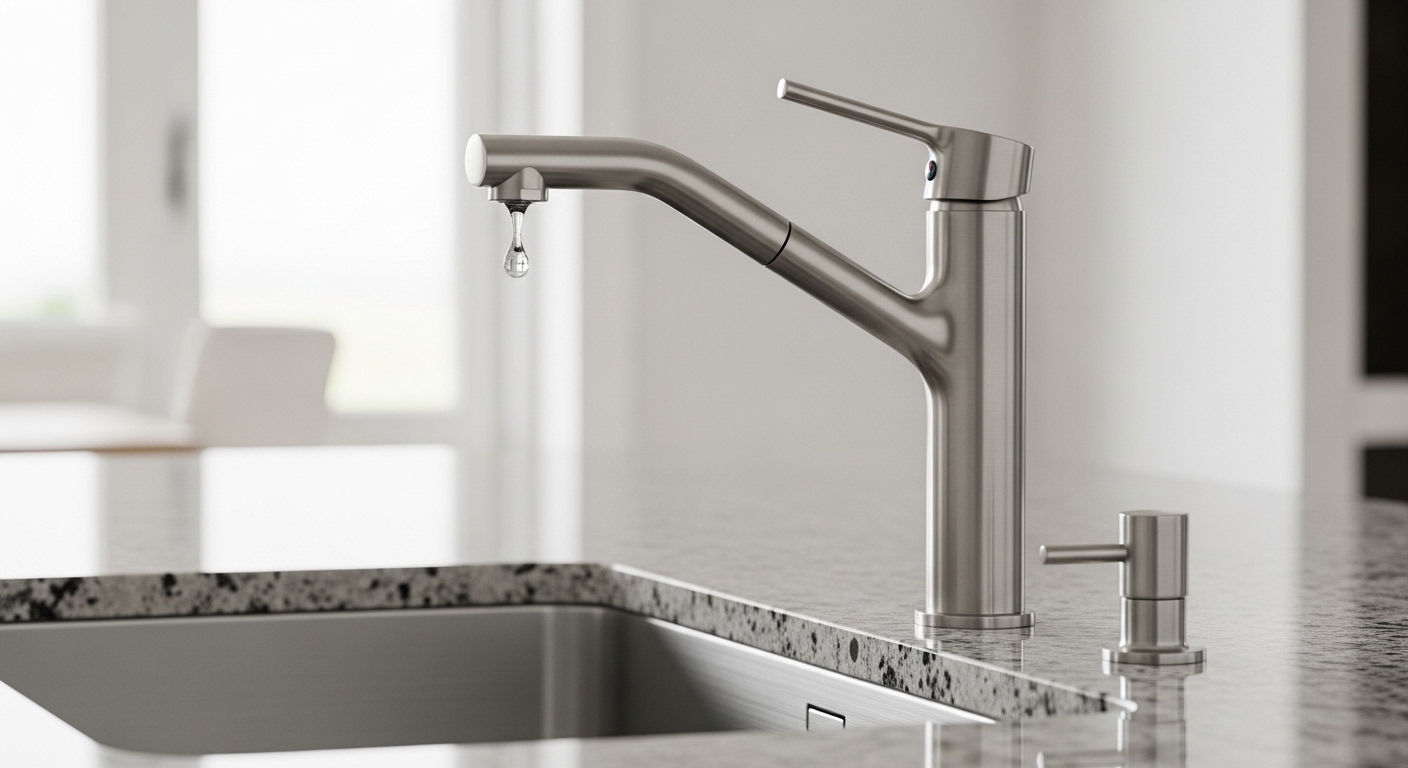
If you want to fix a leaky faucet kitchen sink yourself, the good news is that a dripping or seeping kitchen faucet is almost always a worn seal — not a broken faucet you need to replace. Nine times out of ten, the culprit is a hardened O-ring, a worn cartridge, a corroded valve seat, or a clogged aerator. Once you know exactly where the water is escaping, the repair is cheap, quick, and very DIY-friendly. This guide walks you through diagnosing the leak by location, matching it to the right part, and doing the fix step by step — plus when it’s smarter to just replace the whole faucet.
Where Is My Kitchen Faucet Actually Leaking From — the Spout, the Base, or Underneath?
Before you touch a tool, figure out where the water is coming from, because each location points to a different worn part. A drip from the spout tip means a bad cartridge or valve seat; water pooling around the base of the faucet means worn O-rings; and a puddle inside the cabinet under the sink means a loose supply-line connection or a failed hose. Fixing the wrong part is the #1 reason DIY repairs “don’t work.”
Dry everything off with a paper towel, run the faucet, then shut it off and watch closely for 30–60 seconds. Here’s how to read what you see:
- Drips from the spout tip when the handle is off → worn cartridge, worn rubber seat/spring (compression style), or a mineral-jammed cartridge. Most common leak overall.
- Water seeps around the base of the spout or handle when running → cracked or flattened O-rings on the spout body.
- Weak, splashy, or spraying stream → clogged aerator (hard-water buildup), not a true leak, but often mistaken for one.
- Puddle inside the cabinet → loose supply line, cracked supply hose, or a failing shut-off valve.
- Drip from the sprayer hose or its connection → loose hose nut or a worn quick-connect on a pull-down faucet.
If the leak turns out to be under the cabinet, the connection is often the issue rather than the faucet itself. If your supply line is barely reaching or kinked, our guide on what to do when a faucet supply line is too short shows how to add length safely without over-torquing the fittings.
What Tools and Parts Do I Need to Fix a Leaky Kitchen Faucet?
You need very little: an adjustable wrench, a set of hex/Allen keys, a Phillips and flat screwdriver, needle-nose pliers, and plumber’s grease. For parts, buy the exact replacement for your faucet’s brand and model — a cartridge, O-ring kit, or seat-and-spring set, typically $6–$30. Don’t guess on the cartridge; take the old one to the store or match the model number stamped under the sink or on the faucet paperwork.
A few small extras make the job cleaner and prevent the classic mistakes:
- Plumber’s silicone grease — for lubricating new O-rings and cartridges so they seat and glide (never use petroleum jelly; it degrades rubber).
- White vinegar — to dissolve mineral scale on the aerator and valve seat.
- A rag or drain plug — so a dropped screw or spring doesn’t vanish down the drain.
- A phone camera — photograph each step as you disassemble so reassembly is foolproof.
How Do I Fix a Dripping Single-Handle Kitchen Faucet Step by Step?
For a single-handle faucet that drips from the spout, replace the cartridge — that’s the fix about 80% of the time. Turn off both supply valves under the sink, open the faucet to relieve pressure, plug the drain, then pull the handle, retaining nut, and cartridge, swap in the matching new cartridge, and reassemble. Budget 20–40 minutes.
Here’s the full sequence:
- Shut off the water. Turn both hot and cold shut-off valves under the sink clockwise. Open the faucet handle to release pressure and confirm the water is truly off.
- Plug the drain. Drop in a stopper or a rag so nothing small falls down it.
- Remove the handle. Pop off the decorative cap if there is one, then loosen the set screw with a hex key. Lift the handle straight up.
- Remove the retaining nut and clip. Unscrew the dome/collar and pull the plastic or brass retaining clip with needle-nose pliers. Keep track of the order of every piece.
- Pull the cartridge. Grip it with pliers and pull straight up. If it’s stuck with mineral scale, wiggle gently or use a cartridge-puller tool — don’t force it sideways.
- Inspect and replace. Compare old and new cartridges to confirm a match. Lubricate the new one and any O-rings with plumber’s grease.
- Reassemble in reverse. Cartridge, clip, nut, handle, set screw. Make sure the cartridge is oriented correctly (hot/cold notch aligned) or the temperatures will be backwards.
- Turn the water back on slowly and test. Open the valves gradually, run the faucet, and check for drips at the spout and base.
If you’d rather see a dedicated deep-dive with model-specific notes, we have a full walkthrough on how to install a kitchen faucet cartridge yourself. And for popular pull-down models, the Delta pull-down kitchen faucet parts guide helps you match the exact cartridge, O-ring, and spray-head replacements.
How Do I Fix a Leaky Two-Handle (Compression) Kitchen Faucet?
On an older two-handle compression faucet, a spout drip almost always means a worn rubber seat washer or a corroded valve seat under the leaking handle. Shut off the water, remove that handle and the packing/bonnet nut, unscrew the stem, and replace the washer at the bottom (and the seat if it’s pitted). Since only one handle usually leaks, you only need to rebuild that side.
The one detail people miss: if the brass valve seat the washer presses against is rough or pitted, a new washer will start dripping again within weeks. Either reseat it with a seat-grinding tool or replace the seat with a seat wrench. Also swap the O-ring on the stem while you’re in there, and coat everything with plumber’s grease before reassembly. Ceramic-disc two-handle faucets don’t use washers — those use a cartridge per side, replaced much like the single-handle version above.
Quick Diagnosis: Leak Location, Likely Cause, and the Fix
Use this table to jump straight from symptom to solution. It covers the leaks that account for the vast majority of kitchen-sink faucet calls.
| Where It Leaks | Most Likely Cause | The Fix | Part Cost |
|---|---|---|---|
| Drip from spout tip (handle off) | Worn cartridge or washer/seat | Replace cartridge (single-handle) or washer + seat (compression) | $8–$30 |
| Seeping around spout base | Flattened or cracked O-rings | Replace spout O-rings, grease before reseating | $5–$12 |
| Weak or splashy stream | Clogged aerator (hard water) | Unscrew, soak in vinegar, or replace aerator | $3–$10 |
| Puddle inside cabinet | Loose or cracked supply line | Tighten or replace braided supply hose | $6–$15 |
| Drip at sprayer hose | Loose quick-connect / worn hose gasket | Reseat connector or replace hose/gasket | $10–$25 |
Why Does My Kitchen Faucet Keep Leaking After I Replaced the Cartridge?
If a faucet still drips after a cartridge swap, the usual reasons are hard-water scale on the valve seat, a cartridge that isn’t fully seated or is slightly the wrong model, or debris trapped under the new seal. Pull it back apart, clean the housing with vinegar, confirm the exact model number, and make sure the retaining clip is fully engaged so the cartridge is pressed down completely.
Hard water is the silent killer of faucet seals. Mineral deposits build up on the cartridge, aerator, and internal seat, which both causes leaks and jams moving parts. If your area has hard water, expect to descale more often — our guide on removing hard water deposits from a faucet head covers the vinegar-soak method that keeps aerators and cartridges flowing freely and extends the life of every repair. And if the “leak” is really just a weak or erratic spray pattern, check our tips on how to troubleshoot kitchen faucet spray modes before you buy any parts.
Should I Repair the Leak or Just Replace the Whole Faucet?
Repair the leak if the faucet is under about 8–10 years old, the finish still looks good, and replacement parts are available — a $15 cartridge beats a $150 faucet every time. Replace the whole faucet if the body is cracked or corroded, parts are discontinued, you’ve already rebuilt it twice, or the base is rusting. As a rule of thumb, if parts and your time cost more than half the price of a solid new faucet, just replace it.
When replacement is the better call, you don’t need a plumber for that either. Our step-by-step guide on how to change a faucet in a kitchen sink takes you from disconnecting the old unit to sealing the new one, and if you’re shopping first, the roundup of the best kitchen faucets 2026 helps you pick a durable model with easy-to-source parts so your next repair is even simpler.
How Do I Prevent My Kitchen Faucet From Leaking Again?
The best prevention is easy maintenance: clean the aerator every few months, don’t crank the handle shut with force (that’s what wears seals), and address hard-water scale before it hardens. A faucet that’s operated gently and descaled regularly can go 10+ years without a single leak.
A few habits make a real difference:
- Turn the handle off gently — over-tightening crushes washers and cartridges faster than anything else.
- Soak the aerator in vinegar every 2–3 months if you have hard water.
- Grease seals during any repair so O-rings stay pliable instead of drying out and cracking.
- Check under-sink connections twice a year — a snug supply-line nut prevents slow cabinet leaks that rot the base.
- Keep a spare cartridge on hand for your model so a future leak is a 20-minute fix, not a weekend project.
FAQ
Why is my kitchen faucet dripping even when it’s turned off?
A drip with the handle fully off means the internal seal isn’t sealing — a worn cartridge on a single-handle faucet, or a worn washer/pitted valve seat on a two-handle compression faucet. Water pressure keeps pushing past the bad seal. Replacing that one part stops the drip; if it returns quickly, the valve seat is likely scaled or pitted and needs cleaning or replacement.
How much does it cost to fix a leaky kitchen faucet myself?
DIY, you’ll usually spend $6–$30 on the part (cartridge, O-ring kit, washer set, or aerator) plus basic tools you may already own. A plumber for the same job typically runs $125–$300 with labor. That’s why diagnosing the exact leak and doing it yourself saves the most — the parts are cheap; the labor is what costs.
Can hard water cause a kitchen faucet to leak?
Yes. Mineral scale from hard water builds up on the cartridge, valve seat, and aerator, which both jams moving parts and prevents seals from closing fully, causing drips and weak flow. Regular vinegar soaks and descaling remove the buildup and dramatically extend how long each repair lasts.
Do I need to turn off the water to fix a faucet leak?
Almost always, yes. For any repair that opens the faucet body — cartridge, O-rings, washers — shut both hot and cold valves under the sink and open the handle to relieve pressure first. The only exception is unscrewing the aerator at the spout tip, which you can do with the water off at the handle. Skipping the shut-off risks a soaked kitchen.
How long does a kitchen faucet cartridge last?
A quality cartridge typically lasts 5–10 years, though hard water can shorten that and gentle use can extend it well past a decade. If your faucet has needed two cartridges in a few years, hard-water scale is the likely accelerant — descale regularly, and consider a faucet with a ceramic-disc cartridge, which resists wear better than older rubber-seal designs.
Why does my faucet leak from the base and not the spout?
A leak at the base of the spout — where it swivels — points to worn O-rings on the spout body, not the cartridge. Lift or remove the spout, roll off the old O-rings, and replace them with the correct-size set, greasing them with plumber’s silicone before reseating. It’s one of the cheapest and easiest faucet fixes there is.
About the author: This guide was written by the WOWOW Faucet product and technical team, who design, bench-test, and service kitchen and bath fixtures every day. Our editors have hands-on experience rebuilding single-handle, compression, and ceramic-disc kitchen faucets across every major mounting style.
About WOWOW Faucet: WOWOW (www.wowowfaucet.net) manufactures kitchen and bathroom faucets built to cUPC and NSF/ANSI-tested standards for safe drinking-water contact, with lead-free brass and ceramic-disc cartridges rated for 500,000+ open/close cycles. Our faucets are backed by a limited lifetime warranty on finish and function, and replacement cartridges and parts are stocked so a future repair is quick and affordable.
您好!Sign In