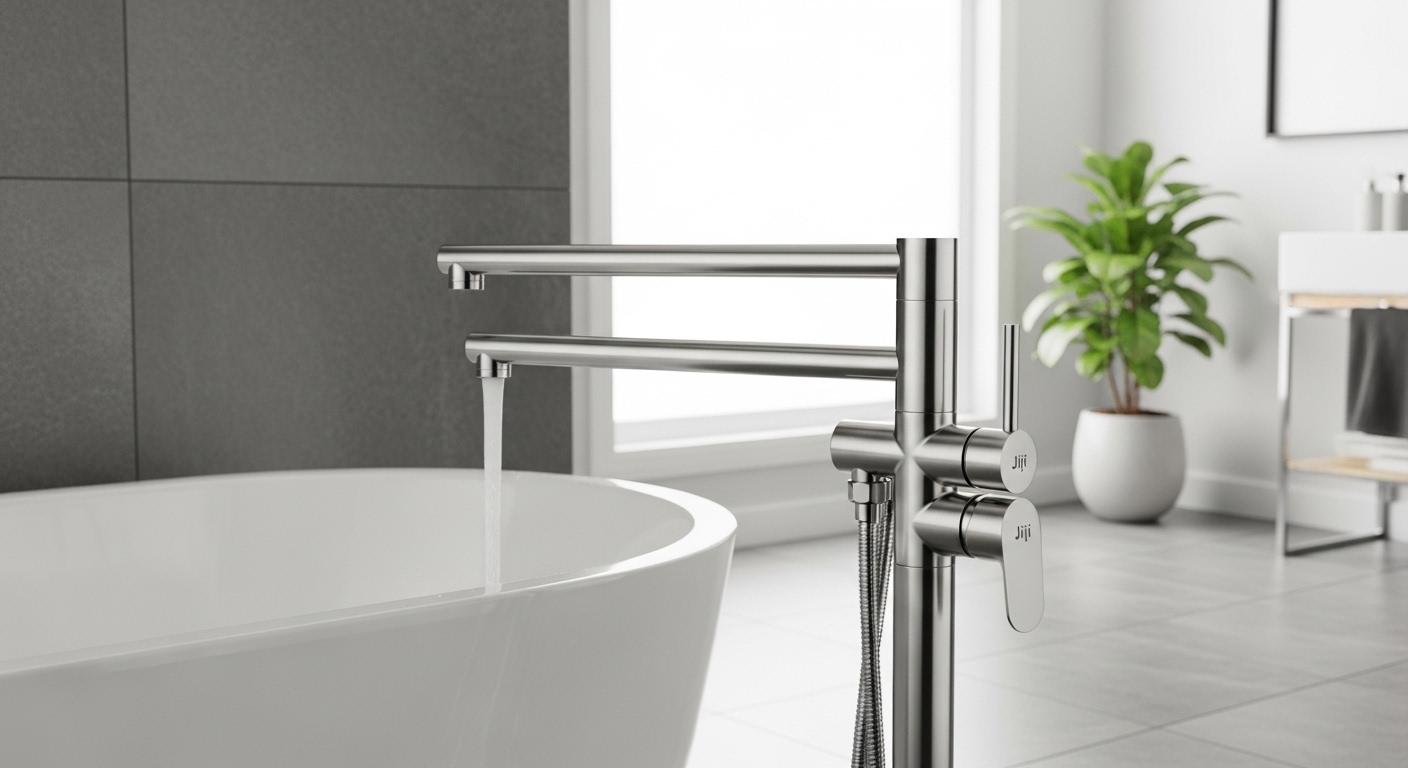
Search for a pot filler tap jiji listing and you’ll see dozens of options at wildly different prices — some for a few thousand naira, others several times higher — often with near-identical photos. The hard part isn’t finding a pot filler; it’s telling a genuine, long-lasting brass fixture apart from a thin zinc-alloy lookalike that will seize or leak within a year. This guide breaks down the materials, valve types, mounting styles, and warranty signals that actually matter, so you can buy once and buy right.
A pot filler (also called a pasta arm or kettle filler) is one of the most underrated upgrades in a modern kitchen. Instead of hauling a full stockpot of water from the sink to the cooktop, you swing the articulated spout over the burner and fill in place. It’s a small change that saves your back, your countertops, and a surprising amount of time during everyday cooking.
What Is a Pot Filler Tap and Why “Pot Filler Tap Jiji” Searches Are Rising
The phrase “pot filler tap jiji” tells you something useful: shoppers across West Africa are increasingly buying premium kitchen fixtures through online marketplaces, and demand for pot fillers in particular has climbed as open-plan kitchens and high-output cooktops become standard in new homes and renovations. A pot filler answers a real daily pain point — filling and moving heavy pots — which is why interest keeps growing.
Mechanically, a pot filler is a cold-water (and occasionally dual-temperature) faucet on a long, double-jointed arm. The arm folds flat against the wall when not in use and extends 18 to 24 inches to reach across a cooktop. Most models include two shutoff handles — one at the base and one near the spout — so you can position the arm and start the flow precisely where you want it.
Because a pot filler typically carries only cold water and is used in short bursts, its mechanical demands differ from your main kitchen mixer. But the same quality fundamentals apply: the body material, the valve cartridge, and the surface finish determine whether the tap stays drip-free for years or starts weeping at the joints after a few months.
Pot Filler Tap Jiji Listings: How to Read Them Like a Pro
When you scroll a marketplace, the photos all look chrome-bright and identical. The differences hide in the specifications — and in what the seller leaves out. Before you commit to any pot filler tap jiji listing, run through this quick checklist:
- Body material: Look for “solid brass” or “SUS304 stainless steel.” If the listing only says “alloy” or “zinc,” expect a shorter lifespan and faster corrosion.
- Valve type: Ceramic disc cartridges last far longer than rubber-washer compression valves and resist hard-water scaling.
- Number of joints: Double-jointed (two-elbow) arms fold tighter and reach farther than single-joint designs.
- Mounting style: Wall-mount is the classic look; deck-mount works when you can’t run a pipe inside the wall.
- Finish: PVD-coated finishes resist scratching and tarnish; cheap electroplate peels.
- Warranty & returns: A real warranty (and a seller who honors returns) is the single best signal of build confidence.
If a listing won’t tell you the body material or valve type, treat that silence as an answer. The best sellers are proud of their internals because that’s where the cost — and the longevity — lives.
Why Material Choice Decides Everything
The body of a pot filler is constantly exposed to water pressure and, in a kitchen, to heat and grease. Solid brass is the gold standard because it resists corrosion, holds threads cleanly, and machines to tight tolerances that keep the swing joints sealed. Stainless steel (SUS304) is an excellent lead-free alternative with a clean, industrial look. Zinc alloy, by contrast, is cheaper to cast but brittle and prone to pitting where the chrome wears thin. If you want to go deeper on how different metals hold up over time, our breakdown of faucet materials and which lasts the longest is worth a read before you buy.
Pot Filler Types Compared: Wall-Mount vs. Deck-Mount vs. Dual-Handle
Not every pot filler suits every kitchen. The right choice depends on where your plumbing runs and how your cooktop is positioned. Here’s a side-by-side comparison of the three most common configurations you’ll encounter when shopping.
| Type | Best For | Install Difficulty | Typical Reach | Notes |
|---|---|---|---|---|
| Wall-Mount Single-Joint | Compact kitchens, range against a wall | Moderate (needs in-wall water line) | 14–18 in | Cleanest look; limited folding range |
| Wall-Mount Double-Joint | Most kitchens with a backsplash supply | Moderate | 18–24 in | Folds flat; best everyday choice |
| Deck-Mount | Islands or kitchens without in-wall pipe | Easier (mounts on countertop) | 16–22 in | Ideal when wall plumbing isn’t possible |
| Dual-Temperature Mixer Arm | Cooks who want warm water at the stove | Higher (two supply lines) | 18–24 in | Adds hot line; more complex valving |
For the majority of homes, a wall-mount double-jointed pot filler is the sweet spot: it reaches across a standard four- or five-burner cooktop, folds flush against the backsplash when idle, and uses a single cold-water supply that’s straightforward to tap into.
Finishes That Last: Matching Your Pot Filler to the Kitchen
Finish is where a pot filler either blends into your kitchen or fights it. The most popular options are polished chrome, brushed/stainless, matte black, and brushed gold. Beyond looks, the finish affects how well the tap hides water spots and resists scratching from pots and utensils swung overhead.
- Polished Chrome: Bright, classic, and easy to clean, but shows fingerprints and water spots.
- Brushed Nickel / Stainless: Warm, forgiving on spots, and a strong match for stainless appliances.
- Matte Black: Bold, modern, and great at hiding limescale — choose a PVD-coated version for durability.
- Brushed Gold / Champagne: A luxe accent that pairs beautifully with warm-toned cabinetry.
Whatever you choose, prioritize PVD (physical vapor deposition) coatings over standard electroplating. PVD finishes are bonded at a molecular level, making them dramatically more resistant to scratching, tarnishing, and the heat that rises off a busy cooktop. If you’re styling a high-end space, our guide to faucet design tips for a luxury look carries over neatly to kitchens too — the same principles of finish coordination and proportion apply.
Flow Rate, Pressure, and Performance
A pot filler is only as good as the water it delivers. Most quality pot fillers flow around 4 liters per minute (roughly 1 GPM) — enough to fill a large stockpot in under two minutes without splashing. But that figure assumes your home delivers adequate supply pressure. If your kitchen runs on a low-pressure gravity system or a struggling pump, even a great tap will dribble.
Before you buy, it pays to verify your incoming water pressure so you know what to expect. Our walkthrough on how to check faucet pressure before buying shows you how to test it in a few minutes with an inexpensive gauge. Aim for at least 0.1–0.5 MPa (roughly 15–75 psi) at the tap for comfortable pot-filling performance.
Also check the aerator. A good pot filler uses an aerator that produces a soft, splash-free stream — important when you’re filling a deep pot at counter height. Cheaper units omit the aerator entirely, leaving you with a hard, splashy jet.
How to Install a Pot Filler Tap (Overview)
Installing a pot filler is more involved than swapping a standard faucet because most models tie into a dedicated cold-water line behind the wall. If you’re comfortable with basic plumbing, here’s the high-level process. If you’re not, hire a licensed plumber — the in-wall connection is not the place to improvise.
- Plan the location. Center the mounting point above your cooktop, roughly 18–24 inches above the burner surface, so the folded arm clears your tallest pots.
- Run the supply line. Tap into the nearest cold-water line and route it to the mounting point. Install a shutoff valve so you can service the tap later.
- Mount the base. Secure the wall flange to a backing board or stud, then thread the pot filler body onto the supply elbow with PTFE tape on the connections.
- Connect and seal. Tighten fittings, then turn the water on slowly. Knowing how to connect faucet hoses to shutoff valves correctly is the difference between a leak-free joint and a drip behind your tile.
- Test for leaks. Extend the arm fully, run the tap, and inspect every joint and the wall connection. Let it run for several minutes and re-check.
If you’re upgrading an existing kitchen and need a refresher on the broader fixture-swap process, our complete guide on how to change a faucet in a kitchen sink covers the supply-line fundamentals that overlap with pot-filler work.
Pot Filler Tap Jiji vs. Buying Direct: Getting the Best Value
Marketplaces like Jiji are great for browsing and comparing, but the lowest-priced “pot filler tap jiji” result isn’t always the best deal once you factor in lifespan, warranty, and returns. A tap that costs more upfront but ships with solid brass internals, a ceramic cartridge, and a multi-year warranty almost always wins on cost-per-year of service.
When you compare options, weigh these factors together rather than fixating on sticker price:
- Total cost of ownership: A cheap unit you replace in a year costs more than a quality one that lasts a decade.
- Warranty coverage: Look for explicit coverage on the cartridge and finish, not just the body.
- Certified materials: Lead-free brass and food-safe components matter for any tap near food prep.
- After-sales support: Replacement cartridges and aerators should be easy to source.
This is exactly where buying from an established faucet specialist pays off. At wowowfaucet, every pot filler and kitchen faucet is built around lead-free brass or SUS304 stainless bodies, ceramic disc cartridges rated for hundreds of thousands of open-close cycles, and PVD finishes tested for tarnish and scratch resistance.
E-E-A-T: Why Trust This Guide
About the brand: wowowfaucet is a dedicated faucet and bathroom-fixtures manufacturer with years of experience producing kitchen mixers, pot fillers, shower systems, and bathroom faucets for customers worldwide. Our products are engineered to meet recognized plumbing standards, and our fixtures undergo pressure testing, salt-spray corrosion testing, and cycle testing on the valve cartridge before they ship.
Author’s note: This guide was written by the wowowfaucet content team in consultation with our product engineers, who specify and test the brass alloys, cartridges, and finishes used across our kitchen line. Every recommendation here reflects what we look for in our own quality control — and what we’d tell a friend before they bought any pot filler online.
Standards & warranty: Reputable pot fillers should use lead-free, drinking-water-safe materials and carry a meaningful warranty. wowowfaucet kitchen fixtures are backed by a warranty covering the body and cartridge, and our finishes are tested to resist tarnishing and corrosion under standardized salt-spray conditions. Always confirm the warranty terms in writing before you purchase, whatever the source.
FAQ
Is a pot filler tap from Jiji listings worth buying?
It can be — if you vet the listing carefully. Many “pot filler tap jiji” results are perfectly good fixtures, but quality varies enormously. Confirm the body material (solid brass or SUS304 stainless), the valve type (ceramic disc), and that a real warranty and return policy are offered. If the seller can’t or won’t share those details, look elsewhere.
Do pot fillers come with hot water or just cold?
Most pot fillers are cold-water only, which keeps installation simple and is all you need for filling pots you’ll heat on the stove anyway. Dual-temperature mixer arms exist for cooks who want warm water at the cooktop, but they require a second supply line and a more complex valve, raising both cost and installation difficulty.
How high above the stove should a pot filler be mounted?
Mount the pot filler so the spout clears your tallest stockpot when it’s sitting on the burner — typically about 18 to 24 inches above the cooktop surface. Test with your actual largest pot before drilling. Too low and the pot won’t fit under it; too high and you’ll get splashing.
Will a pot filler leak over the stove?
A quality pot filler with a ceramic disc cartridge and properly sealed joints should not leak. Leaks almost always come from poor installation (insufficient PTFE tape, under-tightened fittings) or from cheap units with rubber-washer valves that fail over time. Choosing solid brass with a ceramic cartridge and installing it correctly virtually eliminates the risk.
What flow rate should a good pot filler have?
Around 4 liters per minute (about 1 GPM) is typical and fills a large pot quickly without excessive splashing. Performance also depends on your home’s water pressure, so test your pressure before buying — aim for at least 0.1 MPa (roughly 15 psi) at the tap for comfortable filling.
Can I install a pot filler myself?
Deck-mounted models that connect under the counter are within reach of a confident DIYer. Wall-mounted pot fillers require tapping into an in-wall cold-water line, which is best handled by a licensed plumber unless you have real plumbing experience. Either way, always install a shutoff valve so you can service the tap later without shutting off the whole house.