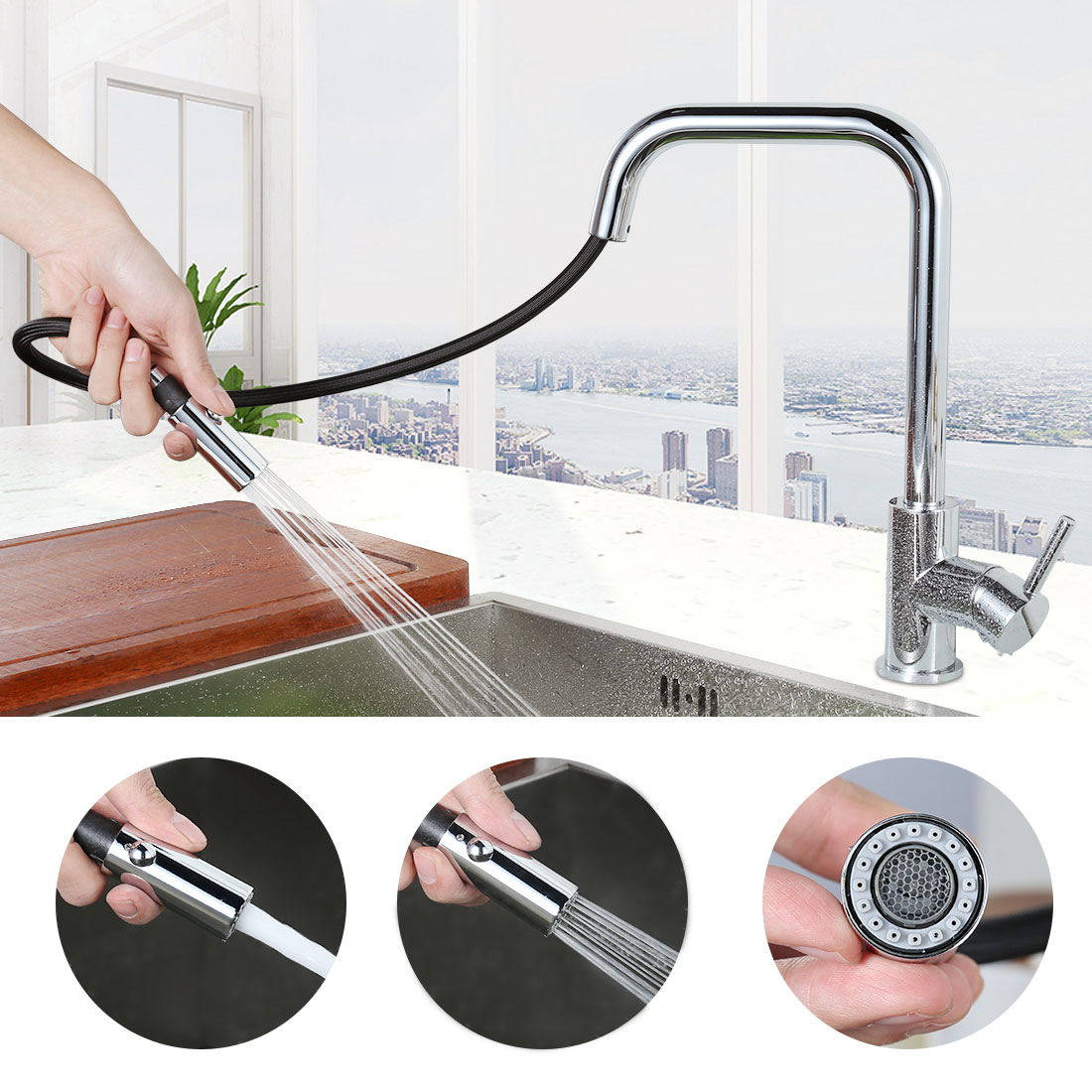
A faucet can feel worn out for several reasons: the finish looks dull, the handle becomes stiff, the stream weakens, or a drip returns after repair. These symptoms should not be treated as one problem. Some are maintenance issues, some involve replaceable parts, and some indicate damage that makes replacement more practical.
Durability also depends on the installation and the conditions around the fixture. Choosing a particular body material does not eliminate the need for correct mounting, compatible connections, and appropriate care. Start with the symptom and the model information instead of assuming that every failure proves the faucet was made from the wrong metal.
Separate appearance changes from functional failure
Water spots and surface residue can make a sound fixture look neglected. A loose handle, persistent drip, or leaking hose is a mechanical issue that needs its own investigation. Photograph the problem and note whether the faucet still operates normally. This helps prevent replacing an entire fixture when the visible issue is removable residue or one serviceable component.
Inspect the finish according to its intended appearance. A brushed surface is not supposed to look like mirror chrome, and some decorative finishes change over time by design. Look for peeling, exposed damage, or cracks rather than judging quality only by shine. If a cleaner caused a sudden change, stop using it and consult the care instructions. Stronger polishing may remove more coating instead of restoring the original surface.
Consider installation stress and everyday force
A faucet should be securely mounted without unnecessary strain on its body or supply lines. A loose base can move during use, while overly tight or misaligned hardware can create other problems. Twisted connectors, sharp hose bends, and a spray hose rubbing on cabinet hardware deserve attention even if no leak has appeared yet.
Handle force matters too. A lever is a control, not a support rail, and a spout should not be used to lift a heavy pot. If the valve becomes difficult to close, investigate the cause rather than applying progressively more force. Check the model instructions for allowable movement and service procedures. Correct the source of resistance or looseness before it damages surrounding components. When mounting or supply work is unfamiliar, have an installer assess it.
Investigate debris, scale, and changes in flow
An uneven stream can originate at an aerator or spray face rather than deep inside the faucet. Compare the affected fixture with others and note whether the problem involves hot water, cold water, or both. This comparison helps distinguish a local outlet issue from a wider supply change.
Clean only the parts identified as serviceable in the manual. Keep screens and seals in order and avoid enlarging outlet holes with sharp tools. Scale on an accessible component is not proof that every internal part has failed. Conversely, repeated debris after cleaning may require investigation beyond the outlet. Record what you find and when it returns. Do not assume a filter or softener is needed solely from a faucet symptom without understanding the water conditions and the specific problem.
Evaluate the cartridge and other replaceable parts
Cartridges, seals, hoses, and aerators can be service parts rather than reasons to discard the whole fixture. Find the model number and parts drawing, then establish which component is responsible. A smooth handle feel alone cannot predict a cartridge’s service life, and a large cycle-count claim should not be repeated without documentation for the actual product.
Use approved compatible parts and the correct procedure. Shut off the water and verify isolation before disassembly. Do not sand ceramic sealing surfaces or add improvised washers to compensate for a mismatch. If a new part does not resolve the symptom, review the diagnosis and installation instead of replacing it repeatedly. Availability of reliable service information is an important ownership consideration when comparing a repair with a complete replacement.
Use cleaning methods that protect the finish
Start with the gentle method approved for the model and finish. Wipe away routine residue and dry accessible surfaces where instructed. Avoid abrasive pads and unapproved chemicals. Delta’s finish-care guidance illustrates why cleaners and abrasives need to be selected carefully; the exact instructions for your fixture still take priority.
Do not assume vinegar, wax, metal polish, or glass cleaner is suitable for every coating. A product safe on one finish can affect another. Keep cleaners from pooling around seams and electronic components. If buildup returns quickly, distinguish a care issue from a plumbing issue rather than escalating the chemical strength automatically. Consistent, appropriate cleaning helps preserve appearance, but it cannot repair a cracked body, damaged cartridge, or failing hose.
Decide what to repair and what to replace
Make a short inventory of faults and the available remedies. One identified service part on a sound body is a different situation from several damaged components with no replacement support. Compare parts, labor, access, and the condition of shutoff valves and connectors. Avoid using a fixed age alone as the decision rule.
If replacement is appropriate, compare kitchen faucets and bathroom faucets for mounting fit, usable reach, documentation, and service access. Ask for material and certification information instead of relying on weight or finish color. Keep the new records and establish a simple inspection routine. A durable installation is the result of a suitable fixture, correct assembly, ordinary care, and timely attention to changes; no single visible feature guarantees all of those conditions by itself.
Frequently asked questions
Does a dull finish mean the faucet needs replacement?
Not necessarily. Residue or water spots can affect appearance without a mechanical failure. Check the approved cleaning instructions and inspect for actual coating damage. Evaluate leaks and handle problems separately rather than treating every visible change as the same issue.
Is stainless steel always more durable than brass?
Material alone does not establish the performance of a complete faucet. Construction, finish, internal components, installation, and service support matter. Compare documented specifications for the models instead of making a universal ranking from their body-material names.
Why does the handle become difficult to move?
The cause may involve the handle assembly, cartridge, deposits, or another model-specific issue. Do not force it. Identify the fixture and follow its troubleshooting instructions, isolating the water before any internal service work.
Can a new aerator fix every weak-flow problem?
No. It can help only when the outlet component is responsible. Compare other fixtures and temperature settings, inspect approved service points, and check the supply route. A wider plumbing problem needs a different response.
Should faucets be replaced after a fixed number of years?
Use condition, support, suitability, and any manufacturer instructions to guide the decision. A calendar milestone alone does not prove failure. Investigate persistent leaks, damaged bodies, or unavailable service parts rather than replacing a sound fixture without a reason.
What records make future maintenance easier?
Keep the model number, receipt, installation manual, parts drawing, and a record of repairs. Photos of the mounting and hose route are also useful. These details reduce guesswork when a cartridge, aerator, or connector must be identified later.