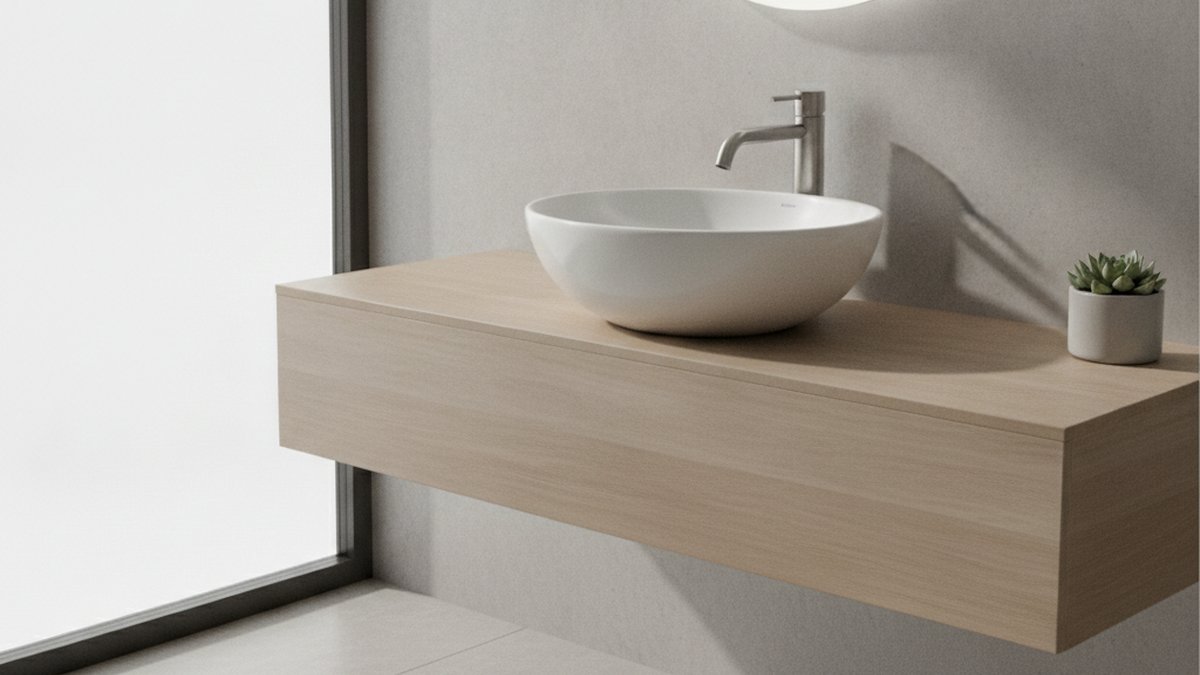
A stainless steel lavatory faucet is a bathroom sink faucet whose body and spout are made from stainless steel — most often 304-grade (also stamped “SUS304”) — rather than the chrome-plated zinc or brass used in budget fixtures. “Lavatory” is just the plumbing-industry word for a bathroom hand-washing sink, so a “lavatory faucet” or “lav faucet” is simply the tap you mount on that sink. The reason people specifically search for the stainless version is durability: stainless steel doesn’t rust, doesn’t leach lead, and shrugs off the toothpaste, soap scum, and hard-water splatter that wreck a bathroom faucet faster than anything in the kitchen.
Below I’ll answer the real questions buyers ask — is it actually better than brass, which grade matters, single-hole vs. widespread, how to keep it spot-free, and what you should budget — so you can pick once and not think about it again.
Is a stainless steel lavatory faucet actually better than a brass or chrome one?
For a bathroom sink, stainless steel and solid brass are the two best long-term choices, and stainless usually wins on rust resistance and price while brass wins on machining feel and warm finish options. Chrome-plated zinc is the one to avoid if you want longevity — the plating chips and the zinc underneath corrodes.
Here’s the plain-English version. A faucet body can be made from a few different materials, and the material — not the shiny outer coating — is what decides how long it lasts:
- 304 stainless steel: Naturally rust- and corrosion-resistant, lead-free, and doesn’t need plating to survive. If a scratch happens, there’s no “different metal” underneath to corrode — it’s stainless all the way through.
- Solid brass: Excellent, heavy, machines beautifully, and takes finishes like brushed gold or matte black well. Slightly pricier, and lower-quality brass can contain lead unless it’s certified lead-free.
- Zinc alloy (pot metal): Cheap and common under $40 faucets. It’s usually chrome-plated; once that plating chips, the zinc pits and corrodes fast — often within a couple of years in a humid bathroom.
The catch: some “stainless-look” faucets are actually zinc with a stainless-colored coating. Read the spec line. You want “SUS304 stainless steel body,” not “stainless steel finish.” A stainless finish is just a color; a stainless body is the real thing.
Does stainless steel rust in a humid bathroom?
Real 304 stainless steel won’t rust under normal bathroom conditions — that’s the whole point of the alloy. The chromium in stainless forms an invisible passive layer that reheals itself when scratched. What people sometimes mistake for “rust” is actually surface staining from iron particles in hard water or from a cheaper metal component nearby (like a corroding drain or a zinc mounting nut). Wipe those spots with a stainless cleaner and they lift right off. If your fixture genuinely rusts, it was never solid stainless to begin with.
Single-hole, centerset, or widespread — which stainless lav faucet fits my sink?
Match the faucet to the number of holes drilled in your sink or countertop: one hole = single-hole faucet, three holes at 4 inches apart = centerset, three holes at 8 inches apart = widespread. Measuring the spread before you buy is the single most common mistake shoppers avoid too late.
Flip your current faucet off (or look under a vessel sink) and count the holes, then measure center-to-center between the outermost holes. Here’s how the three standards break down:
| Configuration | Holes | Hole spread (center to center) | Best for |
|---|---|---|---|
| Single-hole | 1 | N/A (one hole, ~1.25–1.5″) | Small baths, vessel sinks, modern/minimal look, easiest install |
| Centerset | 3 | 4″ | Standard builder-grade sinks, replacing an old 4″ faucet |
| Widespread | 3 | 8″ (sometimes 6–16″) | Larger vanities, traditional/luxury look, separate hot & cold handles |
| Wall-mount | 2 (in wall) | Varies by rough-in | Vessel sinks, high-end custom vanities |
If you have a 3-hole sink but want a clean single-hole faucet, you’re not stuck — buy a matching stainless deck plate (escutcheon) to cover the two outer holes. Most single-hole lav faucets sell one as an add-on in the same finish. Just confirm the deck plate is also stainless, so it ages at the same rate as the faucet.
What size supply lines and drain does a lav faucet need?
Most U.S. lavatory faucets connect with 3/8″ compression supply lines and use standard 1.25″ (or 1.5″) pop-up drains, but always check the reach of your existing lines first. Bathroom faucets often ship with short built-in hoses or 1/2″-to-3/8″ fittings, and vanity shutoff valves sit low. If your lines don’t reach the new inlets, that’s an easy, cheap fix — see our guide on what to do when your faucet supply line is too short before you start wrenching. And if you’re removing an old faucet first, a corroded mounting nut can be the real headache — here’s how to remove a rusted faucet nut without breaking the sink.
How do I keep a stainless steel faucet from showing water spots and fingerprints?
The finish matters more than the cleaning routine: a brushed/satin stainless finish hides fingerprints and water spots dramatically better than a mirror-polished one, so if low maintenance is your goal, buy brushed. For upkeep, a weekly wipe with a damp microfiber cloth and a dab of dish soap is all 90% of faucets ever need.
Polished stainless looks stunning in a showroom and in photos, but every fingerprint and dried water droplet shows on it — same problem chrome has. Brushed (also called satin or “brushed nickel-look” stainless) has a fine directional grain that scatters light and camouflages smudges. In a family bathroom, brushed wins every time.
To keep any stainless lav faucet looking new:
- Wipe it down with a soft, damp cloth after heavy use — dried hard water is what leaves the cloudy spots.
- Once a week, use a drop of dish soap on a microfiber cloth, then buff dry. Always wipe with the grain on brushed finishes, not in circles.
- For stubborn mineral spots, use a 50/50 white vinegar and water mix, rinse, and dry. Skip it on any nearby plated parts.
- Never use steel wool, abrasive powders, or bleach-based cleaners — they scratch the passive layer and dull the finish.
One nice bonus of solid stainless: minor scratches on a brushed finish can be gently blended back in along the grain with a fine non-woven pad, because the color goes all the way through the metal. You can’t do that with plated chrome — sand a plated faucet and you expose the base metal. If you do end up with a chip on a plated fixture elsewhere in the bath, see whether faucet touch-up paint actually works before you replace the whole thing.
Is a brushed stainless lav faucet the same as brushed nickel?
No — they look almost identical but are made differently. “Brushed stainless” means the faucet body itself is brushed stainless steel; “brushed nickel” is usually a nickel coating applied over brass or zinc. Visually you’ll struggle to tell them apart on a shelf; the difference is what’s underneath and how it ages.
For matching your fixtures, treat brushed stainless and brushed nickel as color-compatible — they’ll coordinate fine with the same towel bars and shower trim. If you’re pairing a warm metal instead, a lot of buyers are moving toward gold tones; if that’s you, compare against a brushed gold lav faucet to see which suits your vanity before committing to a finish across the whole room.
What should I budget for a good stainless steel lavatory faucet?
Plan on $60–$180 for a genuinely good single-hole 304 stainless lav faucet with a ceramic-disc cartridge, and $120–$300 for a widespread two-handle model. Under about $40, you’re almost certainly buying zinc with a stainless-look coating, not solid stainless — the price is the tell.
Where the money actually goes, and what’s worth paying for:
- Cartridge quality (worth it): A ceramic-disc cartridge is what makes a faucet drip-free for years. Cheap rubber-washer valves are what cause leaks. This is the part that fails, so buy quality here.
- Solid 304 body (worth it): The whole reason you’re choosing stainless. Don’t compromise.
- Certifications (worth it): Look for cUPC/NSF and lead-free compliance — see the standards note below.
- Water-saving aerator (nice): A 1.2 GPM aerator cuts water use without feeling weak. Many U.S. models ship at 1.2 GPM to meet WaterSense.
- Fancy spout shapes (optional): Waterfall spouts and ultra-tall designs look great but don’t add durability. Buy the look you love, not the marketing.
A quick reality check on total cost: the faucet is rarely your only spend. Budget a few dollars for new supply lines if yours are old or short, and if you’re upgrading an aging vanity, factor in a new pop-up drain. Those small parts are cheap; skipping them and reusing corroded ones is what causes callbacks and slow leaks.
Can I install a stainless lavatory faucet myself?
Yes — a single-hole lav faucet is one of the most beginner-friendly plumbing jobs, typically 30–60 minutes with a basin wrench, an adjustable wrench, and some plumber’s tape. If you can turn off the two shutoff valves under the sink and connect two supply lines, you can do this.
The basic sequence: shut off the hot and cold valves, disconnect and remove the old faucet, drop the new faucet through the hole, secure the mounting nut from below, connect the supply lines (hand-tight plus a quarter turn — don’t overtighten), then turn the water back on and check for drips. The two moments people get stuck are a corroded old mounting nut and supply lines that won’t reach — both covered in the linked guides above. If a connection weeps after you turn the water on, it’s almost always an under-tightened nut or a missing/misplaced washer, not a defective faucet; the same troubleshooting logic in our guide on how to fix a leaky faucet on a kitchen sink applies to a bathroom lav faucet too.
One tip specific to stainless: don’t grip the finished spout or body with pliers during install. Use a basin wrench on the mounting nut under the sink and cushion any tool contact with a rag. Brushed stainless resists a lot, but crushing pliers will still leave a mark.
Author note & why trust this
This guide was written by the WOWOW Faucet product team, who spend their days spec’ing, stress-testing, and warranty-supporting bathroom and kitchen fixtures. WOWOW builds faucets with solid stainless steel and lead-free brass bodies, ceramic-disc cartridges rated for 500,000+ open/close cycles, and finishes tested against corrosion and abrasion standards. Our lavatory faucets are cUPC certified and meet U.S. lead-free (NSF/ANSI 372) and WaterSense flow requirements, and they’re backed by a limited lifetime warranty on the finish and cartridge. We recommend stainless not because we’re selling it, but because it’s the material that generates the fewest warranty claims — which, frankly, is the best real-world durability data there is.
FAQ
Is a stainless steel lavatory faucet worth the extra money over chrome?
For a bathroom you’ll keep more than a few years, yes. Chrome-plated zinc looks identical on day one but the plating chips and the zinc corrodes underneath, often within 2–3 years in a humid bath. Solid 304 stainless costs a bit more upfront but doesn’t have a coating to fail, so it typically lasts 10–15+ years looking the same. The extra $20–$40 pays for itself the first time you don’t have to replace a corroded faucet.
What does “304” or “SUS304” stainless steel mean on a faucet?
304 (also written SUS304) is a specific grade of stainless steel — about 18% chromium and 8% nickel — that’s the standard for faucets and food-grade equipment because it resists rust and corrosion extremely well and is lead-free. When a faucet lists a “304 stainless steel body,” you’re getting real solid stainless. “Stainless steel finish” without a grade usually means a coated zinc body, which is not the same thing.
Do stainless steel faucets scratch easily?
Brushed/satin stainless is quite scratch-tolerant, and because the finish runs all the way through the metal, light scratches can be blended back in along the grain. Polished (mirror) stainless shows fine scratches and fingerprints more easily, like chrome. For a busy bathroom, choose brushed and use non-abrasive cleaners — never steel wool or scouring powder.
Will a stainless lav faucet match my brushed nickel towel bars and shower trim?
Yes. Brushed stainless and brushed nickel are close enough in tone that they coordinate seamlessly — most people can’t tell them apart. If your existing hardware is a warmer tone like champagne bronze or gold, a cool stainless faucet will read as a deliberate contrast rather than a match, so decide whether you want everything to match or intentionally mix metals.
How long should a good stainless steel lavatory faucet last?
A quality solid-stainless lav faucet with a ceramic-disc cartridge should last 10–15 years or more with minimal maintenance, and often much longer with just an occasional cartridge swap. The finish is usually the longest-lasting part; the cartridge is the wear item, and on a good faucet it’s replaceable, so you rarely need to replace the whole fixture.
Are stainless steel faucets lead-free and safe for drinking water?
Solid 304 stainless is inherently lead-free, which is one of its advantages over cheaper leaded brass. To be sure your specific faucet meets U.S. safe-drinking-water rules, look for NSF/ANSI 372 lead-free certification and a cUPC or WaterSense mark on the box or listing — reputable stainless lav faucets, including ours, carry these.