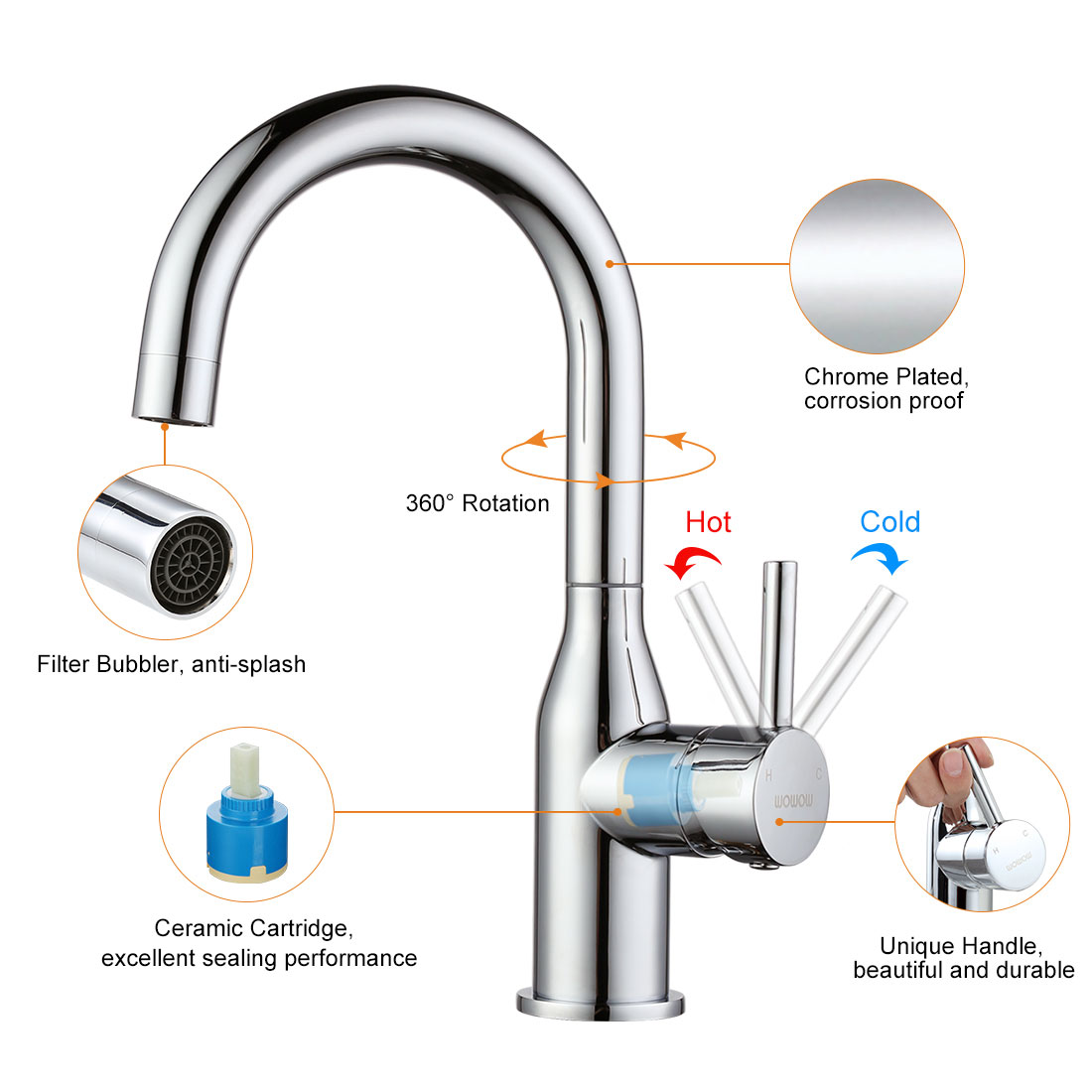
When people shop for a faucet, they usually look at the finish, the style and the price. But the part that most affects long-term performance and water safety is the cartridge, sometimes called the spool or valve core. A low-quality cartridge can do more than leak: it can release heavy metals into the water and wear out quickly. Understanding what makes a good cartridge helps you choose a faucet that is both durable and safe.
What the faucet cartridge does
The cartridge sits inside the faucet body and controls the flow and temperature of the water as you move the handle. In a single-handle faucet, one cartridge manages both hot and cold water. In a two-handle faucet, each handle has its own valve. The cartridge also forms the seal that stops water from dripping when the tap is closed, so it is the hardest-working part of the fixture.
Why the cartridge affects water safety
Because water flows directly through the cartridge, the materials inside it are in constant contact with your drinking water. Cheaper cartridges and valve bodies may contain brass or alloys with higher lead content, and as those parts wear, tiny amounts of metal can leach into the water. Over time and under warm or acidic water conditions, this leaching can increase, which is why cartridge material and manufacturing quality matter for safety.
Ceramic versus older cartridge types
Older faucets often use compression valves with rubber washers or ball valves with plastic and metal components. These wear out, scratch and leak over time. Modern ceramic disc cartridges use two smooth ceramic plates that slide against each other. Ceramic is extremely hard, resists scratching and keeps a tight seal, which means less wear, fewer leaks and less contact between water and any lower-quality metal parts.
How to judge cartridge quality by feel
You cannot see the cartridge when a faucet is assembled, but you can feel it. Turn the handle through its full range and notice whether it moves smoothly and with a light, controlled resistance. A good ceramic cartridge feels damped and steady rather than loose or gritty. A handle that sticks, wobbles or grinds is often a sign of a low-quality or poorly fitted cartridge.
Why the structure matters as much as the material
Two cartridges can both be ceramic and still perform very differently. The machining precision, the gap between the plates and the quality of the seals all affect how well the cartridge controls water, resists high pressure and stays leak-free. A well-engineered cartridge holds its seal under pressure, reduces water hammer noise and keeps temperature adjustments accurate.
What to look for when buying
Choose a faucet that uses a certified ceramic disc cartridge and, ideally, a body made from low-lead brass or stainless steel. Look for certifications such as NSF/ANSI 61, which confirm the materials have been tested for safe lead levels. Avoid unbranded faucets that give no information about the cartridge or the metal content, because these are the ones most likely to cut corners where you cannot see.
When to replace a cartridge
A dripping faucet, a stiff handle or water that keeps flowing after you close the tap usually points to a worn cartridge. Turn off the water, remove the handle and take out the cartridge, then clean it to remove grit. If it is scratched, cracked or heavily scaled, install a matching replacement. Replacing a worn cartridge promptly protects both the faucet and the quality of your water.
Lead-free and low-lead standards
Water safety standards have tightened significantly over the years. In many regions, faucets sold for drinking water must meet low-lead or lead-free requirements, which limit how much lead can be present in the wetted parts. Look for certification marks such as NSF/ANSI 61 or a stated low-lead rating, because a cartridge and body that meet these standards are far less likely to leach metals into your water.
How to maintain a cartridge for safer water
Even a good cartridge benefits from regular care. Flush the faucet after any plumbing work, clean the aerator so sediment does not get pushed back into the cartridge, and avoid harsh chemical cleaners that can damage seals. A few simple habits keep the cartridge sealed and reduce the chance of metal contact with the water:
- Flush the lines before first use and after repairs;
- Clean the aerator regularly to keep grit out;
- Avoid abrasive or acidic cleaners near the spout;
- Repair drips early before wear worsens.
Choosing a faucet brand you can trust
Because the cartridge is hidden inside the faucet, the brand is often your best guide to its quality. Reputable manufacturers invest in certified materials, precise machining and consistent testing, while no-name brands may cut corners where you cannot see. A trusted brand is especially important for a fixture that supplies drinking water.
Look for clear specifications, a stated cartridge type and a meaningful warranty. If a seller cannot tell you what the cartridge or body is made of, treat that as a warning sign and choose a product with transparent information instead.
Frequently asked questions
Can a faucet cartridge release heavy metals?
A low-quality cartridge or valve body can leach small amounts of metals into water, especially as it wears or in acidic water conditions.
What is the best faucet cartridge material?
Ceramic disc cartridges are the best choice because they are hard, smooth and resistant to wear and leaking.
How do I test a cartridge without opening the faucet?
Turn the handle through its range and feel for smooth, steady resistance. A gritty, loose or sticking feel suggests a poor cartridge.
Does a heavier faucet mean a better cartridge?
Not always. Weight usually reflects the body material, while cartridge quality is better judged by feel and by the manufacturer’s specifications.
How do I know my faucet is lead-safe?
Look for low-lead brass or stainless steel construction and NSF/ANSI 61 certification on the product.
How often should a ceramic cartridge be replaced?
A quality ceramic cartridge can last five years or more, and often much longer with clean water and normal use.
A safe faucet starts with a quality cartridge. When you are ready to upgrade, explore our bathroom faucets and kitchen faucets for fixtures built around reliable ceramic valve cores.