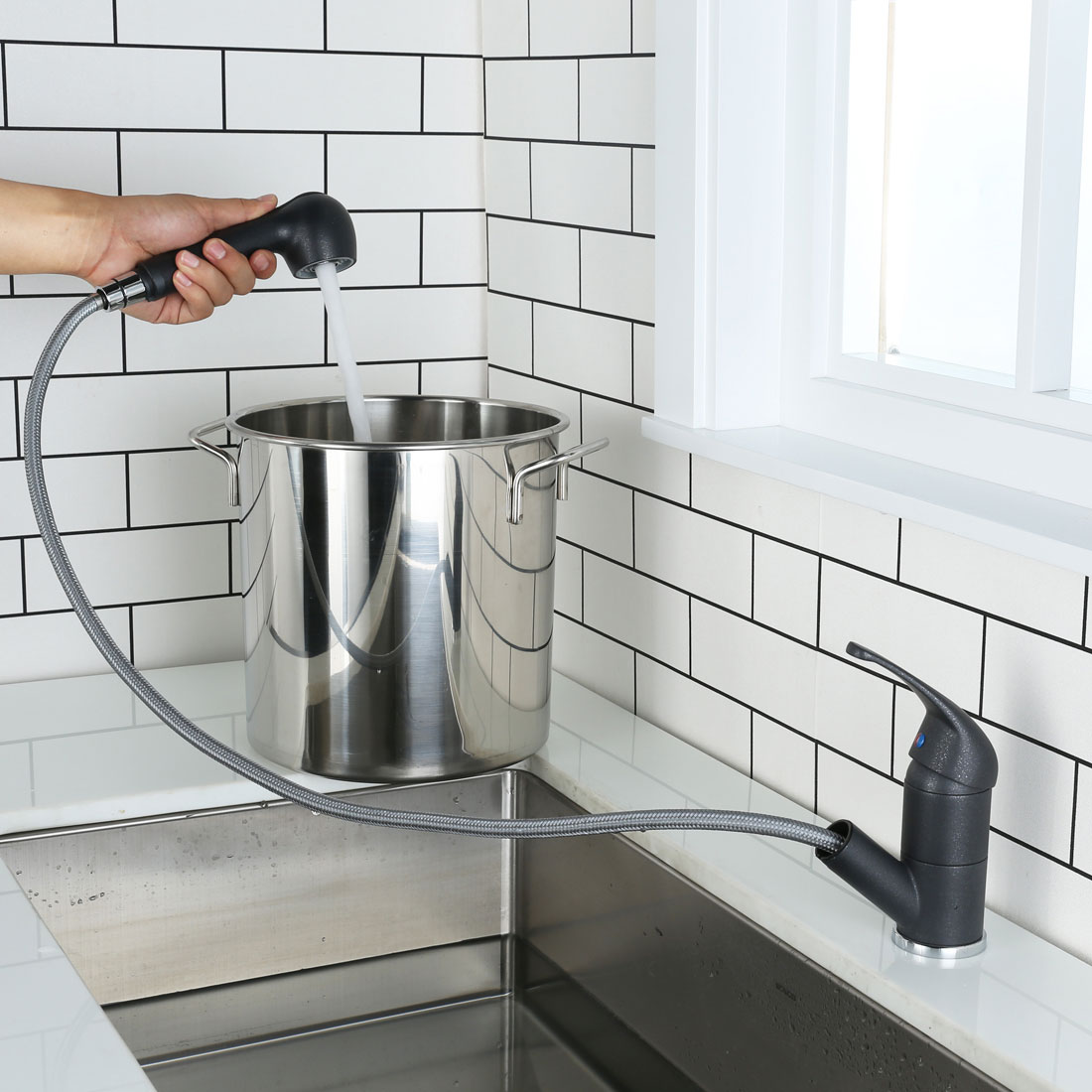
Replacing a faucet on a fixed schedule is not a substitute for understanding its condition or the water supply. A new fixture can resolve a damaged body or unsupported valve, but it cannot automatically correct contamination entering from another part of the plumbing. Conversely, an older fixture is not necessarily unusable simply because it has reached a particular birthday.
Make the decision in two parts. First assess whether the faucet works properly and can be maintained. Then investigate any drinking-water concern with appropriate information or testing. Keeping those questions separate helps you avoid unnecessary replacement while still responding promptly to a real mechanical or water-quality problem.
Assess the condition of the complete fixture
Look for persistent leaks, cracks, damaged mounting areas, unreliable controls, and deteriorated hoses. Note whether each problem is isolated or whether several components are failing together. A loose handle may need a small repair, while a damaged nonserviceable body may justify replacement. Do not rely solely on the surface finish to judge the condition inside.
Inspect the cabinet and nearby plumbing as well. Replacing the visible faucet will not fix a leaking shutoff or a damaged supply connector that is left in place. Record the model number and take photographs of the symptoms. If the faucet has already been repaired, list the parts and dates. A clear history makes it easier to compare another repair with replacement and to explain the problem accurately to a plumber or supplier.
Check whether a reliable repair is available
Find the parts diagram and identify the failed component before ordering. Ask whether the correct cartridge, hose, handle adapter, or seal kit is still available. The ability to repair a sound fixture can be a practical reason to keep it, especially when replacement would require changes to a compatible sink or countertop.
Compare the complete repair cost with a complete replacement installation. Include labor, access difficulties, and related plumbing work. Do not compare the price of a cartridge with the sticker price of a new faucet while ignoring installation. Also consider whether the repaired fixture still meets the household’s needs. A sound but awkwardly positioned spout may be a candidate for replacement for usability reasons, while a well-fitting fixture with one supported service part may be worth retaining.
Investigate water-quality concerns separately
If lead or another contaminant is a concern, do not use the faucet’s age, color, taste of the water, or a shiny new finish as a diagnostic test. Contact the water supplier or an appropriate laboratory and follow its sampling instructions. Keep any local notices and test results with the household records.
The EPA’s lead information explains that plumbing components beyond the faucet can contribute lead. A replacement may address one source without addressing another. Ask what the findings imply for the whole supply path rather than assuming the newest visible component determines water quality at the outlet. If a treatment device is recommended, check its specific verified function and maintain it as instructed. Do not treat ordinary faucet cleaning as equivalent to contaminant testing or treatment.
Select replacement products using documentation
For drinking-water applications, look for clear model identification and relevant product documentation. Check that a claimed listing covers the exact fixture being purchased. Material descriptions such as brass or stainless steel are useful but do not explain every wetted component or establish every safety claim by themselves.
Review the mounting drawing, supply requirements, and service information alongside those documents. Compare kitchen faucets and bathroom faucets for their intended uses instead of selecting a model solely because it appears newer or heavier. Ask for clarification when a seller’s claims are vague. Keep the certification information, manual, and receipt after installation. Those records support later maintenance and make it easier to establish what was fitted if the water supplier or a plumber needs details about the household plumbing.
Use appropriate care while the fixture remains in service
Clean the finish with the approved method and inspect accessible outlet components when flow changes. Keep hoses free from sharp bends and clear of storage items. Respond to dampness or a persistent drip rather than waiting for a planned replacement date. If water is escaping actively, isolate it safely and arrange the appropriate repair.
For drinking and cooking, follow local water guidance. EPA specifically advises using cold tap water rather than hot for these purposes because hot water can dissolve lead more readily; see its cold-water explanation. Do not turn that advice into a claim that cold water is always free of contaminants. The required response still depends on the supply, plumbing, and any confirmed water-quality issue.
Make and document the final decision
Write down why you are repairing or replacing the faucet: a verified failed component, damaged body, unavailable service part, unsuitable layout, or a recommendation based on a water investigation. A specific reason is more useful than a blanket rule that every fixture must be changed after the same number of years.
After work, inspect connections with the faucet running and closed. Confirm that the original symptom is resolved and retain the new part or model information. Where replacement formed part of a water-quality response, follow the professional or authority’s instructions for any further testing. A dry, functional fixture and an appropriately investigated water supply are related goals, but they require different evidence. Completing both checks gives a better result than assuming a purchase alone has settled every concern.
Frequently asked questions
Must a faucet be replaced every five years?
There is no universal age rule that establishes the condition of every faucet. Consider the manufacturer’s instructions, physical condition, available parts, and suitability. Investigate specific faults or water-quality concerns instead of treating a calendar date as a diagnosis.
Will a new faucet remove lead already in the water?
A normal faucet is not a lead-removal filter. Replacing a contributing component may help address that source, but other plumbing can still matter. Use appropriate testing and water-authority guidance to determine the required response.
Is a stained finish a health test?
No. Appearance does not establish drinking-water quality. Surface marks may involve deposits or finish damage, while contaminants can require specific testing. Address the cosmetic issue with approved care and investigate water concerns through the appropriate channels.
When is repair a reasonable choice?
Repair can make sense when the body is sound, the fault is identified, and the correct service part is available. Include labor and surrounding plumbing in the comparison. Verify the result rather than assuming replacement is always necessary.
What should I ask before buying a replacement?
Request the exact model, fit dimensions, connection requirements, relevant certification, service-part information, and care instructions. Confirm included accessories and installation needs. These details are more useful than relying on a broad promise about material or expected lifespan.
Should water be tested again after replacement?
If replacement was part of a water-quality investigation, follow the testing and sampling instructions supplied by the relevant authority or professional. Mechanical leak checks alone do not demonstrate a contaminant level, and the necessary follow-up depends on the original concern.