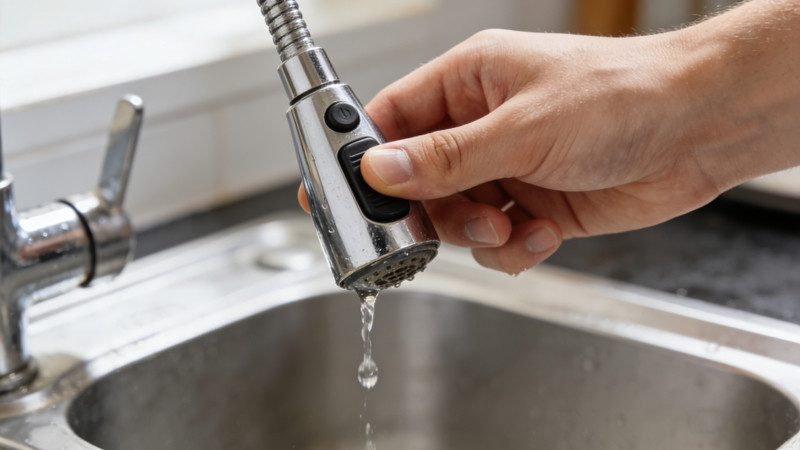
Modern kitchen faucets often come with multiple spray modes, such as stream, spray, and pause, making everyday tasks like rinsing dishes and cleaning sinks more efficient. However, when spray modes stop switching properly, lose pressure, or stop working altogether, the faucet can quickly become frustrating to use. The good news is that most spray mode problems are caused by minor issues that are easy to diagnose and fix without replacing the entire faucet.
This guide walks you through the most common spray mode problems, why they occur, and how to restore smooth, reliable operation.
How Kitchen Faucet Spray Modes Work
Spray modes are controlled by a diverter mechanism located in the spray head or faucet body. When you press a button or toggle a switch, the diverter redirects water flow through different internal channels. Small seals, springs, and valves inside the spray head regulate pressure and flow direction.
Because these parts are compact and exposed to water constantly, they are especially vulnerable to mineral buildup, debris, and wear.
Common Spray Mode Problems
Understanding the symptom helps pinpoint the cause quickly.
- Spray button won’t switch modes
- Water pressure drops when switching to spray
- Spray mode works briefly, then reverts to stream
- Uneven or sputtering spray pattern
- No water flow in one mode
Each issue usually has a simple explanation.
1. Clean the Spray Head and Aerator
Mineral buildup is the most common cause of spray mode failure. Hard water leaves calcium and lime deposits that clog internal channels.
How to fix it:
- Unscrew the spray head from the hose
- Disassemble removable components if possible
- Soak parts in white vinegar for 30–60 minutes
- Use a soft brush or toothpick to clear clogged nozzles
- Rinse thoroughly and reassemble
This step alone resolves many spray issues.
2. Flush Debris from the Hose and Faucet Body
Sediment from plumbing pipes can lodge inside the hose or diverter, restricting flow.
Steps:
- Turn off the water supply
- Disconnect the spray head from the hose
- Turn water on briefly to flush the hose into a bucket
- Check for sand, rust flakes, or debris
Flushing clears blockages that interfere with mode switching.
3. Inspect the Diverter Valve
The diverter is responsible for switching between spray modes. When worn or dirty, it may stick or fail.
Signs of diverter issues:
- Button feels stiff or unresponsive
- Mode switches back on its own
- One mode has little or no flow
Depending on your faucet model, the diverter may be located in the spray head or inside the faucet body. Remove it carefully and clean or replace it if damaged.
4. Check for Worn Seals and O-Rings
Rubber seals inside the spray head wear out over time. When they lose elasticity, water pressure drops and spray patterns become inconsistent.
What to do:
- Inspect O-rings for cracks or flattening
- Replace damaged seals with manufacturer-approved parts
- Apply plumber’s grease for smoother operation
Fresh seals often restore full pressure instantly.
5. Test Water Pressure
Low household water pressure can prevent spray modes from functioning properly. High pressure, on the other hand, can cause spray heads to revert to stream mode.
Check pressure:
- Attach a pressure gauge to a hose bib
- Ideal pressure range: 40–60 PSI
If pressure is outside this range, adjust or install a pressure-reducing valve (PRV).
6. Examine the Pull-Down or Pull-Out Hose
For pull-down faucets, hose problems can interfere with spray modes.
Inspect for:
- Kinks or sharp bends under the sink
- Twisted hoses preventing smooth water flow
- Worn or leaking hose connections
Straightening or replacing the hose often improves spray performance.
7. Reset or Replace the Spray Head
Some spray heads are designed to default back to stream mode after shutting off the faucet. This is normal behavior, not a defect.
However, if switching modes feels inconsistent or unreliable even after cleaning, the spray head may be internally worn.
Consider replacement if:
- Buttons no longer click firmly
- Plastic components are cracked or brittle
- Cleaning provides only temporary improvement
Replacing just the spray head is often affordable and easy.
8. Address Mineral Buildup in the Faucet Body
In severe hard-water areas, mineral buildup can extend beyond the spray head.
Solution:
- Remove the cartridge and flush the faucet body
- Install a whole-house or under-sink water softener
- Perform routine vinegar soaks to prevent recurrence
Preventive treatment protects spray mechanisms long-term.
When to Call a Professional
If spray modes still malfunction after cleaning and part replacement, the issue may lie deeper in the plumbing system. Hidden obstructions, internal casting defects, or pressure irregularities may require professional tools and experience.
Conclusion
Troubleshooting kitchen faucet spray modes doesn’t have to be complicated. Most problems stem from mineral buildup, debris, worn seals, or pressure imbalance—all of which can be resolved with basic tools and routine maintenance. By understanding how spray modes work and addressing issues early, you can restore smooth switching, strong water flow, and reliable performance.
A well-maintained spray head not only improves daily kitchen tasks but also extends the life of your faucet and reduces unnecessary replacements.