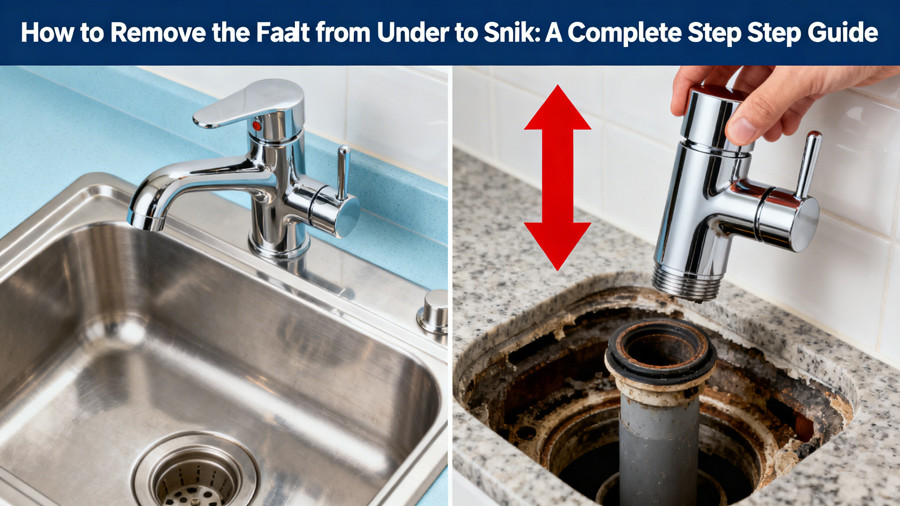
Removing a faucet from under the sink is one of those projects that seems intimidating until you try it yourself. With tight spaces, awkward angles, and parts you may have never seen before, it’s no surprise many homeowners assume faucet removal requires a plumber. But with the right tools, preparation, and techniques, taking out an old faucet is absolutely doable—even if you’re not an experienced DIYer.
This guide walks you through the entire process: how to prepare the workspace, which tools you need, how to disconnect water lines, and how to loosen the hard-to-reach mounting nuts underneath the sink. By the end, you’ll feel confident and ready to tackle the job, whether you’re replacing a faucet or repairing the countertop or sink below it.
1. Gather the Right Tools Before Starting
Working under the sink means limited visibility and very tight working angles. Having the right tools makes everything easier. Here’s what you should prepare:
-
Adjustable wrench
-
Basin wrench (the most important tool for tight spaces)
-
Pliers
-
Bucket and towels
-
Flashlight or headlamp
-
Penetrating oil (optional)
-
Putty knife
-
Gloves
A basin wrench is invaluable because it lets you reach and turn mounting nuts far behind the sink bowl. If your old faucet has been installed for many years, it’s possible the nuts are corroded or stuck, so some penetrating oil can help loosen them.
2. Clear Out the Space Under the Sink
Before you crawl under the cabinet, remove anything stored beneath it. Cleaning out the space helps you work more comfortably and prevents objects from getting in the way while you loosen bolts or disconnect hoses.
Next, place a towel or small mat inside the cabinet. Laying down padding makes it easier on your back and shoulders since you’ll be looking upward for much of the job.
3. Turn Off the Water Supply
This step is crucial. Under your sink, you’ll find two shutoff valves: one for hot water and one for cold water. Turn them clockwise until they stop.
If the valves haven’t been turned for years, they may be stiff. Use a rag for extra grip or a set of pliers, but avoid applying too much force to prevent breaking the valve stem.
After shutting both valves, turn on the faucet to release any remaining pressure. This ensures you won’t get sprayed once you disconnect the water supply lines.
4. Disconnect the Water Supply Lines

Place a bucket or bowl under the faucet connections to catch any water remaining in the hoses.
Use an adjustable wrench to loosen the nuts connecting the water supply lines to the shutoff valves and to the underside of the faucet. Be prepared for a small amount of water to drip out.
If your faucet has flexible braided lines, they should come off easily. Older faucets may have rigid copper tubing, which is harder to maneuver—but still removable with patience.
Once the lines are disconnected, move them aside so you have a clear view of the mounting hardware.
5. Locate the Faucet Mounting Nuts
Under the sink, the faucet is held in place by one or more mounting nuts. These are located at the base of the faucet where it passes through the sink or countertop.
These nuts can be:
-
Large plastic wing nuts
-
Metal nuts secured with washers
-
Integrated mounting brackets
Depending on your faucet type—single-hole, two-handle, or widespread—you may have one central nut or multiple nuts spaced apart.
6. Use a Basin Wrench to Loosen the Mounting Nuts
This is the part most homeowners struggle with. The nuts are often deep behind the sink basin where your hands cannot reach. This is where the basin wrench becomes essential.
Here’s how to use it effectively:
-
Position the wrench so the jaws grip the mounting nut.
-
Ensure the head is angled correctly so the tool tightens as you turn it.
-
Turn counterclockwise to loosen the nut.
-
Apply steady pressure rather than sudden force.
If the nuts are stuck due to corrosion, apply penetrating oil and let it sit for 10–15 minutes before trying again.
For faucets with two separate valves (like widespread models), repeat the process for both mounting points.
7. Remove the Faucet from Above the Sink
Once the nuts are fully loosened, return to the top of the sink. Grip the faucet base and gently lift it straight upward.
If the faucet doesn’t budge:
-
Old plumbers’ putty or mineral buildup may be acting like glue.
-
Use a putty knife to carefully break the seal around the base.
-
Apply gentle rocking motion until the faucet releases.
Be careful not to scratch your sink’s surface while prying.
8. Clean the Mounting Surface
With the faucet removed, you’ll probably see old putty, silicone, or mineral deposits on the sink deck.
Clean the area using:
-
A putty knife
-
Vinegar or mild cleaner
-
A nonabrasive scrub pad
Removing debris ensures the new faucet installs correctly and seals well.
9. Inspect the Water Lines and Valves

Before installing a new faucet, inspect the shutoff valves and supply lines:
-
Are the valves leaking or hard to turn? Consider replacing them.
-
Are the supply lines frayed or old? Always replace them when installing a new faucet.
-
Is there corrosion around the sink opening? Clean thoroughly or repair as needed.
A few extra minutes of inspection now prevents future leaks and surprises.
Final Thoughts
Removing a faucet from under the sink may look tricky, but with preparation and the right tools, it’s very manageable for most DIYers. The key challenges—tight spaces, stubborn mounting nuts, and awkward angles—are easy to overcome with a basin wrench, patience, and proper lighting.
Once the old faucet is out, installing a new one becomes much simpler. A clean surface, fresh supply lines, and secure mounting hardware ensure your new faucet will work reliably and leak-free for years.