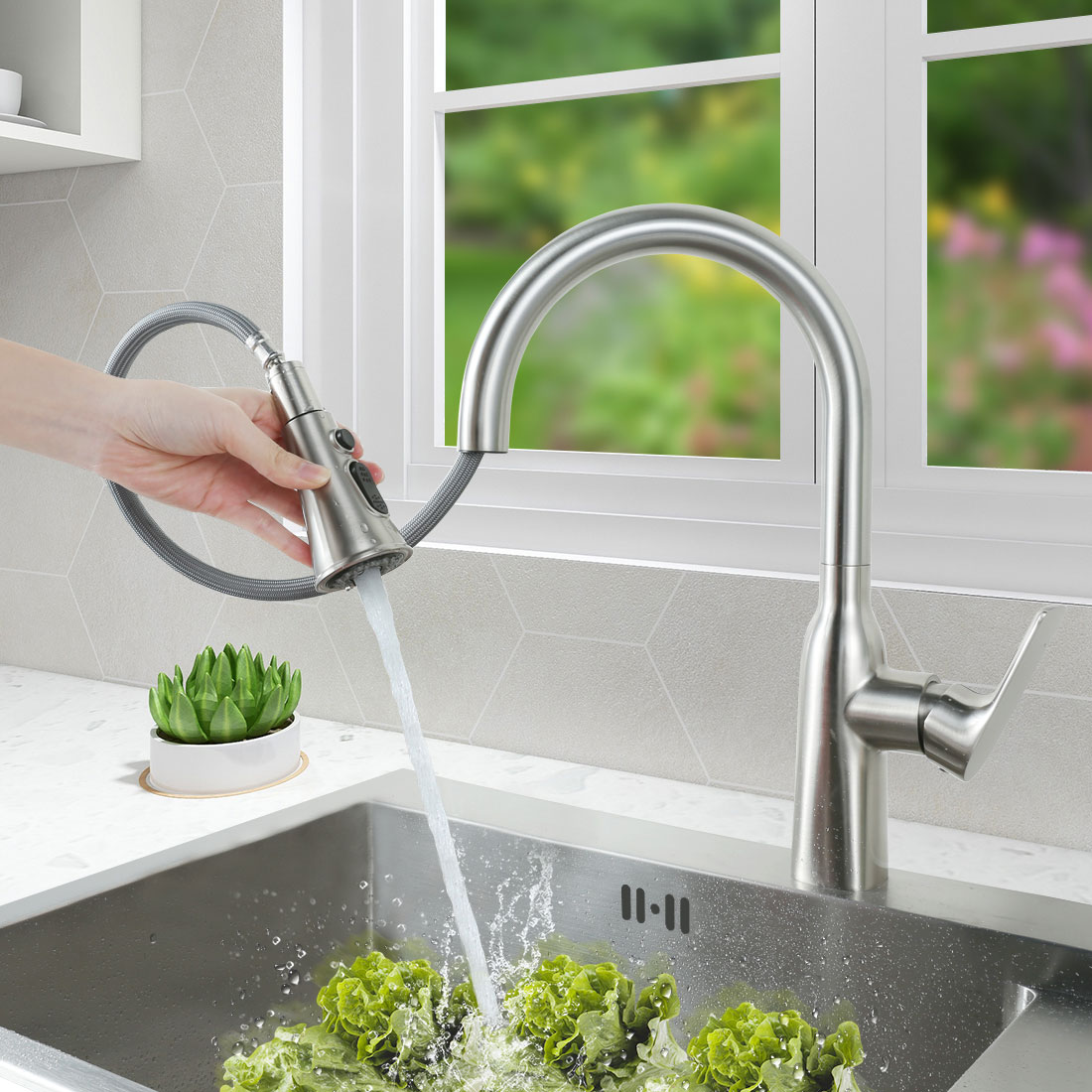
Faucets can look nearly identical on the outside while being made from very different materials on the inside. Stainless steel, solid brass, zinc alloy and plastic each behave differently in terms of durability, safety and price. Learning how to identify these materials helps you avoid overpaying for a cheap body and choose a faucet that will hold up to years of daily use.
The main faucet materials
The four most common materials are stainless steel, brass, zinc alloy and polymer or plastic. Stainless steel resists rust and does not need a coating to stay safe. Brass is durable, naturally antimicrobial and usually finished with chrome or nickel plating. Zinc alloy is inexpensive but softer and more prone to corrosion. Plastic is light and cheap but the least durable choice for a body.
Check the weight first
Weight is one of the most reliable clues. Solid brass and stainless steel faucets feel noticeably heavy, while zinc alloy and plastic feel light. Pick up the faucet and compare it with another model of similar size. A heavy, dense feel usually means more metal, which generally means a stronger, longer-lasting body.
Inspect the surface finish
A quality faucet has a smooth, even finish with no pits, bubbles, rough patches or color differences. Run your finger over the surface: it should feel consistent. Pay special attention to edges and hidden areas, where cheap plating often shows defects. A thick, well-applied plating protects brass and resists corrosion far longer than a thin or patchy coating.
Look at the underside and threads
The underside of the faucet and the threads of the connections often reveal the true material, because these areas are usually not plated. If the metal looks yellowish and solid, it is likely brass. A dull gray or silvery surface may be stainless steel or zinc. If the area is rough, pitted or powdery white, it may be corroding zinc alloy.
Use sound and feel
Tap the body lightly with a fingernail or a non-metallic object. Solid metal produces a lower, duller sound, while thin or hollow zinc alloy produces a higher, tinny ring. You can also feel the temperature of the material: metal conducts heat, so a solid brass or stainless body feels cool to the touch, while plastic feels warmer and lighter.
Understand what zinc alloy means for safety
Zinc alloy faucets are common because they are cheap to produce, but zinc is a softer metal that can corrode and release zinc and other metals into the water over time. If a faucet is suspiciously cheap and feels light, it is probably zinc alloy rather than brass or stainless steel. For drinking water, choose low-lead brass or food-grade stainless steel instead.
Watch the price and the warranty
Material is the biggest driver of faucet cost, so an extremely low price is often a warning sign. Solid brass and stainless steel faucets cost more because the raw material and machining are more expensive. A reputable brand will also back the product with a meaningful warranty, which is a good signal that the materials are what they claim to be.
Spotting cheap plating and hollow bodies
Some faucets look like solid metal but are actually a thin metal shell over a plastic or hollow core, or a zinc body with a shiny coating. Check the weight and look for seams or rough edges where the plating may be thin. If the faucet flexes slightly when you press it, or if the finish chips easily during handling, the body is probably not solid metal.
A quick material checklist
Use this checklist when comparing faucets in a store or online:
- Lift the faucet and compare its weight with similar models;
- Inspect the underside and threads for unplated metal;
- Tap the body to hear whether it sounds solid or hollow;
- Check for a stated material and a low-lead certification;
- Look at the warranty length as a signal of quality.
When material choice affects water safety
For a kitchen faucet that supplies drinking water, material safety matters more than for a laundry or outdoor tap. Choose certified low-lead brass or food-grade stainless steel for any faucet used for drinking or cooking, and reserve cheaper materials for low-risk uses where water is not consumed.
Quick tests you can do in the store
You do not need special tools to judge a faucet in person. Run your fingernail lightly over the finish to feel for pits or rough spots, and breathe on the surface to see whether the fog clears quickly and evenly. A good finish fogs briefly and clears fast, while a poor finish may hold the fog longer.
Also compare the sound when you tap the body and the way the handle moves through its range. These quick checks take only a minute but reveal a surprising amount about the material and the cartridge.
Frequently asked questions
How can I tell brass from zinc alloy?
Brass is heavier and has a yellowish color on unplated surfaces, while zinc alloy is lighter and duller with a more gray or powdery look.
Is stainless steel better than brass for faucets?
Both are good choices. Stainless resists rust without plating, while brass is strong and naturally antimicrobial but usually needs a finish.
Does a heavy faucet always mean better quality?
Heavy weight usually means more metal, but you should also check the finish, cartridge and brand, because weight alone is not a guarantee.
Are plastic faucets safe?
Plastic faucets are light and inexpensive but less durable and not ideal for a main kitchen or bathroom fixture.
Why are some brass faucets so cheap?
Cheap brass faucets are often zinc alloy with a brass-colored plating, or thin-walled brass, rather than solid brass.
What certification should I look for?
NSF/ANSI 61 is a useful certification because it means the faucet has been tested for safe lead and material content.
Identifying the material is the first step to a smart purchase. Once you know what to look for, browse our kitchen faucets and bathroom faucets for fixtures made from durable, safe materials.