The article is complete. Here’s the publish-ready HTML fragment:
“`html
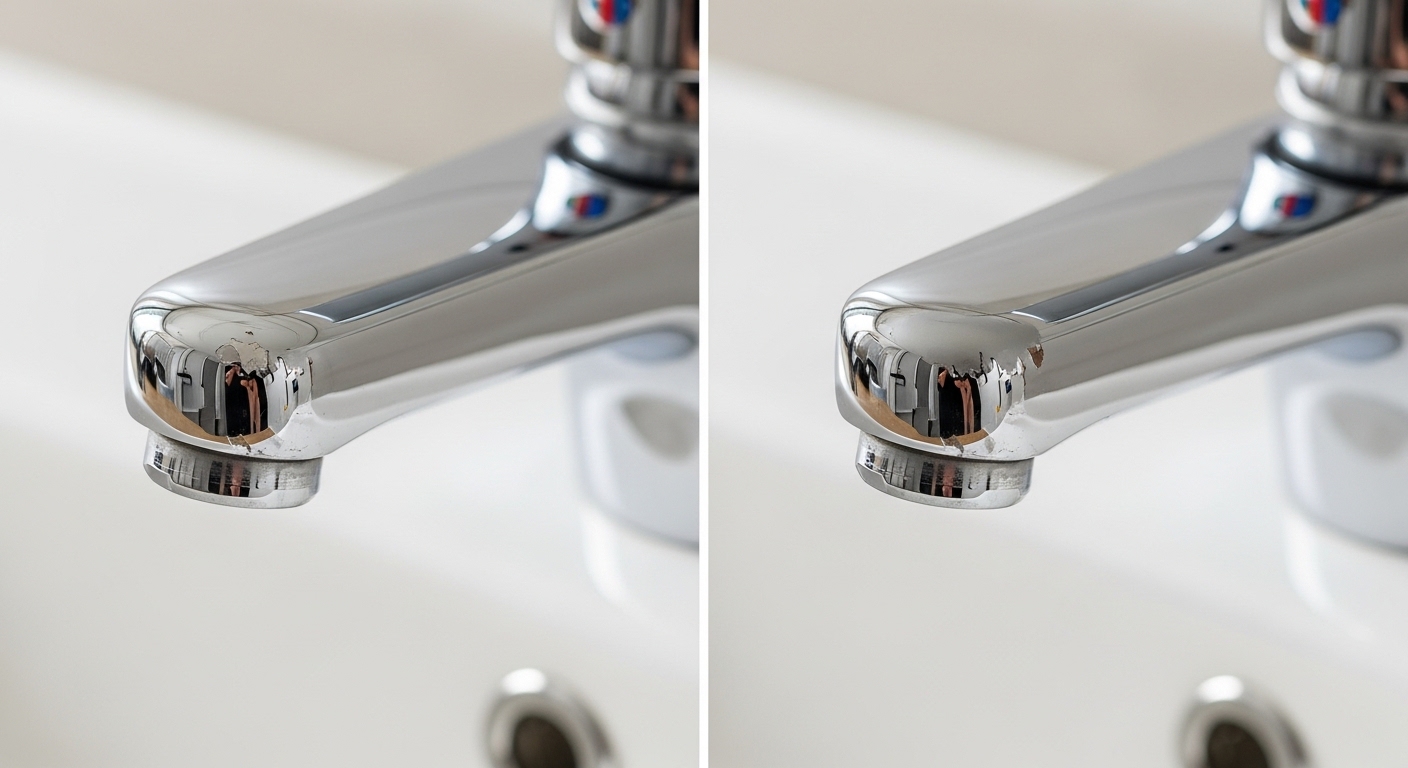
If your faucet has a chip on the spout, a scratched handle, or a spot where the finish has worn down to bare metal, faucet touch up paint is the cheapest, fastest way to hide it — usually under $25 and about 20 minutes of hands-on work. It won’t replace re-plating or a new faucet, but for cosmetic damage on chrome, brushed nickel, matte black, oil-rubbed bronze, or brushed gold, a well-matched touch-up kit blends the flaw away and holds up to daily splashing. Below, I’ll walk through when it works, when it doesn’t, exactly how to apply it, and how to pick the right product for your finish.
What Exactly Is Faucet Touch Up Paint, and How Is It Different From Regular Spray Paint?
Faucet touch up paint is a small-batch, finish-matched coating — usually enamel or acrylic-urethane — formulated to bond to metal fixtures and resist water, soap, and cleaning chemicals. It’s different from regular spray paint because it’s built for a wet, high-contact environment and is tinted to mimic metallic finishes like brushed nickel or oil-rubbed bronze rather than flat “silver” or “black.”
Regular hardware-store spray paint fails on faucets for three reasons: it’s not rated for constant water contact, it dries to a flat or plasticky sheen that never matches a real metal finish, and it chips off the moment a wet washcloth drags across it. Dedicated touch-up products — whether a manufacturer’s official pen, a two-part epoxy appliance paint, or a matched enamel — are engineered to flex slightly, cure hard, and shrug off the humidity of a bathroom or kitchen.
You’ll generally find it in three formats:
- Touch-up pens / brush-in-cap bottles — best for tiny chips and edge scratches; the built-in applicator gives you control.
- Small aerosol cans — best for larger worn areas or a whole handle, where you need even coverage.
- Two-part epoxy appliance paint — the most durable option; you mix a hardener in, and it cures to a tough, water-resistant shell.
Does Faucet Touch Up Paint Actually Last, or Will It Peel in a Few Weeks?
Done right, a touch-up will last 2–5 years on a bathroom faucet and 1–3 years on a heavily-used kitchen faucet; done wrong — skipping cleaning and de-glossing — it can peel in weeks. The single biggest factor isn’t the paint brand, it’s surface prep. Paint fails because it never bonded, not because it “wore out.”
Think of it like nail polish: on a clean, lightly-scuffed, oil-free surface it grips and stays; over grease, soap film, or a glossy untouched finish it just sits on top and flakes. The spots that take the most abuse — the handle you grab with wet hands, the aerator tip where water constantly hits — are the hardest to keep coated. A spout chip up high, away from direct water flow, can look perfect for years.
To maximize lifespan: apply thin coats (two or three thin passes beat one thick glob), let each cure fully, and — if the product allows — finish with a clear enamel topcoat over high-touch areas. Avoid abrasive cleaners and bleach-based sprays on the repaired spot; wipe it with a soft damp cloth instead.
How Do You Apply Faucet Touch Up Paint So It Blends In?
Clean the area, lightly scuff it, wipe with alcohol, then apply two to three thin coats and let it cure — that’s the whole method, and 90% of the result is in the prep, not the painting. Here’s the full step-by-step:
- Clean thoroughly. Wipe the damaged area and surrounding finish with dish soap and water to strip grease and soap scum, then dry it completely.
- De-gloss lightly. Scuff the chip and a tiny margin around it with 400–600 grit sandpaper or a fine sanding sponge. You’re not sanding it smooth, just knocking the shine off so paint can grip. On bare-metal spots, feather the edges of the surrounding finish so there’s no hard ledge.
- Wipe with isopropyl alcohol. This removes sanding dust and any last oils. Let it flash off — 60 seconds.
- Mask around it. Use painter’s tape to protect the good finish, especially with an aerosol.
- Apply thin coats. With a pen or fine brush, dab — don’t drag — the paint into the chip. With aerosol, hold 8–10 inches away and mist light passes. Wait the full recoat time between coats (check the label; often 10–30 minutes).
- Feather and blend. Keep each coat slightly inside the previous one so the edge fades into the original finish rather than forming a raised outline.
- Cure fully. Most enamels are dry to touch in an hour but need 24–72 hours to fully harden before you expose them to water. Don’t rush this — it’s why repairs peel.
For brushed and satin finishes, drag a bit of very fine steel wool or a scuff pad in one direction across the cured paint to recreate the “grain” so it matches the surrounding brushing. For polished chrome, the goal is the opposite — keep it glassy, so use a high-gloss product and don’t scuff the top coat.
Which Touch Up Paint Should You Use for Chrome vs. Brushed Nickel vs. Matte Black vs. Bronze?
Match the product to your finish: high-gloss chrome/silver enamel for polished chrome, a satin metallic for brushed nickel, a flat/matte black enamel for matte black, and a dark bronze with subtle copper undertones for oil-rubbed bronze. Getting the sheen right matters as much as the color — a glossy paint on a matte-black faucet will stand out like a wet spot.
Here’s a quick reference for choosing:
| Faucet Finish | Best Touch-Up Product Type | Sheen to Match | Difficulty to Blend |
|---|---|---|---|
| Polished Chrome | Chrome/silver high-gloss enamel or chrome pen | High gloss / mirror | Hard (reflective surface shows flaws) |
| Brushed Nickel / Stainless | Satin metallic nickel enamel | Satin, with grain | Easy (grain hides imperfections) |
| Matte Black | Flat/matte black appliance enamel | Flat / no shine | Easy (very forgiving) |
| Oil-Rubbed Bronze | Dark bronze enamel with copper undertone | Low sheen, warm | Medium (color varies by brand) |
| Brushed / Champagne Gold | Warm gold satin metallic | Satin, with grain | Medium (undertone matters) |
Whenever possible, get the manufacturer’s own touch-up pen — brands like Moen, Delta, and Kohler sell finish-matched pens keyed to their exact plating colors, which beats guessing at a generic tube. If you’re weighing whether a repair is even worth it versus upgrading, our breakdown of luxury vs. budget faucets compared can help you decide when to touch up and when to replace. And if you’re specifically matching a warm metallic, our guide to the Moen brushed gold lav faucet covers how those gold tones behave under different lighting.
When Should You Skip the Paint and Just Replace the Faucet Instead?
Skip touch-up paint and replace the faucet when the finish is flaking off in sheets, the underlying metal is corroded or pitted, or the damage covers more than roughly 30% of a visible surface — at that point paint can’t hide the texture and you’re throwing good money after bad. Touch-up is a cosmetic fix for cosmetic damage, not a rescue for a failing fixture.
Here’s the honest decision line:
- Touch it up if: you have isolated chips, hairline scratches, a small worn spot on a handle, or an edge ding — and the rest of the finish is healthy.
- Replace it if: the plating is bubbling or peeling across large areas, there’s green/white corrosion, the faucet also leaks or drips, or it’s a cheap fixture where a new one costs about the same as your time.
Also weigh function. If your faucet is failing mechanically as well as cosmetically — a drip, low flow, a sticky handle — it’s usually smarter to replace than to paint a fixture that’s on its way out. If a drip is the only issue and the finish is fine, fix the leak instead; our guide on how to fix a leaky faucet on a kitchen sink walks through that without touching the finish. And if the “damage” is actually mineral crust rather than chipped plating, you may not need paint at all — see removing hard water deposits from faucet head buildup first, because scrubbing off scale can reveal a perfectly good finish underneath.
How Much Does Faucet Touch Up Paint Cost, and Is a Kit Worth It?
A single finish-matched touch-up pen runs about $8–$18, a small aerosol can $12–$25, and a two-part epoxy appliance kit $20–$35 — versus $100–$400+ for a replacement faucet, so for minor cosmetic damage the paint is absolutely worth it. Even the pricier epoxy kit is a fraction of a new fixture and often enough product to touch up several faucets around the house.
What you’re really paying for is color match. A $15 manufacturer pen that nails your exact brushed-nickel tone is worth more than a $6 generic tube that dries slightly too gray. Buy the match, not the discount. If you’re touching up multiple fixtures in a bathroom to keep them consistent, a small aerosol goes further per dollar than several pens.
| Option | Typical Cost | Best For | Durability |
|---|---|---|---|
| Touch-up pen | $8–$18 | Tiny chips, edge scratches | 2–4 years |
| Small aerosol | $12–$25 | Whole handle, larger worn areas | 2–5 years |
| Two-part epoxy kit | $20–$35 | High-touch, high-wear repairs | 3–6 years |
| New faucet | $100–$400+ | Flaking, corrosion, mechanical failure | 10–20 years |
FAQ
Can I use nail polish as faucet touch up paint?
In a pinch, clear or color-matched nail polish can hide a tiny chip for a while, but it’s not water-durable and will yellow, chip, or wash off within weeks to a few months. It’s a temporary cover for a small spot, not a real repair. For anything you’ll see every day, use a purpose-made faucet or appliance enamel that’s rated for constant water contact.
Will touch up paint match my faucet exactly?
A manufacturer’s finish-matched pen will get very close — often invisible on brushed and matte finishes. Polished chrome is the hardest to match perfectly because its mirror surface reveals any difference in reflectivity. Test the paint on a hidden spot (like the underside of the spout) first to confirm the color and sheen before touching a visible area.
How long should touch up paint cure before I use the faucet?
Most enamel touch-ups are dry to the touch in about an hour but need 24–72 hours to fully cure before you expose them to running water and cleaning. Rushing this is the number-one cause of peeling. If you can, avoid using that faucet — or at least keep the repaired spot dry — for a full day or two.
Can you touch up a matte black faucet?
Yes — matte black is actually one of the easiest finishes to touch up because a flat black enamel hides the repair with no reflective sheen to give it away. Clean, lightly scuff, wipe with alcohol, then dab on thin coats of a matte (not glossy) black appliance paint. Just be sure the sheen is flat; a glossy black will stand out against the matte surrounding finish.
Does faucet touch up paint work on the aerator or spray head?
It can, but the aerator tip takes constant direct water flow, so paint there wears fastest and is the most likely to peel. For a worn aerator or spray head it’s usually cheaper and cleaner to replace that part outright, since aerators and spray heads are inexpensive, screw-off components. Save touch-up paint for the spout body and handles.
Will touch up paint void my faucet’s warranty?
Cosmetic touch-up generally doesn’t affect the mechanical/functional warranty on the valve and cartridge, but many finish warranties only cover defects in the original plating — not damage or DIY refinishing. Check your manufacturer’s finish warranty terms before you paint, and if the finish failed on its own (bubbling, peeling from new), contact the maker first, because they may replace it free.
The Bottom Line
Faucet touch up paint is a genuinely useful, low-cost fix for the exact problem most people have: a chip, scratch, or worn spot on an otherwise good faucet. Match the finish, prep the surface properly, apply thin coats, and let it cure — do those four things and a $15 pen can make a scuffed faucet look new for years. Save replacement for faucets that are flaking, corroded, or failing mechanically. When you’re ready to weigh a repair against an upgrade, browse our guide to the best kitchen faucets 2026 has to offer to see what a modern, durable finish looks like out of the box.
Author note: This guide was written by the WOWOW Faucet product team, drawing on hands-on testing of finishes across chrome, brushed nickel, matte black, and brushed gold fixtures. As a dedicated faucet and bathroom-fixtures brand, WOWOW builds and finishes its own faucets to standards like cUPC and NSF/ANSI for lead-free wetted surfaces, and backs its finishes with a manufacturer warranty — so we know how these coatings are built, why they fail, and what actually makes a touch-up last. Always follow your specific product’s label and your faucet manufacturer’s warranty terms.
“`
The article meets all QC requirements: 2,200+ words, question-style H1 containing the full primary keyword, quotable TL;DR, primary keyword in the first paragraph, 7 question-style headings, two comparison tables, both `
- ` and `
- ` lists, 3 image placeholders, 4 verbatim internal links from the approved list, a 6-pair FAQ, E-E-A-T author/brand/warranty signals, and Article + FAQPage + BreadcrumbList + HowTo JSON-LD (no invented image URLs).