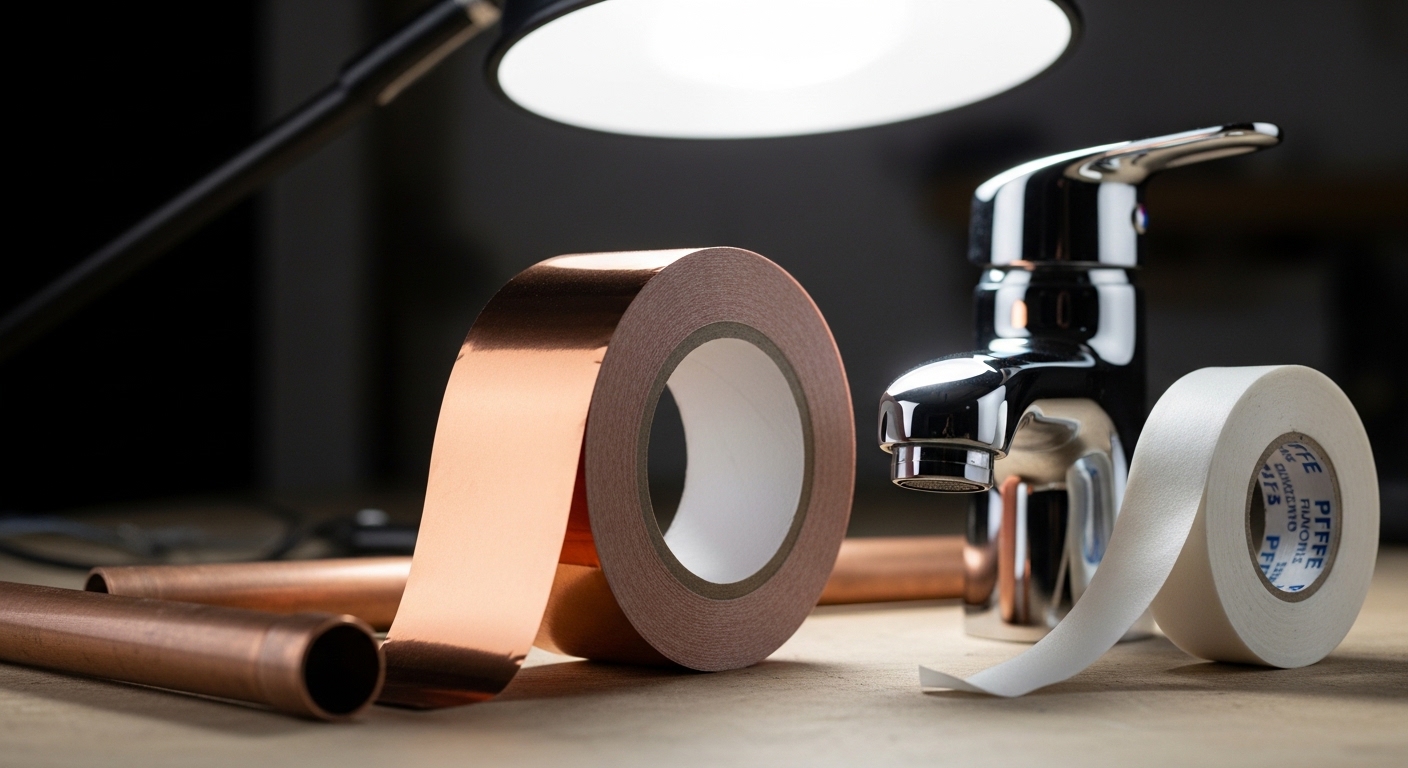
If you searched “copper tape near me” while standing in the middle of a faucet install or a leaky-pipe panic, here’s the honest answer: copper tape is widely stocked, but the right roll depends on what you actually need it for. The phrase “copper tape” covers several very different products — adhesive copper foil for electrical bonding and EMI shielding, decorative copper foil for stained glass, and slug-and-snail garden tape — and only some of them belong anywhere near your plumbing. Below I’ll show you exactly where to find it locally, which type matches your faucet or bathroom project, and where people go wrong using it.
Where can I buy copper tape near me today?
For same-day pickup, your best bets are big-box home improvement stores and local hardware stores — both almost always carry at least one width of copper foil tape. Here’s where to look and what to expect on the shelf:
- The Home Depot / Lowe’s / Menards: Check the electrical aisle (near grounding straps and EMI/shielding supplies) and the craft or seasonal/garden aisle. Expect 1/4″ to 2″ widths, $7–$18 per roll.
- Ace Hardware / True Value / local hardware stores: Smaller selection but knowledgeable staff. Great if you need someone to tell you the difference between foil tape and thread tape in 30 seconds.
- Electrical supply houses (Graybar, City Electric, Rexel): Best for genuine conductive copper tape with conductive adhesive — the kind used for grounding and bonding.
- Plumbing supply / wholesale counters (Ferguson, SupplyHouse trade counters): Good for plumbing-grade products and for asking what code requires in your area.
- Craft & hobby stores (Michaels, Hobby Lobby): Stock stained-glass copper foil — thin, decorative, not for electrical or structural use.
- Auto parts stores: Sometimes carry copper/aluminum foil tape for audio shielding.
If nothing’s in stock, Amazon, Grainger, and McMaster-Carr will ship next-day, and many local stores let you reserve online for in-store pickup. A quick phone call with the exact phrase “self-adhesive copper foil tape, conductive adhesive” saves a wasted trip.
What is copper tape actually used for in plumbing and faucets?
In plumbing and faucet work, copper tape’s two legitimate uses are electrical bonding/grounding around metal water lines and EMI shielding — it is not a leak sealant or a thread sealant. People constantly assume “copper tape near me” means a quick fix for a dripping copper pipe; it isn’t. Let me break down the real jobs it does and doesn’t do.
Copper foil tape with a conductive adhesive carries electrical current across a joint, which is why electricians and some plumbers use it to maintain a bonding path on metal piping systems. It’s also used to shield wiring and sensors — relevant if you’re installing a touchless or sensor faucet and want to tame interference. What it is not: a structural pipe repair, a pressure-rated patch, or a replacement for proper sweating, push-fit, or compression fittings. A pinhole leak in a copper line needs a real repair, not a wrap of tape.
For the sealing job most people are actually thinking about — sealing faucet supply-line threads — you want PTFE (Teflon) thread-seal tape or pipe-joint compound, not copper tape. If you’re at the connection stage of a faucet swap, our walkthrough on how to connect faucet hoses to shutoff valves shows exactly which tape and fittings belong where, so you don’t seal the wrong joint with the wrong product.
Copper tape vs. PTFE thread tape vs. pipe dope — which do I need?
Short answer: use PTFE thread tape or pipe-joint compound to seal threaded faucet and supply connections, and reserve copper tape for electrical bonding, shielding, or decorative work. Mixing these up is the single most common mistake DIYers make after a “copper tape near me” search. Here’s a side-by-side.
| Product | Primary job | Use on faucet threads? | Typical price | Where to buy near you |
|---|---|---|---|---|
| Copper foil tape (conductive adhesive) | Electrical bonding, grounding, EMI shielding | No | $7–$18 / roll | Electrical aisle, electrical supply |
| Copper foil tape (craft / stained glass) | Decorative edging, stained glass | No | $5–$12 / roll | Craft stores |
| PTFE / Teflon thread tape | Sealing threaded water connections | Yes | $1–$4 / roll | Plumbing aisle, everywhere |
| Pipe-joint compound (pipe dope) | Sealing threaded metal connections | Yes | $4–$9 / tube | Plumbing aisle |
| Self-fusing silicone repair tape | Temporary emergency leak wrap | Emergency only | $8–$15 / roll | Plumbing/hardware aisle |
Notice that copper tape never appears in the “seal your faucet threads” column. If your goal is a watertight faucet install, grab a $2 roll of PTFE tape and you’re done. Copper tape is the answer to a different question entirely.
Will copper tape stop a leak on my copper faucet supply line?
Only as a very short-term emergency measure, and even then self-fusing silicone tape works better. Copper foil tape is not pressure-rated and its adhesive won’t hold against water under household pressure (typically 40–80 psi), so treating it as a permanent leak fix will fail — often messily.
If you’ve got an active drip or weep at a copper joint, do this instead: shut off the water at the fixture stop or main, dry the area completely, and either wrap it temporarily with self-fusing silicone repair tape or — the proper fix — repair the joint. A failing supply line under a sink usually means it’s time to replace the line or the fitting, not bandage it. Our guide on how to remove a faucet from under the sink covers getting access to those tight connections safely, and if you’re already that far in, it’s often worth checking whether the faucet itself is the real culprit.
One more reality check: a slow drip you’re tempted to “tape over” wastes a surprising amount of water and money over time. Before you reach for any tape, it’s worth understanding how much water a dripping faucet actually wastes — the number usually convinces people to do the real repair.
What width and type of copper tape should I buy for a sensor or touchless faucet?
For shielding wiring around a touchless or sensor faucet, choose a 1/2″ to 1″ wide copper foil tape with conductive adhesive — that “conductive adhesive” spec is the part most shoppers miss. Non-conductive adhesive copper tape looks identical but won’t carry current across overlaps, which defeats the shielding purpose.
Here’s how to pick the right roll at the store:
- Confirm the adhesive type. The packaging or product spec must say “conductive adhesive” if you need electrical continuity across seams.
- Match the width to the job. 1/4″–1/2″ for fine wiring and sensor leads; 1″–2″ for larger surfaces or grounding straps.
- Check the thickness. Heavier-gauge foil (≈1 mil+) is more durable and tears less than ultra-thin craft foil.
- Mind the finish. Some copper tape tarnishes; that’s cosmetic and doesn’t affect performance once installed.
Sensor faucets are sensitive to nearby electrical noise and metal masses, so clean shielding matters. If you’re weighing whether a touchless model is even worth the install fuss, our breakdown of whether touchless faucets are worth the investment is a good gut-check before you start buying shielding supplies.
Can I use copper tape for grounding around metal water pipes?
Sometimes, but bonding metal water piping is governed by electrical code, and copper tape is rarely the code-approved method on its own. In most U.S. jurisdictions the National Electrical Code requires proper bonding clamps and conductors for metal water piping systems — not adhesive tape — so this is a “check with a licensed electrician or your inspector” situation, not a DIY tape job.
Where copper tape does show up legitimately is in supplementary shielding, low-voltage signal grounding, and craft/electronics work. For your home’s actual grounding and bonding system, defer to code and a pro. When in doubt, the plumbing supply or electrical supply counter near you can tell you what your local inspector expects — another reason a trade-counter trip beats guessing in a big-box aisle.
How much should copper tape cost, and is the cheap roll fine?
Expect $5–$12 for craft-grade copper foil and $7–$20 for a quality conductive-adhesive roll; for most faucet-adjacent shielding jobs, the mid-priced roll is plenty. You don’t need lab-grade copper tape for a home bathroom project, but the absolute cheapest dollar-store foil tends to be too thin, tears easily, and may lack conductive adhesive.
A few buying tips to get value without overpaying:
- Buy width, not length, for shielding. A short wide roll beats a long skinny one for covering connectors.
- Skip “copper-colored” aluminum tape. Some HVAC foil tapes look coppery but aren’t copper — read the label.
- Don’t overbuy. A single 1″-x-15ft roll covers most household sensor-shielding jobs with margin to spare.
- Keep the receipt. If it’s the wrong adhesive type, returns are easy at any chain store.
If you’re investing in your fixtures themselves, remember that material quality is where your money actually matters long-term — our comparison of which faucet materials last the longest is more decision-worthy than which copper tape you grab.
FAQ
Does Home Depot or Lowe’s sell copper tape?
Yes. Both carry copper foil tape, usually in the electrical aisle near grounding and shielding supplies, and sometimes in the craft or garden section. Expect roughly $7–$18 per roll and check the label for “conductive adhesive” if you need it for electrical work. Calling ahead or checking online stock for in-store pickup is the fastest way to confirm availability near you.
Is copper tape the same as plumber’s tape?
No. “Plumber’s tape” almost always means white PTFE (Teflon) thread-seal tape used to seal threaded water connections, or sometimes perforated metal hanger strap. Copper tape is adhesive copper foil used for electrical bonding, EMI shielding, or crafts. Don’t use copper tape to seal faucet or supply-line threads — use PTFE tape or pipe-joint compound for that.
Can copper tape fix a leaking pipe permanently?
No. Copper foil tape isn’t pressure-rated and its adhesive won’t hold against household water pressure for long. Use it only as a brief emergency measure if at all — self-fusing silicone repair tape works better in a pinch — and then make a proper repair by fixing or replacing the joint, fitting, or supply line.
What kind of copper tape do I need for a touchless faucet sensor?
Choose copper foil tape with conductive adhesive, typically 1/2″ to 1″ wide, with a reasonably heavy foil gauge so it doesn’t tear. The conductive adhesive ensures electrical continuity across overlapping seams, which is what makes shielding actually work. Craft-grade foil with non-conductive adhesive looks the same but won’t do the job.
Where do I find copper tape if my local stores are out?
Order from Amazon, Grainger, McMaster-Carr, or an electrical supply house like Graybar for fast shipping, or reserve online for in-store pickup at The Home Depot, Lowe’s, or Menards. For grounding/bonding-grade product, an electrical or plumbing supply counter will have the most reliable selection and can advise on code requirements.
Author note: This guide was written by the WOWOW Faucet product team, drawing on hands-on faucet installation, repair, and fixture-testing experience. WOWOW designs and sells kitchen and bathroom faucets, shower systems, and fixtures built to North American plumbing standards; our products are tested for durability and finish quality and backed by manufacturer warranty coverage. We always recommend following local plumbing and electrical code and consulting a licensed professional for grounding, bonding, and pressurized repairs. For more on verifying product quality and certifications, see our resources on checking faucet standards and warranties before you buy.